For anyone in a rental, a tiny apartment, or an RV, the question are countertop dishwashers worth it comes down to a simple trade: you give up counter space and capacity in exchange for skipping the hand-wash routine. These compact units sit on your counter, hook to the faucet or fill manually, and wash a few place settings at a time. For the right household they are a genuine quality-of-life upgrade. For a busy family of five, they fall short. Here is how to tell which side you land on.
Part of our Countertops guide — explore the full guide →
- How a Countertop Dishwasher Works
- Capacity: The Real Limitation
- Water and Energy Use
- Cost and Who Benefits Most
- The Drawbacks to Weigh
- Performance: Do They Actually Get Dishes Clean
- Tank-Fill vs Faucet-Connect: Which to Choose
- The Verdict
- Tips to Get the Most From a Countertop Unit
- Frequently Asked Questions
How a Countertop Dishwasher Works
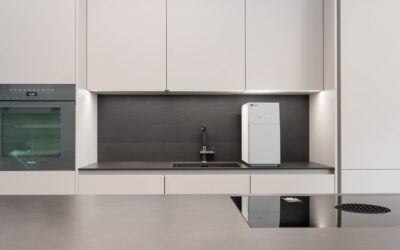
A countertop dishwasher is roughly the size of a microwave, usually about 17 inches wide, 20 inches deep, and 17 inches tall. Most connect to your kitchen faucet with a quick-release adapter, drawing water in and draining it back through the same hose. Newer tank-fill models let you pour in a few liters by hand, which frees you from needing a compatible faucet at all, a big deal in older apartments.
Inside, a spray arm and heating element run a cycle much like a full-size machine, complete with a heated dry on better models. Cycles typically run 60 to 120 minutes.
Capacity: The Real Limitation
This is where expectations meet reality. Most countertop units hold 2 to 6 place settings. A 6-setting model fits dinner plates, salad plates, bowls, glasses, and a basket of cutlery, enough for a couple or a small household. What they cannot handle are large pots, sheet pans, oversized mixing bowls, and tall stockpots, which simply will not fit. If your sink fills with cookware every night, a countertop model will not clear the backlog.
Water and Energy Use
Countertop dishwashers are surprisingly efficient. Many use just 2 to 4 gallons per cycle, compared to the 6 to 10 gallons of hand-washing under a running tap. Because they heat their own water and run on a standard 120-volt outlet drawing under 1,000 watts, energy costs are modest, often just a few dollars a month with regular use.
- Water per cycle: roughly 2 to 4 gallons
- Power: standard household outlet, no special wiring
- Detergent: standard pods or powder, used sparingly
Cost and Who Benefits Most
Countertop dishwashers run $200 to $400, with tank-fill and stainless models at the higher end. That is a fraction of a built-in unit, which costs $400 to $1,000 for the appliance plus $200 or more for installation. There is no plumbing work and no cabinet cutout, so renters can take the unit with them when they move.
The people who get the most value are singles and couples in apartments, tiny homes, RVs, and offices, plus anyone whose kitchen has no space or hookups for a built-in. For them, the answer to whether countertop dishwashers are worth it is a clear yes.
The Drawbacks to Weigh
The biggest cost is counter space. A unit roughly 17 inches square permanently occupies prime real estate next to the sink, which is a real sacrifice in a small kitchen. Faucet-connect models also tie up your tap during the cycle, so you cannot run water while it works unless you choose a tank-fill design. Cycle times of an hour or more mean you cannot do a quick wash before guests arrive.
Performance: Do They Actually Get Dishes Clean
Cleaning power is the question that makes or breaks the purchase, and modern countertop units perform better than their size suggests. With a heated wash cycle reaching around 140°F and a heated dry option on mid-range models, they handle everyday food residue, coffee stains, and grease as well as a built-in. Where they struggle is baked-on, crusted food; pre-rinsing heavily soiled plates makes a noticeable difference.
Loading technique matters too. Because the racks are smaller, angling plates toward the spray arm and not overcrowding the basket ensures water reaches every surface. Run a rinse-aid dispenser if the unit has one, and you will get spot-free glasses that air-dry clear.
Tank-Fill vs Faucet-Connect: Which to Choose
The single biggest decision is how the unit gets its water. Faucet-connect models tap straight into your sink faucet, so they never run out of water mid-cycle, but they tie up the tap and require a compatible faucet thread, which many modern pull-down sprayers lack. Tank-fill models let you pour a few liters into an internal reservoir, freeing you from the faucet entirely, ideal for an RV, a wet bar, or an apartment with an incompatible faucet.
- Faucet-connect: unlimited water, but ties up the sink and needs a compatible faucet
- Tank-fill: works anywhere with an outlet, but you refill it manually
- Hybrid models: offer both, the most flexible if your budget allows
The Verdict
So, are countertop dishwashers worth it? If you live alone or with one other person, lack the space or hookups for a full-size unit, and mostly wash plates, bowls, and glasses rather than big cookware, the answer is yes; the convenience and water savings justify the $200 to $400 outlay. If you have a family, cook with large pots nightly, or already own a built-in, skip it. Match the machine to your actual dish load and the math works out clearly one way or the other.
Tips to Get the Most From a Countertop Unit
If you do buy one, a few habits maximize its value. Run it on a full load rather than a few items to conserve water and energy, and choose an eco or short cycle for lightly soiled dishes to cut run time. Scrape food into the trash before loading, but skip heavy pre-rinsing, which wastes the water you bought the machine to save. Use rinse aid for spot-free drying, and periodically run an empty cycle with a dishwasher cleaner or a cup of white vinegar to clear mineral buildup and keep odors away.
Position the unit close to the sink so the inlet and drain hoses reach comfortably, and make sure the drain hose sits at or below the sink level so it empties fully. With smart loading and regular cleaning, a $250 countertop dishwasher can deliver years of reliable service in a small kitchen.
Frequently Asked Questions
What is the difference between a countertop and a portable dishwasher?
A countertop dishwasher sits on the counter and holds about 2 to 6 place settings, while a portable dishwasher is a full-height unit on wheels that holds many more and rolls to the sink when needed. Both typically connect to the kitchen faucet. Portables cost more and need floor space to park, but they handle family-size loads and larger cookware.
Can a countertop dishwasher go inside a cabinet?
Usually not. Countertop models are designed to sit in open air, and they vent heat and steam during the wash and dry cycles, which can damage the inside of an enclosed cabinet. Some owners place them on a sturdy open shelf near the sink instead. Check the manual for the required clearances around the unit before choosing a spot.