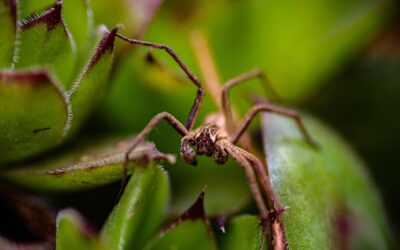
Most people assume spiders march toward porch lights the same way moths do. The truth is more interesting and more useful for keeping them out of your house. Are spiders attracted to light directly? Almost never. They are attracted to the buffet of insects that gather around your bulbs, which is why swapping the wrong fixture for the right one can cut your spider population in half.
- Why Spiders Gather Near Lights
- Which Bulbs Attract the Most Bugs
- Bug Lights and What They Actually Do
- Where Spiders Build Webs Around Houses
- Reducing Light Spill Near Living Areas
- Indoor Lighting and Spiders
- Other Factors That Pull Spiders to a Home
- Seasonal Patterns to Expect
- When to Call Professional Pest Control
Why Spiders Gather Near Lights
Spiders are predators with poor eyesight in most species, and their hunting strategy depends on prey density. Bright lights pull moths, midges, mosquitoes, and beetles from up to 100 yards away. Where insects cluster, web-building spiders set up shop. Orb weavers, cellar spiders, and house spiders all build near lit windows and porch corners because the food keeps coming all night.
Hunting spiders like wolf spiders and jumping spiders show up too, but they prowl rather than wait. They are drawn to the same insect convention, just hunting actively along siding and door frames.
Which Bulbs Attract the Most Bugs
Insects see ultraviolet (UV) and short-wavelength blue light far better than humans do. Standard cool white LED bulbs at 5000K to 6500K, fluorescent tubes, and old mercury-vapor yard lights all pump out enough UV to attract massive insect crowds, which then attract spiders. Incandescent bulbs put out heat that mosquitoes love but less UV than fluorescents.
- Worst offenders: Mercury vapor, fluorescent, blue-rich LED above 5000K
- Better options: Warm white LED at 2700K to 3000K
- Best options: Yellow “bug light” LEDs at 2200K or amber sodium
Bug Lights and What They Actually Do
The yellow-coated bug bulbs at every hardware store filter out blue and UV wavelengths. They do not repel insects with chemicals or sound. They simply emit light that flying insects struggle to see. Studies from researchers at the University of Kansas measured 50 to 70 percent fewer insects under amber LEDs compared to cool white. Fewer insects equals fewer spider webs in the eaves by week two.
Sylvania, Feit, and GE all sell screw-in 2200K to 2700K LED bug bulbs for $5 to $9 each. Replace every exterior bulb at the same time — leaving one cool white fixture nearby concentrates the bug population there instead of solving the problem.
Where Spiders Build Webs Around Houses
Pay attention to the specific spots that draw spiders. Door frames near porch lights, window screens with backlit interior lighting, soffit corners over bug zappers, and gutter edges below garage spotlights are the top four. Spiders also love the low side of any motion-sensor flood that triggers all night when raccoons cross the yard.
Check eaves and overhangs in the morning when dew highlights fresh webs. Webs rebuilt overnight in the same spot tell you that location stays bug-rich. Move the light or change the bulb color, and the spider relocates within a few days.
Reducing Light Spill Near Living Areas
Even with the right bulb color, light leaking through windows draws insects to the glass. Close blinds after dark in rooms next to porches. Install full-cutoff fixtures that aim light downward instead of broadcasting in all directions. Your driveway will still be lit, but bugs flying in from the yard cannot see the source from above.
Motion sensors are another easy upgrade. A light that runs only when triggered cuts insect attraction by 90 percent compared to dusk-to-dawn fixtures. Pair a motion sensor with a 2700K bulb and you have eliminated most of the spider food supply at that spot.
Indoor Lighting and Spiders
Indoors, spiders follow the same logic. Basement window wells with constantly running lights collect spiders fast. Garages with fluorescent strip lights left on overnight become spider headquarters. Switch garage lighting to 3000K LED and add a timer that kills the lights after 11 p.m. unless someone trips a motion sensor.
Spiders also gather where lights illuminate clutter. Stacks of cardboard, woodpiles next to floodlights, and unused planters near garage doors all create harborage one foot from a food source. Move clutter at least 10 feet from any exterior fixture.
Other Factors That Pull Spiders to a Home
Light is the headline answer, but humidity and gaps drive spider populations too. Cracks under siding, gaps around dryer vents, and torn window screens give them easy interior access. Caulk gaps over 1/8 inch with paintable silicone. Replace bent screen frames where corners no longer seal flush.
Outdoor faucets, dripping AC condensate lines, and birdbaths within 20 feet of a lit door create the moisture spiders need. Move standing water sources further from entry points and you remove a second piece of the puzzle.
Seasonal Patterns to Expect
Spider populations near lights peak in late summer and early fall, when juveniles disperse and look for new hunting grounds. This is also when male spiders wander into homes searching for mates, which is why September brings the highest indoor sighting rates. Plan bulb swaps and exterior caulking in May or June to be ready before the fall surge. Winter brings a brief reprieve as outdoor populations die back, but house spiders remain active year-round in heated basements and garages.
When to Call Professional Pest Control
If you have black widows in a garage, brown recluses indoors, or cobweb-filled crawlspaces beyond what vacuuming can fix, a licensed exterminator with cyfluthrin or deltamethrin treatments will reset the population. Expect $150 to $300 for a perimeter spray that lasts 90 days. Combine that with bulb swaps and light-spill control, and most homeowners see lasting relief by the second season.