
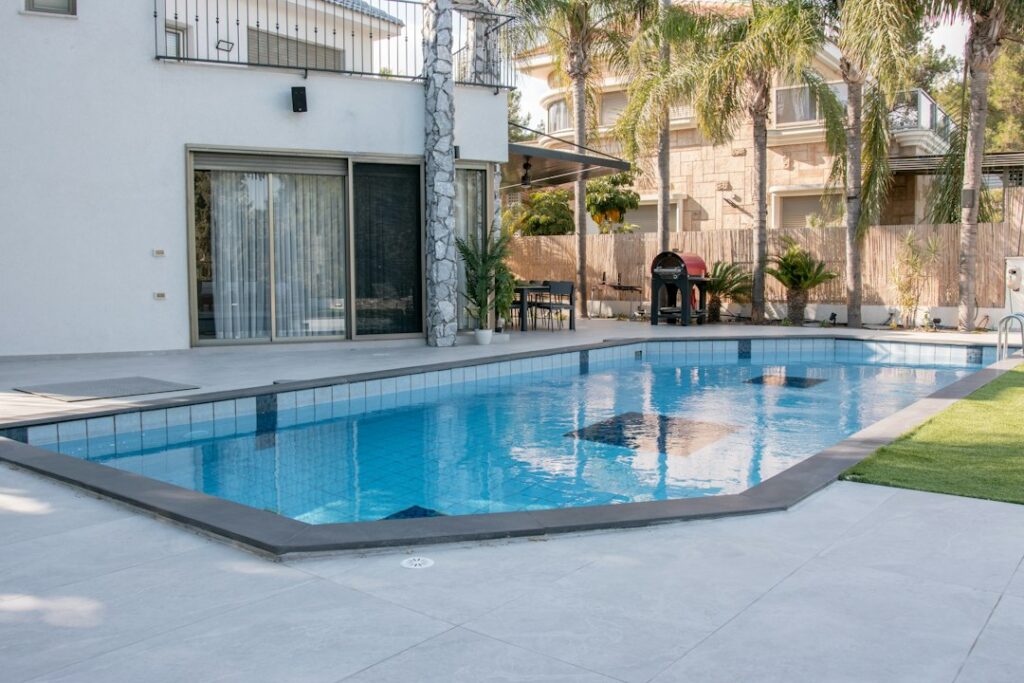
Pulling a heavy vinyl cover across a pool by hand is the kind of chore that quietly stops happening by July. Automatic pool covers solve that with a motor and a key switch: a turn of the key rolls a fabric cover across the water in under a minute, and another turn rolls it back. They keep debris out, hold heat and cut evaporation, and many are designed to meet recognized safety cover standards. What they cannot do is replace a pool fence or an adult watching the water.
Most systems use a motorized drum at one end of the pool and tracks along the sides that guide the cover’s edges. The cover stays taut and sealed at the edges, which is what lets some models resist the weight of a child or pet that wanders onto it. Prices vary widely depending on pool shape, track style and whether the system is built in during construction or retrofitted later.
- How Automatic Pool Covers Work
- Track Options: Recessed, Under-Track and Deck-Mounted
- Safety Cover Standards and the Walkable Question
- Drowning Prevention: A Cover Is Only One Layer
- Removing Water From the Top
- Electrical Work and Installation
- Maintenance Tips
- Automatic Pool Cover Cost Ranges
- Troubleshooting Quick Guide
- When to Call a Licensed Professional
- Frequently Asked Questions
If you are weighing a retractable pool cover, the key decisions are track type, whether the product is certified as a safety cover, how you will remove rainwater from the top and who will handle the electrical work.
How Automatic Pool Covers Work
Automatic pool covers have four main parts: a reel (drum) that stores the rolled-up cover, a motor or hydraulic drive that turns the reel, tracks that hold the cover edges, and a control switch, usually key-operated so children cannot open or close it. When closed, the leading edge bar pulls the cover along the tracks until it reaches the far end.
Most motorized pool covers are made of heavy reinforced vinyl in a range of colors. Darker colors absorb more solar heat; lighter colors reflect it. Because the cover floats on or just over the water, it reduces evaporation and heat loss, which lowers heater and water costs.
Track Options: Recessed, Under-Track and Deck-Mounted
Recessed or Under-Track Systems
On new construction, the tracks and drum can be built into the pool coping or tucked under a lip just beneath the deck edge. The reel sits in a vault at one end, often hidden under a lid. These electric pool covers look cleanest and keep the deck clear, but they must be planned during the pool build or a major remodel.
Deck-Mounted (Top-Track) Systems
For existing pools, tracks are fastened to the deck surface along each side, and the reel sits in a bench or housing at one end. These auto pool covers are the most common retrofit choice. Tracks stand slightly proud of the deck surface, so they create a low edge to watch for. Choose low-profile tracks, keep them clean and consider contrasting colors or pads so no one catches a toe.
Pool Shape Limits
Rectangular pools are ideal. Freeform or kidney shapes often need a rectangular cover area with extra decking, a custom track layout or a different cover type entirely. Raised spas, beach entries and rock features also complicate installation.
Safety Cover Standards and the Walkable Question
Many people search for a pool cover you can walk on. The safer way to think about it: some automatic covers are tested and certified to meet ASTM safety cover standards, which require the cover to support a specific load and seal the edges so a small child cannot slip underneath. That rating exists to prevent drowning if someone falls onto the cover, not so people can stroll across it.
Never walk, stand or play on any pool cover, including a walkable pool cover or safety-rated model. Water, ice and debris make the surface slippery, standing water can pool where you stand, and loads can damage the cover or tracks. Teach children and guests that the cover is off limits.
Ask for documentation that a specific model and installation meet the applicable safety cover standard, and check your local pool code. Some jurisdictions accept a certified powered safety cover as one layer of protection; others still require a full barrier.
Drowning Prevention: A Cover Is Only One Layer
A certified automatic cover adds protection, but it is never a substitute for layers of safety. Keep these in place even with the best cover:
- A 4-sided barrier fence that separates the pool from the house and yard, at the height your local code requires, with no climbable features.
- A self-closing, self-latching gate that opens outward from the pool, with the latch out of a young child’s reach.
- Constant adult supervision whenever the pool is open, with a designated water watcher who is not on a phone or distracted.
- Door and gate alarms on house doors that lead to the pool area.
- Swimming lessons and CPR training for family members.
Always close the cover fully when the pool is not in use, keep the key out of reach and never leave a partially open cover, which can trap a swimmer underneath.
Removing Water From the Top
Rain and snowmelt collect on a closed cover, and standing water adds weight, stresses the tracks and creates a drowning hazard for small children and pets even on a covered pool. Remove it promptly.
- Pool cover pump: A small automatic submersible pump set on the cover lifts water off and discharges it through a hose away from the pool. Many turn on and off automatically based on water level. Choose one rated for outdoor use, and plug it into a GFCI-protected outlet.
- Built-in drains: Some covers have mesh panels or drain features; they still need periodic checks.
- Keep it clean: Leaves on the cover clog pumps and stain vinyl. Use a soft broom or leaf blower from the deck, never while standing on the cover.
Electrical Work and Installation
Motorized covers need power for the motor and controls. Pool electrical work follows strict code requirements for bonding, grounding and GFCI protection, and it is not a DIY job. Have a licensed electrician run any new circuit, install GFCI protection and connect the motor and key switch. Before anyone services wiring, the breaker must be off and the circuit confirmed dead with a non-contact voltage tester. Never test or measure live voltage near pool water.
Most cover systems are installed by specialist cover installers working with a licensed electrician. Expect a permit and inspection in many jurisdictions, especially for new circuits near the pool.
Maintenance Tips
- Keep the water chemistry balanced. Overchlorinated water trapped under a closed cover can degrade the vinyl and damage the tracks.
- Remove water and debris from the top promptly.
- Rinse tracks and clean out leaves and grit that make the cover bind.
- Inspect ropes, pulleys and the leading edge bar every few months.
- Listen for grinding or straining, and stop using the cover if it jams. Call the installer rather than forcing it.
- Schedule professional service once a year to check motor, limit switches, alignment and cover wear.
Most cover fabrics last several years with good care, while motors and mechanisms often last longer. Replacing only the fabric is a common mid-life repair.
Automatic Pool Cover Cost Ranges
Automatic pool covers are among the more expensive pool upgrades. Deck-mounted retrofits on standard rectangular pools often start in the high thousands, while recessed systems built into new construction or on large or complex pools can reach well into five figures. Replacement fabric typically costs a fraction of the full system. Operating costs are small, and savings from reduced evaporation, chemical use and heating can offset part of the price over time.
Troubleshooting Quick Guide
- Cover pulls crooked: Ropes or tracks may be misaligned or dirty. Clean tracks and have alignment adjusted.
- Motor runs but cover will not move: Possible broken rope, slipping drive or jammed track. Stop and call for service.
- Cover sags into the water: Usually standing water on top or low pool water level. Pump off water and keep the pool filled to the proper level.
- Switch does nothing: A tripped GFCI or breaker may be the cause. Reset once; if it trips again, call a licensed electrician.
When to Call a Licensed Professional
Call a licensed electrician for any wiring, GFCI and bonding work, and a qualified cover installer for track mounting, alignment and repair. Check local codes and permits before installation, and confirm with your inspector which barriers your jurisdiction requires alongside a powered cover.
Frequently Asked Questions
Can you walk on automatic pool covers?
No. Some safety-rated covers can support weight to help prevent drowning if someone falls on them, but nobody should walk, stand or play on any pool cover.
Does an automatic pool cover replace a pool fence?
No. Keep a 4-sided barrier fence with a self-closing, self-latching gate and constant adult supervision. A cover is one extra layer, not a replacement.
Can an automatic cover be added to an existing pool?
Yes, usually with a deck-mounted track system. Rectangular pools are easiest; freeform pools may need custom work or extra decking.
How do I get water off an automatic pool cover?
Use an automatic pool cover pump plugged into a GFCI outlet, and remove water promptly after rain or snowmelt.
Who should do the electrical work for a motorized pool cover?
A licensed electrician should handle the circuit, GFCI protection and bonding, following local code and permit requirements.


