
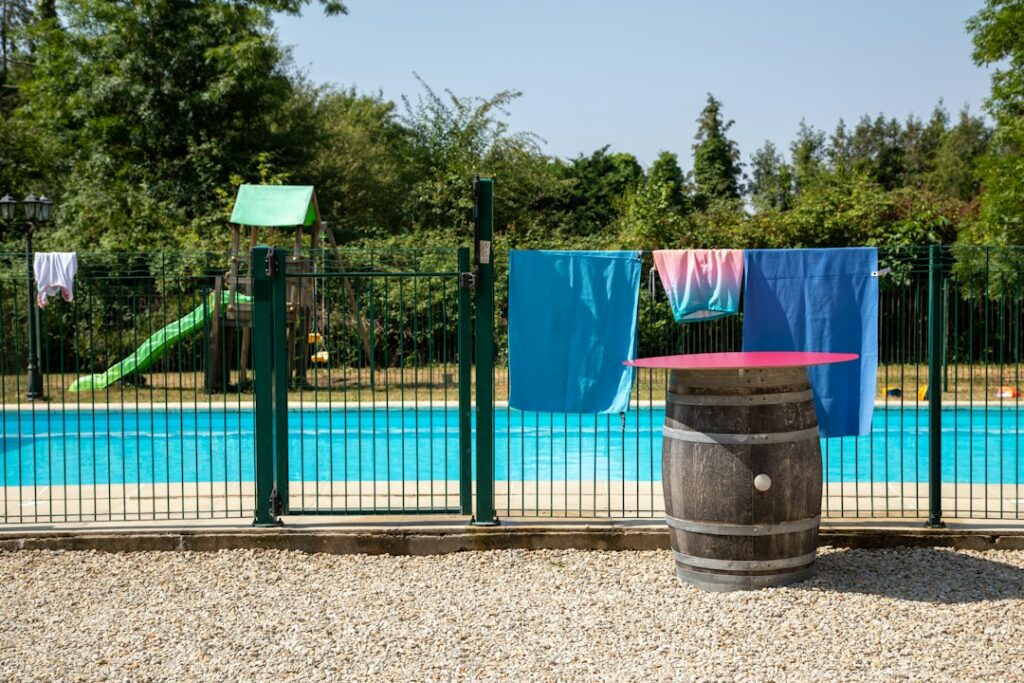
Two inches of rain on a 16 x 32 foot pool cover adds roughly 600 gallons of water, and that water weighs about 5,000 pounds. A pool cover pump is the small submersible unit that sits on the cover and pushes that water off before it stretches the fabric, tears the anchors or turns the cover into a shallow pond. That shallow pond is the part many owners underestimate: a few inches of standing water on a cover is enough to drown a toddler or a small dog.
The fix is simple and inexpensive. Choose a pump sized for your cover and climate, set it at the lowest point, power it only from a GFCI-protected outdoor outlet, and check it after every storm. Pair that with a proper fence and constant supervision, and your closed pool stops being a hazard hiding under a tarp.
- How a Pool Cover Pump Works and Why You Need One
- Drowning Prevention Comes First
- Sizing the Pump: Gallons per Hour and Lift
- Tools and Materials
- Step-by-Step Setup
- Electrical Safety for Cover Pumps
- Winter Care and Maintenance
- Troubleshooting Common Problems
- Cost of a Pool Cover Pump
- When to Call a Licensed Professional
- Frequently Asked Questions
Everything that follows covers sizing, placement, power, maintenance, common problems, costs and when a licensed professional should get involved.
How a Pool Cover Pump Works and Why You Need One
Most models are compact submersible pumps with a flat base, a short discharge port and a built-in float switch or water sensor. You set the pump on the cover, attach a garden hose to the outlet and run that hose to a drain, lawn or street gutter well away from the pool deck. When water collects around the pump, it switches on, empties the low spot and shuts off again once the water drops.
Solid winter covers and solid safety covers need a cover pump the most, because water cannot pass through them. Mesh safety covers let rain drain into the pool, so they rarely need one, although a heavy snowmelt or clogged mesh can still leave puddles. Above ground pool covers are especially vulnerable: they sit on a wall cable instead of ground anchors, and a heavy pool of water can pull the cover into the pool or buckle the top rail. For an above ground pool cover pump, a smaller, lighter unit is usually plenty.
Beyond protecting the cover, the pump protects people. Standing water on a pool cover is a drowning hazard for small children and pets. A child who walks onto a sagging cover can slip into the water pocket, and the fabric makes it very hard to climb back out. Keeping the cover drained is a real safety task, not just maintenance.
Drowning Prevention Comes First
A cover, net or pump is never a substitute for layers of protection. Before worrying about gallons per hour, make sure the basics are in place:
- A 4-sided barrier fence that separates the pool from the house and yard, with a self-closing, self-latching gate that opens outward away from the pool.
- Constant adult supervision whenever children are near the pool area, even in winter when the pool is covered. Assign a specific adult as the watcher.
- Door and gate alarms on any house door that leads directly to the pool area.
- Cleared cover surfaces: no standing water, leaves piled into a pocket, or toys left on top that tempt a child to reach.
Treat the pump as one more layer that removes a hazard, not as a guard. Kids and pets should never be allowed on any pool cover, even a rated safety cover.
Sizing the Pump: Gallons per Hour and Lift
Cover pumps are rated in gallons per hour (GPH). Residential models commonly range from about 300 to 2,500 GPH. A useful rule of thumb:
- Small above ground pools and mild climates: 300 to 800 GPH is usually enough.
- Typical in-ground pools up to about 18 x 36 feet: 800 to 1,500 GPH handles most storms.
- Large pools, heavy rain regions or big snow loads: 1,500 to 2,500 GPH clears water faster between storms.
Remember that the rated flow drops as the hose gets longer and as the water has to climb. If your discharge hose runs 50 feet and rises 2 or 3 feet over a pool wall, expect real output to be noticeably lower than the box number. When in doubt, size up one step rather than down, because a slow pump lets water sit on the cover for hours after heavy rain.
Automatic vs manual
Automatic pumps have a float or sensor that turns the pump on at roughly 1/8 to 1/4 inch of water and off when the area is nearly dry. Manual pumps run as long as they are plugged in, which means someone has to watch them or they can run dry and overheat. For most homeowners, an automatic model is the better choice for all-winter use, because storms rarely arrive when you are home and paying attention.
Tools and Materials
- Submersible pool cover pump (automatic preferred)
- Garden hose, 50 feet or as long as needed to reach a safe discharge spot
- Outdoor-rated extension cord of the correct gauge, only if the pump cord cannot reach, plugged into a GFCI outlet
- Soft broom or leaf rake with a rubber edge for clearing debris
- Optional mesh debris bag or strainer screen that fits around the pump
- Non-contact voltage tester if you need to confirm an outlet is dead before any electrical work by a pro
Step-by-Step Setup
- Find the low spot. After the first rain, look for where water gathers. On most covers it is near the center or slightly toward the deep end.
- Clear the area. Rake leaves and twigs off the cover. Debris clogs the intake and hides water pockets.
- Attach the hose. Thread the garden hose onto the discharge port hand-tight and check that the washer is seated.
- Set the pump. Lower the pump gently onto the low spot. Never walk onto the cover to place it. Use the attached rope or a pool pole to position it from the deck.
- Route the hose. Run the hose off the cover and away from the pool so discharged water does not flow back under the cover or pool toward the house foundation. Keep the hose flat along the deck edge where people will not trip on it.
- Route the cord safely. Keep the cord off walkways, secure it along the fence line or deck edge, and plug it into a GFCI-protected outdoor outlet with a weatherproof in-use cover.
- Test the GFCI. Press the test button on the outlet to confirm it trips, then reset it before plugging in the pump.
- Watch the first cycle. Confirm the pump turns on, moves water and shuts off without running dry.
Electrical Safety for Cover Pumps
Water and electricity sit inches apart on a pool cover, so electrical rules are not optional. Plug cover pumps into GFCI outlets only. A GFCI (ground fault circuit interrupter) cuts power in a fraction of a second if current leaks to ground, which is exactly the failure that can occur with a nicked cord in standing water.
- Never use indoor extension cords, ungrounded adapters or power strips outdoors. If you must use an extension cord, choose an outdoor-rated, grounded cord of adequate gauge and keep the connection off the ground and out of puddles.
- Inspect the pump cord before each season. Replace the pump if the cord is cracked, cut or has exposed conductors. Do not tape and reuse it.
- If you have no outdoor GFCI outlet within reach, have a licensed electrician add one. New outdoor outlets and circuits are a job for a licensed electrician, with permits where required.
- If an outlet ever needs inspection, turn off the breaker and confirm power is off with a non-contact voltage tester before anyone touches the device. Never probe or test live circuits.
Winter Care and Maintenance
Check the cover after every storm and at least weekly during the off-season. A few habits keep the pump working all winter:
- Clean the intake screen whenever leaves or grit build up.
- Watch for freezing. When nights drop well below freezing, water around the pump can freeze and trap it. Many owners pull the pump inside during hard freezes and return it once the ice softens, or they rely on a model rated for cold weather use.
- Drain the hose after cold snaps. A frozen hose blocks discharge and can split.
- Remove snow carefully. Push light snow off the edges with a soft roof rake from the deck. Never step onto the cover to clear it.
- Store the pump dry in spring after rinsing it with clean water.
Troubleshooting Common Problems
Pump runs but does not move water
Check for a kinked hose, a clogged intake or an air lock. Tilt the pump slightly underwater to release trapped air, then set it flat again.
Pump will not start
Confirm the GFCI has not tripped. If it trips repeatedly as soon as the pump is plugged in, stop using the pump: that points to a fault in the cord or motor. Replace the unit rather than bypassing the GFCI.
Water keeps collecting in the same spot
The cover may be sagging from loose anchors or a stretched panel. Tighten the anchor straps on a safety cover or reposition water bags on a winter cover. Persistent sag means the cover may need replacement.
Pump sucks pool water through the cover
If the pump keeps running and the pool level drops, the cover has a hole or tear. The pump is draining the pool itself. Unplug it and patch or replace the cover.
Cost of a Pool Cover Pump
Expect general price ranges rather than a fixed figure. Basic manual pumps for small pools often run roughly $40 to $80. Automatic models with float switches and higher flow usually fall between about $80 and $200. Heavy-duty automatic units rated for larger covers can reach $200 to $300. Add a quality garden hose and, if needed, an outdoor extension cord. Installing a new GFCI outlet by a licensed electrician commonly costs a few hundred dollars depending on distance from the panel and local permit fees. Compared with replacing a torn safety cover, which can cost well over $1,000, a good pump pays for itself quickly.
When to Call a Licensed Professional
Call a pro when the job goes beyond placing a pump and plugging it in:
- Licensed electrician: adding an outdoor GFCI outlet, running a new circuit, or fixing an outlet that keeps tripping. Permits may be required.
- Pool service company: torn or sagging safety covers, loose deck anchors, or water loss you cannot explain.
- Fence contractor: installing or repairing a 4-sided barrier with a self-closing, self-latching gate so the pool area stays secured while it is closed.
Frequently Asked Questions
Do I need a pool cover pump for a mesh safety cover?
Usually not, because rain passes through mesh. You may still need a pump if debris clogs the mesh or snowmelt pools faster than it drains.
Can I leave a cover pump out all winter?
An automatic pump can stay out between storms if it is plugged into a GFCI outlet, but check it weekly and bring it inside during hard freezes so it does not get trapped in ice.
What size pump do I need for an above ground pool?
Most above ground pools do well with about 300 to 800 GPH. Larger pools or areas with heavy storms benefit from a bit more capacity.
Is standing water on a pool cover dangerous?
Yes. A few inches of water on a cover can drown a small child or pet. Keep covers drained, keep the pool fenced on all four sides with a self-closing, self-latching gate, and supervise children constantly.
Why does my GFCI trip when I plug in the pump?
A tripping GFCI usually signals a ground fault in the pump or cord. Stop using the pump and replace it. Never bypass the GFCI.


