Every structure starts at the ground, and choosing the wrong house foundation leads to cracking, settling, moisture intrusion, and repairs that dwarf the original construction cost. The three main foundation types — slab-on-grade, crawl space, and full basement — each suit different climates, soil conditions, and budgets. Understanding the trade-offs helps you make a decision you will not regret 20 years from now.
Slab-on-Grade Foundation
A concrete slab poured directly on graded soil is the simplest and least expensive foundation type. Standard thickness is 4-6 inches of concrete over a 4-inch gravel base, with thickened edges (footings) around the perimeter. Rebar or wire mesh reinforcement prevents cracking from soil movement.
Slabs cost $4-$8 per square foot, making a 1,500-square-foot home’s foundation $6,000-$12,000. Construction takes 1-3 days for the pour plus 7-28 days of curing. Slabs dominate in warm climates like Texas, Florida, and the Southwest where frost lines are shallow and basements are uncommon.
- Pros: Lowest cost, fast construction, no moisture issues from below-grade walls, pest-resistant (no crawl space entry points)
- Cons: No storage or utility space beneath the home, plumbing runs through or under concrete (expensive to repair), not suitable for steep lots, susceptible to cracking in expansive clay soil
Crawl Space Foundation
A crawl space raises the home 18-48 inches above ground level on perimeter walls made of poured concrete or concrete block. This creates an accessible space beneath the floor for plumbing, HVAC ductwork, and electrical runs. Cost ranges from $7-$14 per square foot, or roughly $10,500-$21,000 for a 1,500-square-foot home.
Crawl spaces work well in areas with moderate frost lines, sloped lots, and regions prone to flooding. They allow easy access to utilities for maintenance and repair, something slab owners envy when a pipe bursts. The trade-off is moisture management. Without proper vapor barriers, ventilation, and drainage, crawl spaces breed mold, attract pests, and rot the floor joists above them.
Encapsulated crawl spaces — sealed with a heavy-duty vapor barrier, insulated, and dehumidified — solve most moisture problems but add $5,000-$15,000 to the construction cost.
Full Basement Foundation
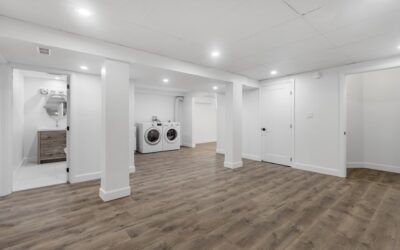
A basement foundation consists of 8-10-foot poured concrete or block walls extending below the frost line, topped by a concrete floor. It effectively adds an entire floor of usable space beneath the home. Costs run $15-$30 per square foot, or $22,500-$45,000 for a 1,500-square-foot footprint.
Basements are standard in the Northeast, Midwest, and other cold-climate regions where footings must extend 3-5 feet below grade anyway to get below the frost line. Since you are already digging that deep, extending to full basement depth adds relatively little incremental cost while providing massive storage, mechanical room space, and potential for finished living area.
- Pros: Adds 800-1,500+ square feet of usable space, ideal for utility equipment (furnace, water heater, laundry), strong tornado and storm protection, increases resale value in markets where basements are expected
- Cons: Highest cost, longest construction timeline (2-4 weeks), vulnerable to water infiltration without proper waterproofing, requires sump pump in high water table areas
Pier and Beam Foundation
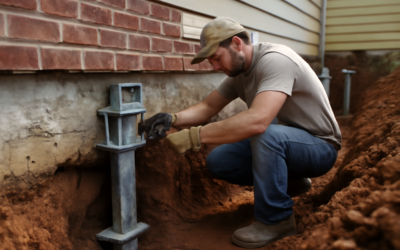
Pier and beam (also called post and beam) foundations support the home on concrete or wood piers spaced 6-8 feet apart, connected by horizontal beams that carry the floor joists. This type is common in coastal areas, flood zones, and older homes built before slab construction became standard.
Modern pier foundations use engineered steel or concrete piers drilled into stable soil or bedrock. Helical piers, a screw-in design, cost $15-$30 per pier installed and work well in soft or unstable soil. A full pier and beam house foundation runs $8,000-$20,000 depending on the number of piers required and soil conditions.
How Soil Type Affects Your Choice
Sandy and gravelly soils drain well and provide stable bearing capacity for any foundation type. Clay soils, particularly expansive clays found across Texas, Colorado, and parts of the Southeast, expand when wet and shrink when dry, creating cyclical pressure that cracks slabs and pushes basement walls inward.
A soil test ($500-$1,500) performed by a geotechnical engineer before construction reveals the soil’s bearing capacity, drainage characteristics, and expansive potential. This report determines the appropriate foundation design and footing specifications. Skipping the soil test to save money is one of the most expensive shortcuts in residential construction.
Foundation Repair Warning Signs
Existing homeowners should watch for signs that their house foundation needs attention. Diagonal cracks radiating from window and door corners, doors that stick or will not latch, uneven floors, and gaps between walls and ceilings all indicate settling or shifting. Hairline cracks in a slab are normal from concrete shrinkage. Cracks wider than 1/4 inch or those growing over time warrant a structural engineer’s evaluation ($300-$500).
Foundation repair costs range from $2,000-$7,000 for minor pier underpinning to $20,000-$40,000+ for major structural correction. Early detection and repair prevents the problem from compounding. A crack that costs $2,000 to fix today could require $15,000 in work if ignored for five years.
Choosing the Right Foundation
Climate, soil, lot slope, budget, and local building codes all factor into the decision. In warm, flat, dry regions, a slab is the practical and affordable choice. In moderate climates with mild slopes, a crawl space provides utility access and flood protection. In cold climates where deep footings are already required, a basement gives you the most value per construction dollar. Consult a local structural engineer or experienced builder who understands your area’s specific soil and climate challenges before finalizing your foundation type.