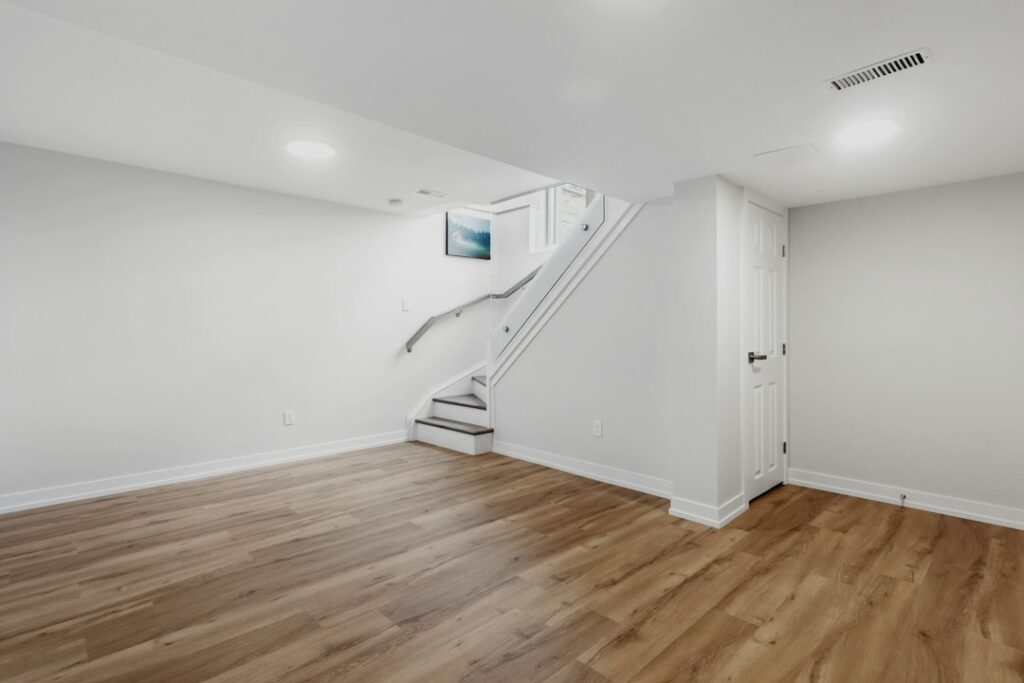
An unfinished basement can get away with a noisy dehumidifier sitting in the middle of the floor and a bucket you empty every morning. Once you add drywall, carpet or luxury vinyl plank and a sofa, that approach falls apart. The right dehumidifier for finished basement space has to keep humidity between 40 and 50 percent, run quietly enough that you can watch a movie, hide out of sight, and drain automatically without a floor drain in sight.
For most finished basements up to about 1,500 square feet, a portable 50- to 70-pint unit with a built-in condensate pump, tucked into a utility room or closet with a louvered door, hits all those goals at a reasonable cost. Larger basements, or homes where humidity is a year-round fight, are better served by a whole-house ducted dehumidifier installed near the furnace and piped to a drain.
- Why a Dehumidifier for Finished Basement Spaces Is Different
- Sizing: How Many Pints Do You Need?
- Portable vs. Whole-House Ducted Units
- Placement: Keeping It Quiet and Hidden
- Draining Without a Floor Drain
- Step-by-Step Setup for a Portable Unit
- Protecting Drywall and Flooring
- Troubleshooting
- Cost Ranges
- When to Call a Pro
- Frequently Asked Questions
This guide explains how to size the unit, how to compare portable and ducted options, where to place it for quiet operation, how to drain it without a floor drain, and how to protect your drywall and flooring from moisture.
Why a Dehumidifier for Finished Basement Spaces Is Different
Basements sit partly below grade, surrounded by soil that stays cool and damp. Warm, humid summer air that finds its way down there cools against the foundation, and its relative humidity climbs. In an unfinished space, that moisture mostly shows up as a musty smell and damp concrete. In a finished space, it has more to damage.
- Drywall absorbs moisture and becomes food for mold, especially near the floor and behind furniture.
- Carpet and pad trap humidity against the slab and can develop odors quickly.
- Wood and laminate flooring swell, cup or gap when humidity swings widely.
- Stored items and furniture pick up musty odors that are hard to remove.
Finished basements also need consistent control, not occasional bursts. A quality unit that runs steadily to hold 45 percent or so protects materials far better than an undersized model that runs constantly and never catches up.
Sizing: How Many Pints Do You Need?
Dehumidifiers are rated by how many pints of water they remove per day under a standard test condition. Current ratings are lower than older ones because the test conditions changed, so compare models using the same standard.
- Up to about 1,000 sq ft, moderately damp: a 35- to 50-pint unit is usually enough.
- 1,000 to 2,000 sq ft, or noticeably damp: step up to a 50- to 70-pint unit.
- Over 2,000 sq ft, very damp, or open to crawlspaces: consider two units or a whole-house model rated around 70 to 130 pints under whole-house test conditions.
Buying a size up usually pays off. A larger unit reaches the setpoint faster, then cycles off, which means less total run time and less noise than a small unit that never stops.
Portable vs. Whole-House Ducted Units
Portable units
Portable dehumidifiers plug into a standard outlet and sit on the floor. They are affordable, easy to replace, and a model with a built-in pump can drain almost anywhere. Downsides include compressor and fan noise in the room where they sit, a larger footprint, and shorter lifespans than dedicated whole-house equipment. A 70-pint unit with a pump is the common choice for a finished basement because it pairs strong capacity with flexible drainage.
Whole-house ducted units
A whole-house dehumidifier is installed in a mechanical room and connected with ducts, either as a standalone system with its own supply and return or tied into the HVAC ductwork. The machine itself is out of sight and hearing, it drains continuously, and it can serve the entire basement or even the whole house. It costs considerably more and typically needs an HVAC contractor to install, but it is the quietest and most durable option for large or very damp spaces.
Placement: Keeping It Quiet and Hidden
Noise is the number one complaint about basement dehumidifiers in living areas. Placement solves most of it.
- Utility room or mechanical closet: the best spot for a portable unit. Use a louvered or undercut door and a transfer grille so air can circulate between the closet and the living area; a unit sealed in a closed closet only dries the closet.
- Central location: air has to reach the machine. A unit in one far corner leaves the opposite end damp, so position it where it can draw air from the main space, or use a small fan to move air toward it.
- Clearance: leave at least 12 inches around the intake and exhaust, and keep it off carpet if possible. A rubber anti-vibration mat reduces hum through the floor.
- Away from bedrooms and media rooms: even quiet units produce a steady tone. Put a door between the unit and anywhere people sleep or watch television.
Many units list noise in decibels; lower numbers are quieter, and low-fan modes help at night. Pair that with a good location and most people stop noticing the machine within a few days.
Draining Without a Floor Drain
Finished basements often have no floor drain, or it is hidden under flooring. You have several options:
- Built-in condensate pump: the simplest solution. The unit pumps water through a thin vinyl hose up to 15 feet or more vertically, so you can route it to a laundry sink, a sump pit or out through a rim joist.
- External condensate pump: for a unit without a built-in pump, a separate small pump collects gravity drainage and lifts it to a sink or discharge point.
- Gravity to a sump pit: if the unit sits higher than the sump, a hose can drain into it by gravity. Secure the hose so it cannot pop out.
- Laundry standpipe or utility sink: clip the hose securely inside the sink or standpipe so it cannot slip out and flood the floor.
Route drain hoses along walls and behind trim where possible, and avoid running them across walkways, which creates a trip hazard and risks kinks. If the discharge must pass outside through a wall, have a pro drill and seal the penetration. In cold climates, protect exterior discharge lines from freezing.
Step-by-Step Setup for a Portable Unit
- Choose the location in a spot with good airflow and clearance, and set the unit on a level surface or anti-vibration pad.
- Plug it directly into a grounded outlet; avoid extension cords, which can overheat with a compressor load. Basement outlets in unfinished areas should be GFCI protected.
- Connect the drain hose to the pump or gravity outlet and route it to the discharge point, securing it at both ends.
- Set the humidity target to 45 to 50 percent. Lower settings waste energy and can over-dry wood flooring.
- Run it for a few days and confirm humidity drops using a separate inexpensive hygrometer, since built-in sensors can drift.
- Clean the filter every few weeks, and check the pump and hose regularly for clogs or leaks.
Protecting Drywall and Flooring
A dehumidifier is only part of the moisture plan. It cannot overcome liquid water. Fix exterior grading, extend downspouts at least 4 to 6 feet from the foundation, repair foundation cracks, and keep the sump pump working before relying on a dehumidifier. Keep drywall at least 1/2 inch above the slab, use moisture-resistant materials near the floor, and choose basement-friendly flooring with a vapor barrier. If you find visible mold covering more than about 10 square feet, have a mold remediation professional handle it rather than simply drying the room.
Troubleshooting
- Humidity stays high: the unit may be undersized, the room too cold for efficient operation, or air cannot reach the machine. Improve airflow or upsize.
- Coils frosting: basements under about 65°F can cause frosting. Choose a model with auto-defrost or warm the space slightly.
- Pump not draining: check for a kinked hose, clogged pump screen or discharge point higher than the pump’s rated lift.
- Musty smell persists: hidden moisture behind drywall or under carpet. Investigate the source and consider professional moisture testing.
- Excessive noise: move the unit onto a pad, away from walls, and behind a closed louvered door.
Cost Ranges
Portable 50- to 70-pint dehumidifiers generally range from a couple hundred dollars to several hundred, with built-in pump models at the higher end. External condensate pumps add a modest amount. Whole-house ducted units typically cost well over a thousand dollars for the equipment, with professional installation often bringing the total into the low-to-mid thousands. Electricity costs depend on run time and efficiency; an efficiency-rated model can meaningfully reduce operating costs over its life.
When to Call a Pro
Bring in an HVAC contractor for a whole-house or ducted unit, since it involves ductwork, drainage and sometimes a dedicated circuit that should be handled by a licensed electrician. A waterproofing contractor is the right call if water seeps through walls or the slab, and a mold remediation specialist should handle significant mold growth. If you want a new outlet installed in a utility closet for the dehumidifier, hire a licensed electrician rather than running an extension cord.
Frequently Asked Questions
What size dehumidifier for finished basement areas is best?
For most finished basements up to about 1,500 square feet, a 50- to 70-pint unit works well. Very large or damp basements may need two units or a whole-house model.
What humidity level should a finished basement be?
Aim for 40 to 50 percent relative humidity. That range discourages mold and dust mites while keeping wood and laminate flooring stable.
Can I put a dehumidifier in a closet?
Yes, if the closet has a louvered door or transfer grille so air can circulate. In a fully closed closet, the unit only dries the closet air.
How do I drain a dehumidifier without a floor drain?
Use a model with a built-in condensate pump or add an external pump, then route the hose to a laundry sink, sump pit or a sealed exterior discharge.
Should a basement dehumidifier run all the time?
It should run as needed to hold the humidity setpoint. In humid summers that may be most of the day; a properly sized unit cycles off once it reaches the target.