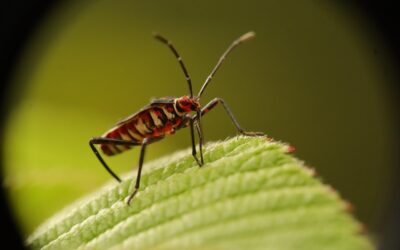
Spotting tiny pale insects along a window sill is unsettling, but it is rarely a confirmed infestation on its own. Baby bed bugs on a window sill would be unusual, because bed bug nymphs prefer to stay close to where people sleep, not on a sunny windowsill across the room. More often the culprit is a look-alike such as a carpet beetle larva, a booklouse, or a young cockroach. Correct identification matters, because the treatment for each is completely different, and bed bugs in particular almost always need professional help to fully eliminate.
Part of our Windows & Doors guide — explore the full guide →
What Baby Bed Bugs Actually Look Like
Bed bug nymphs are the immature stage of the bed bug. A freshly hatched nymph is roughly 1 to 1.5 millimeters, about the size of a pinhead, and nearly translucent or pale straw-colored before it feeds. After a blood meal it turns reddish or rusty brown and becomes visibly swollen. Nymphs molt five times before adulthood, getting darker and larger with each stage. They are flat, oval, and wingless, with six legs and no fuzzy hairs.
The key behavioral clue is location. Bed bugs feed on blood at night and hide within a few feet of where you sleep or sit for long periods: mattress seams, box springs, headboards, the cracks of a couch. They do not naturally congregate on window sills. If the bugs are concentrated at a window, that points strongly toward a different insect.
Common Look-Alikes You Might Actually Be Seeing
Several harmless or different pests are routinely mistaken for baby bed bugs, especially near windows where good light makes small bugs easy to notice.
- Carpet beetle larvae: Tiny, brown, and noticeably fuzzy or bristly, often striped. They love window sills because they feed on dead insects, lint, and natural fibers. Their bristly look is the giveaway; bed bug nymphs are smooth.
- Booklice (psocids): Pale, soft, under 2 millimeters, and drawn to humidity and mold. They appear on damp window sills and bathroom walls and are harmless to people.
- Baby cockroaches (nymphs): Dark with long antennae and able to move fast. Bed bugs move slowly by comparison.
- Spider beetles and gnat larvae: Occasionally turn up at windows and get misidentified.
If the bugs are fuzzy, fast, winged, or clustered only at the window, they are almost certainly not bed bugs.
The Real Signs of a Bed Bug Infestation
Bed bugs leave evidence beyond the bugs themselves. Look for these around your mattress, headboard, and nearby furniture, not the window:
- Small rust-colored or dark spots on sheets and mattress seams (digested blood, like marker dots).
- Tiny pale, empty eggshells about 1 millimeter long and translucent shed skins from molting nymphs.
- A faint, sweet, musty odor in heavy infestations.
- Itchy bites in lines or clusters on skin exposed during sleep, though bites alone are not proof since people react differently.
If you find these signs near your bed, that is a far more reliable indicator than a single bug on a sill.
Why Would Bed Bugs Be Near a Window At All?
Occasionally bed bugs do wander to a window, usually in a severe infestation when prime hiding spots are crowded, or if a bed or seating area sits right under the window. They can also be carried there on clothing or bedding. So the window itself is not impossible, just uncommon. Treat a windowsill sighting as a prompt to inspect your sleeping area carefully rather than as confirmation by itself.
How to Confirm What You Have
Capture a specimen with clear tape or a small jar and examine it under good light or a phone macro lens. Compare the size, color, and whether it has hairs. Smooth, flat, oval, and pinhead-sized leans toward bed bug; fuzzy and striped leans toward carpet beetle. If you are unsure, take the sample to a local extension office or a pest control company; most will identify a specimen for free or a small fee. Accurate ID saves you from spending money treating the wrong problem.
What to Do If They Are Bed Bugs
Act early and do not panic. Bed bugs reproduce quickly but spread slowly, so catching them early makes treatment far easier. Honestly, bed bugs are one of the hardest household pests to eliminate with DIY methods alone, because they hide in cracks, resist many over-the-counter sprays, and a single missed female can restart the infestation.
- Wash and dry all bedding and nearby clothing on high heat; the dryer’s heat kills bugs and eggs.
- Vacuum the mattress, box spring, frame, and surrounding cracks thoroughly, then seal and discard the vacuum bag outside.
- Encase the mattress and box spring in a certified bed bug zipper cover and leave it on for at least a year.
- Reduce clutter near the bed so there are fewer hiding spots.
- Strongly consider a licensed pest control professional. They use heat treatments and targeted insecticides that reliably reach hidden bugs. Heat treatment that brings a room to roughly 120 to 135°F is highly effective.
If They Turn Out to Be Carpet Beetles or Booklice
The fix is far simpler. Vacuum the sills and floors regularly, reduce humidity with better ventilation or a dehumidifier (booklice need moisture), clean up dead insects and lint, and store wool, fur, and silk items in sealed containers. These pests do not bite people and are mostly a nuisance.
Bottom line: a few small bugs on a window sill are far more likely to be carpet beetles or booklice than baby bed bugs, given that bed bugs prefer your bed. Capture one, identify it carefully, and check your sleeping area for the telltale signs. If it is genuinely bed bugs, move fast and lean on a professional, because early, thorough treatment is what ends an infestation for good.