The damage in your closet probably is not the work of the little beetles on the windowsill; it is their offspring. The baby black carpet beetle, more accurately the larval stage of the black carpet beetle, is the form that actually feeds on and destroys natural fibers in your home. While the adults are harmless plant-pollen feeders, the larvae chew through wool, silk, leather, feathers, and stored food, and they hide in dark, undisturbed places where they can feed for months. Learning to identify these larvae and break their lifecycle is the most effective way to protect your rugs, clothing, and pantry.
What the Larvae Look Like
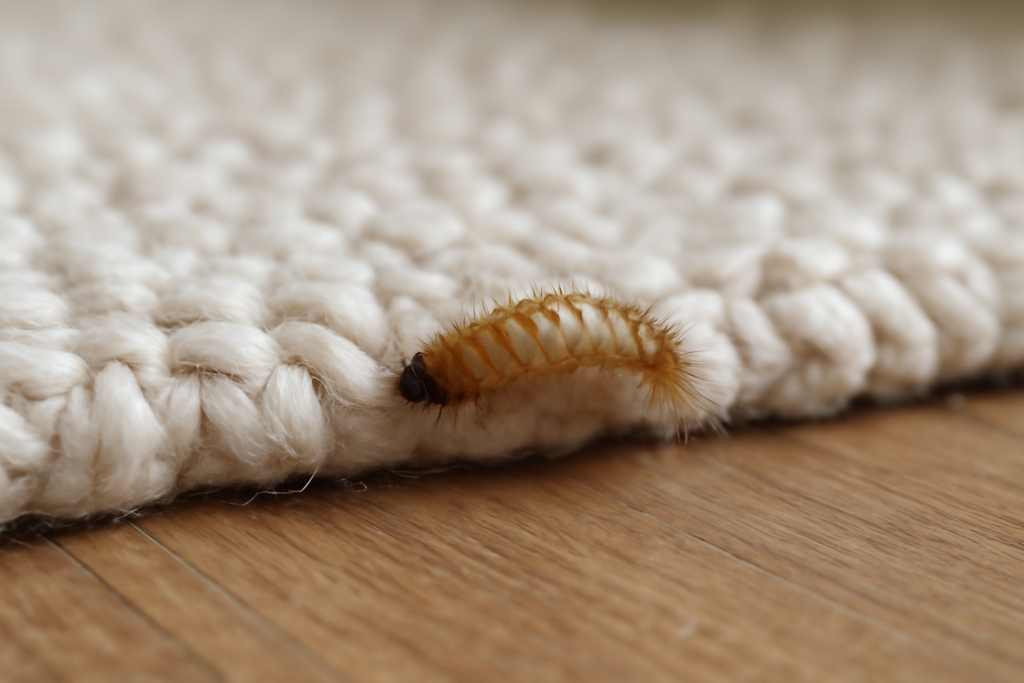
Black carpet beetle larvae look very different from the rounded adult beetle. They are elongated and carrot-shaped, tapering to a tail with a tuft of long bristly hairs. Their color ranges from light golden brown to dark reddish-brown, and their bodies appear segmented and bristly. As they grow they molt, shedding their skins, and those discarded cast skins are often the first clue homeowners find.
- Slender, carrot or cigar shape, usually 1/8 to 1/2 inch long depending on age.
- Tan to dark brown, with visible body segments.
- A tuft of long hairs at the rear end.
- Bristly appearance overall.
- Often found near damaged fabrics, in closets, and along baseboards.
Do not confuse the larvae with the adults, which are small, oval, shiny black beetles. Only the larvae cause fabric damage.
The Lifecycle Behind the Damage
The black carpet beetle goes through complete metamorphosis: egg, larva, pupa, and adult. Females lay eggs near a food source, such as a wool rug, lint, stored woolens, or pantry goods. The eggs hatch into the destructive larvae, which can feed for many months and, in poor conditions, sometimes more than a year before maturing. After the larval stage they pupate and emerge as adults, which live only a few weeks, feed mostly on outdoor pollen, mate, and start the cycle again.
Because the feeding larval stage is so long and the larvae avoid light and disturbance, an infestation can quietly build before you notice the holes, shed skins, and grit-like droppings they leave behind.
What They Damage
These larvae target materials made of keratin and other natural proteins. Common victims include wool and silk rugs, sweaters and woolen clothing, fur and leather items, feather pillows and down, and felt. They also feed on accumulated lint, pet hair, and dead insects, and the black carpet beetle in particular will infest stored grains, cereals, pet food, and spices in the pantry. Synthetic fibers like polyester and nylon are generally safe unless blended with natural fibers or soiled with food and sweat, which can attract feeding.
How to Control Baby Black Carpet Beetles
Control comes down to removing the food source and physically eliminating the larvae through thorough cleaning. Be systematic and patient.
- Locate the infestation. Check closets, rug edges and undersides, stored fabrics, and pantry shelves for larvae, shed skins, and damage.
- Vacuum thoroughly. Clean carpets, rugs on both sides, upholstery, closet floors, cracks, and baseboards, then empty the vacuum into an outdoor bin right away.
- Wash or dry-clean fabrics. Launder washable items in hot water and dry on high heat; dry-clean delicate woolens. Heat kills eggs and larvae.
- Freeze non-washable items for about two weeks in sealed bags to kill all life stages.
- Clear the pantry. Discard infested dry goods and store the rest in sealed, airtight containers.
- Discard severely damaged items that keep feeding the population.
Repeat vacuuming over several weeks to catch newly hatched larvae from any eggs you missed.
Preventing Future Infestations
Keeping larvae out is mostly about removing what they eat. Vacuum regularly, including the hidden, undisturbed spots they favor. Store wool, silk, and fur items clean and sealed in bins or garment bags. Keep pantry goods in airtight containers. Maintain window and door screens to keep adults from flying in, and inspect cut flowers, used furniture, and secondhand clothing before bringing them inside.
Larvae vs Other Household Pests
Black carpet beetle larvae are sometimes mistaken for other small household pests, so a quick comparison helps. Unlike the soft, legless larvae of clothes moths, carpet beetle larvae are firm, bristly, and clearly segmented with a tuft of hairs at the tail. They are not the same as silverfish, which are silvery, fast-moving, and have a flattened body with two long antennae and three tail filaments. They are also not bedbug nymphs, which are flat, reddish, and feed on blood rather than fabric. The carpet beetle larva’s distinctive carrot shape and bristly coat, paired with fabric damage and shed skins, are the giveaways.
Correct identification matters because the treatment differs. Fabric-feeding larvae call for the cleaning, laundering, and storage approach described here, while a blood-feeding or moisture-loving pest needs a different strategy entirely. When you find the bristly larvae near holes in wool or silk, you can be confident you are dealing with carpet beetles.
Do These Larvae Bite?
A common worry is whether black carpet beetle larvae bite people, and the answer is no, they do not bite or feed on humans. However, the tiny bristly hairs that cover the larvae can irritate the skin of sensitive individuals, producing an itchy rash that is sometimes confused with insect bites. These hairs and the shed larval skins can also trigger allergy and asthma symptoms when they build up in household dust. That is one more reason to vacuum thoroughly and often during and after an infestation: removing the larvae also removes the irritating debris they leave behind, which protects anyone in the home who reacts to it.
When to Call a Pest Professional
If you keep finding larvae and fresh damage after weeks of diligent cleaning, or the problem spans several rooms, bring in a licensed pest control professional. They can pinpoint the harborage areas you may be missing and apply targeted treatments safely, which is especially worthwhile for large homes, valuable textiles, or persistent infestations.
The Bottom Line
The baby black carpet beetle, the larval stage, is what actually damages your fabrics and stored goods. Identify the bristly, carrot-shaped larvae, break their lifecycle by removing the food source and cleaning thoroughly, and protect your woolens and pantry with sealed storage. Act early, repeat the cleaning, and call a professional for stubborn cases to keep these pests in check.
Prefer to explore on your own?
See how new flooring looks in your actual room in seconds — free, no signup.
Try the free Floor Studio →