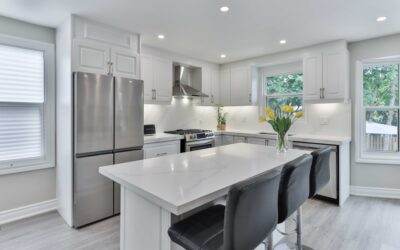
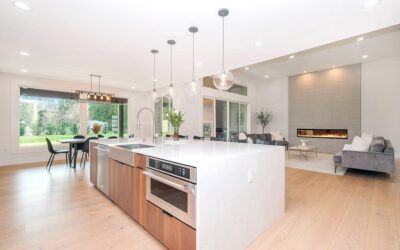
Pairing a backsplash with granite is harder than pairing it with quartz because no two slabs are identical. The veining, the secondary colors, the speckles, and the depth all influence which tile or slab works in the same room. The best backsplash ideas for granite countertops start from one principle: pick a backsplash that balances the granite rather than competes with it. After designing kitchens in both luxury remodels and rental flips, these are the pairings that consistently look intentional rather than busy.
Part of our Countertops guide — explore the full guide →
- Match the Backsplash to the Granite's Activity Level
- Subway Tile Is Still the Safest Pairing
- Picking Up a Secondary Color in the Stone
- Full Slab Backsplash for a Continuous Look
- Honed Marble Against Polished Granite
- Textured Tile for Quiet Granite
- Mosaic Patterns to Avoid
- Grout Color Matters Almost as Much as Tile
- Lighting Changes Everything
- The Final Visual Test
Match the Backsplash to the Granite’s Activity Level
Every granite slab falls somewhere on a spectrum from busy to quiet. Busy stones like Giallo Ornamental, Volga Blue, or Typhoon Bordeaux carry intense pattern, multiple colors, and dramatic veining. Quiet stones like Steel Grey, Caledonia, or Black Pearl read almost like a solid from a few feet away. Match the visual weight of the backsplash to the inverse of the stone’s activity.
A busy granite needs a quiet backsplash to settle the eye. A quiet granite gives you room to use a patterned or textured backsplash without overwhelming the kitchen.
Subway Tile Is Still the Safest Pairing
For a busy granite, a 3×6 white subway tile in matte or glossy finish remains the most reliable backsplash choice. It is timeless, neutral, and inexpensive at $1.50 to $4 per square foot. The clean horizontal lines visually quiet the eye and let the granite carry the kitchen.
If white feels too stark, try a soft greige like Daltile’s Restore Bisque or Bedrosians Cloe in Plaster White. These warmer whites pair beautifully with golden-toned granites like New Venetian Gold and Baltic Brown without going yellow.
Picking Up a Secondary Color in the Stone
Look at the granite slab under the same lighting as your kitchen and identify the second or third color underneath the dominant background. That secondary tone is your backsplash color. A Uba Tuba granite, primarily black-green, often carries a flash of copper or gold within the speckle. Pulling that copper into a brushed bronze tile or a warm copper penny-round backsplash creates harmony without matching.
The mistake to avoid is matching the dominant background color. A black backsplash against black granite looks heavy and reads like a void. The secondary tone is where the design conversation happens.
Full Slab Backsplash for a Continuous Look
If your fabricator has enough remnant from the same slab as your countertops, running a full-height slab backsplash from counter to upper cabinets eliminates the seam between two materials entirely. Cost runs $30 to $80 per square foot installed depending on the stone, but the look is dramatic and modern.
- Works best with quieter granites where pattern continuation looks intentional
- Eliminates grout lines, which is a major win for cleanability
- Requires careful slab-yard selection to ensure the veining flows naturally upward
- Pairs especially well with floating shelves instead of upper cabinets
Honed Marble Against Polished Granite
Mixing finishes is one of the easiest ways to add visual depth. A polished granite countertop with a honed Carrara marble herringbone backsplash creates contrast through finish rather than color. Both materials are natural stone, both stay in the same neutral palette, but the matte versus polished interplay gives the room a layered feel.
Honed marble runs $9 to $18 per square foot. Seal it with Miracle 511 Impregnator before grouting, because honed marble is more porous than its polished version and grout haze sticks easily.
Textured Tile for Quiet Granite
When the granite is calm, the backsplash can carry more interest. Zellige tiles, fluted ceramic, and dimensional 3D wall tiles all add depth to a quiet slab. Bedrosians Cloe and Clé Tile’s standard Zellige run $14 to $25 per square foot. The slight color variation tile to tile gives a handmade look that flatters a smoother countertop.
Fluted tile in particular has surged in 2024 and 2026. The Bedrosians Marin and Daltile Fluted Wall lines run vertical reeded patterns that catch sidelight and elongate the visual height of the kitchen.
Mosaic Patterns to Avoid
Two patterns consistently clash with granite and should be avoided unless the stone is exceptionally calm. First, multi-color glass mosaic blends that mix four or more tones, because they fight every secondary color in the granite. Second, traditional Tuscan listello borders that mix tan, gold, and rust, because they date instantly and date the kitchen with them.
The general test: if you can squint at the backsplash sample held against the slab and the two patterns blur together into noise, the pairing is too busy. A successful match still reads as two distinct materials in conversation.
Grout Color Matters Almost as Much as Tile
For white subway tile, a gray grout like Mapei Pearl Gray or Custom Building Products Delorean Gray gives a soft definition without the harsh contrast of charcoal. White grout on white tile stains within two years of cooking splatter. Gray hides the inevitable wear and looks cleaner long term.
For colored tile, match the grout to the lightest tone in the granite. That keeps the eye moving across the entire wall rather than getting stuck on the grout lines.
Lighting Changes Everything
Under-cabinet lighting fundamentally changes how a backsplash reads. Warm 2700K LEDs warm the appearance of gray and beige tones, which can clash with cool granites like Steel Grey or Bianco Antico. Cooler 3500K to 4000K LEDs flatter cool granites but make warm Tuscan granites look washed out.
If you are not sure, choose 3000K. It is the neutral middle that flatters most stones and most tile finishes.
The Final Visual Test
Always view tile samples against the actual granite slab, in your kitchen, at multiple times of day. Tile that looks perfect under fluorescent showroom light often reads completely differently under household incandescent or daylight from a south-facing window. Bring home a 12×12 inch tile sample for at least 48 hours before committing. The right backsplash ideas for granite countertops are the ones that look balanced at breakfast, at dinner prep, and at the moment the morning sun hits the wall.