Homeowners who install bamboo flooring often hit a wall at the staircase, because the floor planks cannot simply be glued onto the steps and still meet code or look finished. Bamboo stair treads solve that problem with solid, one-piece treads milled with a rounded nosing. Done right, they carry the same color and grain from the floor straight up the stair. Done wrong, they cup, crack at the nose, or clash with the floor next to them. Here is what to know about construction types, hardness, cost, installation, and care.
Part of our Stairs & Stair Flooring guide — explore the full guide →
- What Bamboo Stair Treads Are and How They Are Made
- Hardness and Durability: Strand vs Horizontal vs Vertical
- Matching Treads to Bamboo and Non-Bamboo Floors
- Cost of Bamboo Stair Treads
- Installing Bamboo Stair Treads Step by Step
- Safety, Slip Resistance, and Finish Considerations
- Pros and Cons at a Glance
- Common Mistakes to Avoid
- Cleaning and Caring for Bamboo Treads
What Bamboo Stair Treads Are and How They Are Made
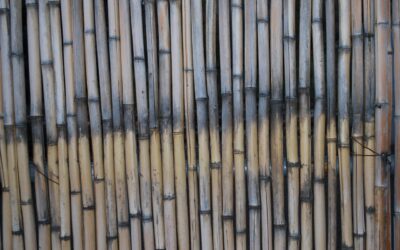
Bamboo is a grass, not a tree, so manufacturers slice the stalks into strips, boil or carbonize them, then press and glue the strips into boards. How those strips are arranged determines the look and strength of the finished tread.
- Horizontal bamboo: Strips laid flat, showing the characteristic “knuckles” or nodes. Classic bamboo look, moderate hardness.
- Vertical bamboo: Strips set on edge, producing a narrow, uniform linear grain. Cleaner, more modern appearance.
- Strand-woven bamboo: Shredded fibers compressed with resin under heavy pressure. Much harder, often with a grain resembling hardwood.
Stair treads are usually sold in standard lengths of 36, 42, 48, and 72 inches, about 11½ to 12 inches deep, and roughly 1 1/16 inches thick. Many suppliers also offer matching risers (about 7½ by 48 inches, around ½ inch thick), landing treads with a nosing on one edge, and flush stair nose pieces for the top step.
Hardness and Durability: Strand vs Horizontal vs Vertical
Hardness matters on stairs because the nosing takes a beating from heels, dropped items, and dragged luggage. Janka ratings vary by manufacturer and by whether the bamboo is carbonized (darkened by heat), which softens it slightly.
| Type | Typical Janka Range | Stair Suitability |
|---|---|---|
| Horizontal, natural | About 1,300 to 1,400 | Fine for light-to-moderate traffic |
| Horizontal or vertical, carbonized | About 1,000 to 1,200 | Dents more easily; best for low traffic |
| Strand-woven | About 3,000 to 5,000 | Excellent for busy family stairs |
For comparison, red oak sits near 1,290 and hard maple near 1,450. Strand-woven bamboo stair treads are two to three times harder than either, which makes them an excellent choice for households with dogs, active kids, or heavy traffic. The trade-off is weight and machining difficulty: strand bamboo dulls saw blades quickly, so budget for a fresh carbide blade with 60 or more teeth.
Carbonized horizontal bamboo, the caramel-colored option, is the softest. It looks warm and beautiful but shows dents and scratches sooner. If you like the caramel tone, look for a carbonized strand-woven product instead.
Matching Treads to Bamboo and Non-Bamboo Floors
If you already have bamboo floors, contact the flooring manufacturer first. Many brands sell factory-matched treads, risers, and stair nose trim in the same colorway and finish. Matching gets harder over time because bamboo darkens or ambers with UV exposure; a floor that has been down for three years may look a shade deeper than brand-new treads. Expect the new treads to catch up in six to twelve months of normal light.
Bamboo treads also work with other floors. Natural or vertical bamboo pairs well with light oak, white-painted risers, and Scandinavian interiors. Dark strand-woven treads in espresso or tiger (a striped strand pattern) pair with gray LVP, polished concrete, or black metal railings. When the floor and treads differ, contrast them clearly. A near-match that is slightly off draws more attention than an obvious, deliberate contrast.
Cost of Bamboo Stair Treads
Bamboo is usually less expensive than oak or maple treads of similar quality, though strand-woven products narrow the gap. Typical 2026 retail ranges:
- Prefinished horizontal or vertical tread, 48 inches: $55 to $110 each
- Prefinished strand-woven tread, 48 inches: $75 to $160 each
- Matching riser, 48 inches: $25 to $55 each
- Landing tread or stair nose: $40 to $120 each
- Professional installation: $75 to $150 per step, more if carpet or old treads need removal
A standard 13-step straight staircase with strand-woven treads and matching risers generally costs $2,500 to $5,500 installed. Demolition of existing carpet and pad is cheap, but replacing old treads cut flush with the stringers, or capping bullnose treads, can add labor time. Unfinished bamboo treads exist but are rare and harder to finish evenly, so most homeowners choose prefinished.
Installing Bamboo Stair Treads Step by Step
You can either replace the existing treads entirely or cap over them. Replacement gives the cleanest result and correct riser heights. Capping, where new treads go over the old ones, is common when the old treads are solid but ugly; you must cut back the existing nosing flush with the riser and account for the added thickness at the top and bottom steps.
- Acclimate the material. Store treads in the room for at least 72 hours at 60 to 80°F and 35 to 55 percent relative humidity.
- Remove carpet, tack strip, and staples. Check stringers for cracks and squeaks; add screws where needed.
- Measure each tread individually. Stairs are rarely square. A stair template tool (around $30 to $60) transfers exact angles.
- Cut treads and risers. Cut from the finished face with a fine-tooth blade and tape the cut line to limit splintering.
- Install risers first, starting at the bottom, using construction adhesive and 18-gauge brad nails.
- Glue and fasten treads. Apply a urethane construction adhesive in a serpentine bead, set the tread, and pin it with 15- or 16-gauge finish nails or trim screws into the stringers. Fill holes with matching putty.
- Seal the joints. A thin bead of color-matched caulk where tread meets skirt board hides small gaps.
Do not rely on nails alone; bamboo moves with humidity, and adhesive stops squeaks and keeps the tread flat. Check that every riser is within 3/8 inch of the others, which the IRC requires, and that treads are at least 10 inches deep with a nosing projection between ¾ and 1¼ inches. If capping changes the top or bottom riser height beyond that tolerance, adjust with a thinner top landing piece or consult a stair contractor.
Safety, Slip Resistance, and Finish Considerations
Prefinished bamboo usually carries an aluminum oxide urethane finish, which is tough but can feel slick in socks. On stairs, that is a real safety issue. Options include clear adhesive anti-slip tape at the nosing, a matte finish product (lower sheen tends to feel grippier), or a runner down the middle for households with young children or older adults.
If you are replacing treads, look closely at the stair structure while it is exposed. Cracked stringers, loose balusters, or a wobbly newel post should be repaired before new treads go on. When stringers are split, sagging, or show rot or insect damage, call a licensed contractor; the stairs carry concentrated loads, and a failure there is dangerous. The same goes for handrails: they must be 34 to 38 inches above the nosing line and able to resist a 200-pound load.
Pros and Cons at a Glance
- Pros: Strand-woven versions are extremely hard; bamboo is rapidly renewable; prices are competitive with oak; matching floor products are widely available; the look ranges from classic to modern.
- Cons: Quality varies widely between manufacturers; low-grade products may use adhesives with higher formaldehyde emissions; carbonized bamboo dents easily; bamboo reacts to humidity swings; refinishing strand bamboo is possible but harder than solid oak.
To avoid low-quality imports, look for products tested to CARB Phase 2 or TSCA Title VI formaldehyde limits and, ideally, FloorScore certification. A reputable supplier will provide Janka data and warranty details specific to stair parts, not just planks.
Common Mistakes to Avoid
Most bamboo tread failures trace back to a handful of avoidable errors. Skipping acclimation is the most common; bamboo shipped from a humid warehouse and installed in a dry, heated home in January will shrink and open gaps at the skirt boards within weeks. Cutting all treads to the same length is another. Stair openings drift out of square by 1/8 to 1/4 inch from bottom to top, so each tread needs its own measurement.
- Using only nails instead of adhesive plus nails, which leads to squeaks.
- Installing flooring planks with a glued-on stair nose instead of solid treads; the joint can loosen and fail.
- Ignoring the added height when capping, which creates an uneven first or last step.
- Mixing treads from different production lots, which can show visible color differences.
Buy one or two extra treads. If one is damaged during installation or years later, having a matching spare from the same lot saves a lot of hassle.
Cleaning and Caring for Bamboo Treads
Sweep or vacuum treads a few times a week with a soft brush attachment; grit ground into the nosing is what dulls the finish first. Damp mop only with a well-wrung microfiber pad and a pH-neutral hardwood cleaner. Never steam mop bamboo; the heat and moisture can swell the fibers and break down adhesive layers.
Keep indoor humidity between 35 and 55 percent year-round with a humidifier in winter and air conditioning or a dehumidifier in summer. That one habit prevents most gapping and cupping complaints. When the finish wears through on the top and bottom steps after years of use, screen and recoat them with a compatible water-based polyurethane rather than sanding down to raw bamboo.
For most homes, strand-woven bamboo stair treads offer the best balance of hardness, looks, and price. Buy from a supplier with matched stair parts, install with adhesive and nails, and keep humidity steady, and your stair will look sharp for decades.