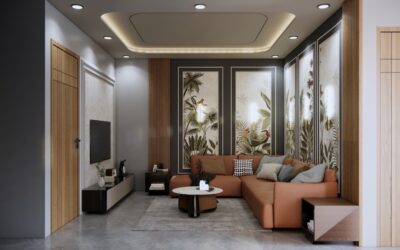
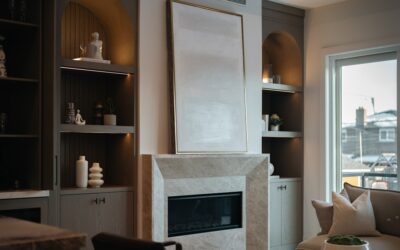
Finished basements have a way of feeling flat — beige walls, limited light, and that subtle “below ground” vibe that’s hard to shake. A well-chosen accent wall fixes more of this than you’d expect. Done right, the right basement accent wall ideas add architectural depth, warm up the temperature feel of the room, and become the anchor that everything else gets styled around.
- What Makes Basements Different
- 1. Stone Veneer (Faux or Real)
- 2. Vertical Wood Slats
- 3. Board and Batten
- 4. Shiplap
- 5. Bold Paint Color
- 6. Brick Veneer
- 7. Picture Frame Molding
- 8. Wallpaper Feature Wall
- 9. Concrete or Plaster Finish
- Where to Place the Accent Wall
- Moisture-Smart Material Choices
- Lighting the Accent Wall
- Bringing It All Together
This guide walks through nine accent wall treatments suited specifically to basements, with realistic costs, moisture considerations, and tips for working with low ceilings and limited natural light.
What Makes Basements Different
Before picking a finish, account for what’s different about a basement compared with above-grade rooms:
- Humidity runs higher year-round — pick moisture-tolerant materials
- Ceilings are typically lower (7–8 feet vs 9 feet upstairs)
- Natural light is scarce — dark finishes can make the room feel cave-like
- Concrete walls behind the studs can wick moisture if the basement isn’t properly waterproofed
- Egress windows often interrupt long wall runs — design around them, not against them
These factors point toward lighter or warm-toned finishes, vertical lines that exaggerate ceiling height, and materials that won’t suffer in 60 percent humidity.
1. Stone Veneer (Faux or Real)
Stone veneer turns a flat wall into a fireplace-level focal point. Lightweight polyurethane faux stone panels install with construction adhesive and a few screws, while real cut-stone veneer requires mortar and is heavier work.
Cost: $400–$1,500 for a 10×8 wall (faux). $1,500–$4,000 (real cut stone).
Best for: Behind a media console, around a fireplace, or as the backdrop for a bar area. Pair with warm LED uplighting at the base for a dramatic effect.
2. Vertical Wood Slats
Floor-to-ceiling vertical wood slats are the most-photographed accent wall treatment of the 2020s. They draw the eye up, which counteracts low basement ceilings, and the warm wood tones offset cool concrete and steel structural elements.
Cost: $300–$900 for a 10-foot wall using prefab Acupanel panels. $200–$500 for DIY using 1×2 oak strips on a black felt backer.
Best for: Modern basement bars, home theaters, and offices.
3. Board and Batten
The traditional alternative to slat walls. Vertical 1×4 strips applied over a painted base wall at 12- to 16-inch intervals, with a horizontal cap rail at chair-rail height or higher. Works in cottage, traditional, and farmhouse-style basements.
Cost: $100–$250 in materials for a 10-foot wall.
Best for: Guest bedrooms, mudroom transitions, casual play areas.
4. Shiplap
Horizontal pine boards with a small gap between each one. Cleaner than board and batten, less polarizing than slat wood, and one of the easier installations on this list. Paint white for a coastal look or stain dark for warmer rustic vibes.
Cost: $150–$300 for a 10×8 wall.
Best for: Bars, family rooms, and basements with farmhouse or coastal styling.
5. Bold Paint Color
The cheapest accent wall option is also one of the most effective. A single wall in a saturated deep tone — forest green, navy, oxblood, charcoal — adds depth and ties the room together without changing the architecture.
Best paint colors for basements specifically:
- Sherwin-Williams Cyberspace (SW 7964) — moody charcoal
- Benjamin Moore Hale Navy (HC-154) — classic deep navy
- Farrow and Ball Studio Green (No. 93) — sophisticated forest
- Sherwin-Williams Urbane Bronze (SW 7048) — warm deep brown
Cost: $40–$80 in materials. A weekend project.
6. Brick Veneer
Thin brick tiles (just the face of a brick, 5/8 inch thick) glue to the wall like tile and grout in place. Creates an industrial loft feel that works especially well for basement bars, gyms, and rec rooms.
Cost: $300–$800 for a 10×8 wall using products from Brickwebb or Old Mill Thin Brick.
Best for: Industrial-style basements, exposed-pipe ceilings, and Edison-bulb lighting setups.
7. Picture Frame Molding
Decorative trim molding applied to a painted wall in rectangular frames. The wall stays one color, but the molding adds dimension and shadow lines that elevate the space significantly. A classic move in traditional basement renovations.
Cost: $80–$200 for a 10-foot wall.
Best for: Formal basement guest suites, libraries, and home offices.
8. Wallpaper Feature Wall
Modern peel-and-stick wallpaper from brands like Chasing Paper, Tempaper, and Spoonflower makes accent walls a Sunday afternoon project. Patterns from subtle geometric to bold maximalist add personality that paint alone can’t match.
Cost: $150–$500 for a 10-foot wall, depending on quality.
Best for: Powder rooms, guest bedrooms, and bar walls where a bold pattern won’t fatigue the eye in long-stay rooms.
9. Concrete or Plaster Finish
Pre-mixed concrete-look plaster (Modern Masters Concrete or Portola Roman Clay) applied to a single wall creates a smooth modern industrial look. Pairs especially well with metal pendant lights, leather seating, and dark hardwood floors.
Cost: $150–$400 for a 10×8 wall.
Best for: Modern basement living rooms, home gyms, and theater rooms.
Where to Place the Accent Wall
The most successful accent walls anchor a specific function:
- Behind the TV — gives the entertainment area visual weight
- Behind the bar — turns the bar into a focal feature
- Behind the bed in a basement guest room
- The wall opposite the stairs — first thing you see when descending
- Behind a built-in desk in a basement office
Avoid putting the accent on a wall with major obstructions — egress windows, utility doors, large air returns. The interrupted line breaks the visual impact.
Moisture-Smart Material Choices
For basements with even minor humidity issues, stick to these moisture-tolerant options:
- Faux stone polyurethane panels (impervious to water)
- Cement-based plaster finishes (tadelakt, marmorino)
- Vinyl peel-and-stick wallpaper (washes clean)
- Stained or sealed wood (avoid raw unfinished pine)
Skip MDF-based products, paper-faced wallpaper, and untreated wood in any basement with a history of dampness, regardless of how watertight the current waterproofing seems.
Lighting the Accent Wall
An accent wall in a basement only shines (literally) with good lighting. A single overhead fixture isn’t enough. Layer the lighting:
- LED strip lighting along the top edge (uplight) for slat or paneled walls
- Wall sconces at 60–66 inch height for symmetry
- Picture lights over framed art on a painted accent wall
- Floor lamps angled toward the wall for stone or brick treatments
Adding $50–$100 in lighting transforms the accent wall from a flat painted surface into the standout feature of the entire basement.
Bringing It All Together
Pick the treatment that suits the basement’s primary use, match the material to the moisture level, and place it on a wall that already commands attention. Among the basement accent wall ideas on this list, the right one for any specific home depends less on trend and more on fit — slat wood in a modern office basement, stone behind a fireplace, board and batten in a guest room. Match the finish to the room and the basement stops feeling like a basement.