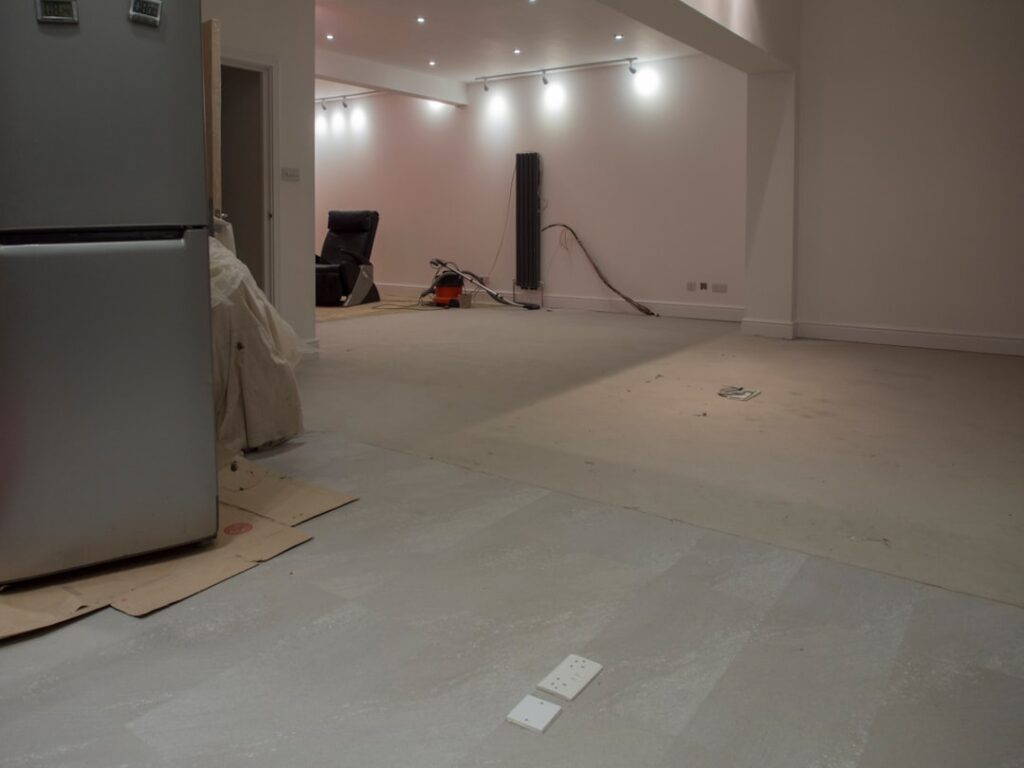
Choosing the right basement floor is fundamentally different from picking flooring for any other room in your home. Basements sit below grade, surrounded by soil that constantly pushes moisture through the concrete slab. Temperature fluctuations, potential flooding, and lower ceilings all create unique challenges that limit your options and demand smarter choices.
The good news is that today’s flooring products have made basement finishing easier and more attractive than ever. From high-performance epoxy coatings to luxury vinyl plank that looks like real hardwood, you have plenty of excellent basement floor ideas to choose from. This guide covers the best options, their costs, moisture considerations, and which basements they work best in.
Moisture: The Number One Basement Flooring Concern
Before exploring specific flooring options, you need to understand and address moisture. Every basement flooring decision starts here.
Where Basement Moisture Comes From
- Hydrostatic pressure: Groundwater pushes moisture up through the concrete slab, especially during wet seasons and in areas with high water tables.
- Vapor transmission: Even without visible water, water vapor constantly migrates through concrete. A slab that looks and feels dry can still transmit enough moisture to destroy flooring.
- Condensation: When warm, humid air contacts the cool concrete slab, condensation forms on or under the flooring.
- Flooding: Whether from plumbing failures, sump pump malfunctions, or heavy rains, basements are the most flood-prone areas in most homes.
Testing for Moisture
Before installing any flooring, test your slab for moisture. The simplest method is the plastic sheet test: tape a 2-foot square of clear plastic sheeting to the bare concrete, seal all edges with tape, and leave it for 48 to 72 hours. If moisture droplets appear under the plastic, your slab has moisture issues that must be addressed before installing flooring.
For more accurate results, use a calcium chloride moisture test or a relative humidity probe test. Most flooring manufacturers specify maximum acceptable moisture levels in their installation guidelines.
Moisture Mitigation Strategies
- Apply a moisture barrier coating (like epoxy moisture barrier or silicate sealer) directly to the concrete before installing flooring.
- Use a dimpled plastic membrane (like Delta-FL or DMX) that creates an air gap between the slab and flooring.
- Ensure gutters, downspouts, and exterior grading direct water away from the foundation.
- Install or maintain a sump pump with a battery backup.
- Run a dehumidifier to keep basement humidity below 60%.
Epoxy Flooring
Epoxy flooring is one of the most practical and durable basement floor ideas available. A high-quality epoxy coating bonds directly to the concrete slab, creating a seamless, waterproof surface that resists stains, chemicals, and impacts.
Why Epoxy Works in Basements
- Completely waterproof once cured, protecting against surface moisture and minor flooding.
- Bonds directly to concrete with no subfloor structure needed.
- Adds zero height, preserving precious headroom in low-ceiling basements.
- Available in solid colors, metallic finishes, flake systems, and custom designs.
- Extremely durable and easy to clean.
Limitations
- The concrete surface must be properly prepared (ground or acid-etched) for the epoxy to bond.
- Cannot be applied over slabs with active moisture issues pushing up from below. The moisture will cause the epoxy to peel and delaminate.
- Can feel hard and cold underfoot without area rugs.
- Professional application is recommended for best results.
Cost
DIY epoxy kits: $2 to $5 per square foot. Professional epoxy installation: $5 to $12 per square foot, depending on the system and design complexity.
Luxury Vinyl Plank (LVP)
LVP flooring has become the most popular basement flooring choice in recent years, and it is easy to see why. Modern luxury vinyl plank delivers stunning hardwood and stone visuals, is 100% waterproof, and installs quickly over concrete with minimal preparation.
Why LVP Works in Basements
- Completely waterproof core (SPC or WPC) that will not swell, warp, or mold when exposed to moisture.
- Click-lock floating installation requires no adhesive and can go directly over concrete (with appropriate underlayment).
- Warm and comfortable underfoot compared to bare concrete or tile.
- Available in hundreds of wood and stone looks.
- DIY-friendly installation that most homeowners can complete in a weekend.
Limitations
- If the basement floods, water can get trapped beneath the floating floor, requiring removal to dry out the slab.
- Requires a reasonably flat subfloor (within 3/16 inch over 10 feet).
- Can look and feel synthetic up close compared to real wood, though quality has improved dramatically.
Cost
Materials: $2.50 to $6.00 per square foot. Professional installation: add $2 to $4 per square foot. DIY installation saves significant money since click-lock LVP is straightforward to install.
Tile Flooring
Porcelain and ceramic tile flooring is a classic basement choice that offers excellent moisture resistance and design versatility. Large-format porcelain tiles in wood-look or concrete-look styles can transform a basement into a polished living space.
Why Tile Works in Basements
- Porcelain tile is virtually impervious to water, making it ideal for basements with moisture concerns.
- Extremely durable and long-lasting. A properly installed tile floor can last 50 years or more.
- Compatible with radiant floor heating, which solves the cold-floor problem basements are known for.
- Available in an enormous range of styles, sizes, and price points.
- Easy to clean and maintain.
Limitations
- Hard and cold underfoot without radiant heat.
- Installation is labor-intensive and typically requires a professional, especially for large-format tiles that need a perfectly flat substrate.
- Grout lines require sealing and periodic maintenance to prevent staining and moisture penetration.
- Concrete slab must be crack-free and structurally sound, as slab movement can crack tile and grout.
Cost
Materials: $1.50 to $8.00 per square foot for porcelain. Professional installation: $5 to $15 per square foot including materials, substrate prep, and grouting.
Carpet Tiles
Carpet tiles (modular carpet squares, typically 18×18 or 24×24 inches) are a practical basement floor idea that offers the warmth and softness of carpet with much better moisture management than traditional broadloom carpet.
Why Carpet Tiles Work in Basements
- Individual tiles can be pulled up to dry or replaced if damaged by moisture or stains.
- Many carpet tiles have waterproof or moisture-resistant backings designed for concrete slab installation.
- Soft and warm underfoot, making basements feel comfortable and inviting.
- Excellent sound absorption, which is ideal for basement media rooms and playrooms.
- Easy DIY installation with peel-and-stick or loose-lay methods.
- Available in a wide range of colors and patterns. You can even mix colors for custom designs.
Limitations
- Not ideal for basements with chronic flooding or standing water issues.
- Can develop mold or mildew if moisture is trapped beneath tiles for extended periods.
- Lower-end carpet tiles can look and feel commercial rather than residential.
- Seams between tiles are more visible than wall-to-wall carpet.
Cost
Materials: $1.50 to $6.00 per square foot. Professional installation: add $1 to $2 per square foot, though most homeowners install carpet tiles themselves.
Stained or Polished Concrete
If your concrete slab is in good condition, staining or polishing it can create a stunning finished floor without adding any new flooring material on top. This approach is gaining popularity in modern, industrial, and contemporary basement designs.
Why Stained Concrete Works in Basements
- No additional flooring material means zero risk of moisture-related flooring failures.
- Adds zero height, maximizing headroom.
- Acid stains create unique, variegated color patterns that look like natural stone or marble.
- Water-based stains offer more uniform, predictable colors in a wider palette.
- Polished concrete creates a glossy, light-reflecting surface that brightens dark basements.
- Extremely durable and low-maintenance.
Limitations
- The existing concrete must be in good condition, free of major cracks, patches, and surface defects.
- Hard and cold underfoot. Area rugs are essential for comfort in living areas.
- Results are somewhat unpredictable with acid stain, as the chemical reaction with concrete varies.
- Requires sealing with a topcoat to protect the stain and prevent dusting.
- Not suitable for slabs with active moisture issues, as moisture can push through and cloud the sealer.
Cost
DIY acid stain kit: $0.50 to $2.00 per square foot. Professional staining: $3 to $8 per square foot. Professional polishing: $3 to $12 per square foot depending on the level of polish and aggregate exposure.
Rubber Flooring
Rubber flooring is an underrated basement floor idea that excels in home gyms, playrooms, utility areas, and workshops. Available in rolls, interlocking tiles, and sheet goods, rubber flooring provides a resilient, shock-absorbing surface that handles moisture like a champion.
Why Rubber Works in Basements
- Naturally water-resistant and unaffected by humidity or temperature changes.
- Shock-absorbing properties protect both your body (great for exercise) and dropped items.
- Excellent sound dampening reduces noise transmission to upper floors.
- Interlocking rubber tiles install in minutes with no adhesive needed.
- Extremely durable and nearly indestructible under normal use.
Limitations
- Limited aesthetic options compared to other flooring types. Rubber is functional more than fashionable.
- New rubber flooring has a strong odor that can take weeks to dissipate in a confined basement space.
- Can be slippery when wet unless you choose a textured surface.
- Not suitable for formal living spaces where appearance is a priority.
Cost
Interlocking tiles: $1.50 to $5.00 per square foot. Rubber rolls: $1.00 to $4.00 per square foot. Professional installation: rarely needed, as rubber tiles and rolls are easy to self-install.
Flooring Options to Avoid in Basements
Not every flooring type works below grade. Here are the ones to skip:
- Solid hardwood: Solid wood absorbs moisture, swells, cups, and warps. It is not rated for below-grade installation by any manufacturer.
- Standard laminate: Most laminate has an HDF or MDF core that swells and disintegrates when exposed to moisture. Only laminate specifically rated as waterproof should be considered, and even then, LVP is usually a better choice.
- Wall-to-wall carpet: Broadloom carpet glued or stretched over a basement slab is a mold and mildew factory. Unlike carpet tiles, it cannot be easily pulled up to dry. If you must have carpet in a basement, use tiles.
- Cork: While attractive, cork is not appropriate for most basements due to its susceptibility to moisture damage and mold growth.
Basement Floor Ideas by Use
Family Room / Living Space
LVP is the top choice for basement living spaces. It delivers the warm wood-look aesthetic, comfortable feel, and waterproof protection that a family room demands. Pair it with a dimpled underlayment membrane for moisture protection.
Home Gym
Rubber interlocking tiles are the clear winner for basement gyms. They absorb impact from dropped weights, provide grip for exercise, and are easy to clean with a damp mop.
Home Theater / Media Room
Carpet tiles provide the sound absorption that a media room needs while offering the moisture-management advantage of being individually replaceable. Dark colors hide spills and stains from movie snacks.
Workshop / Utility Area
Epoxy or polished concrete handles the abuse that a workshop dishes out. Chemical resistance, easy cleanup, and extreme durability make these the logical choice for utility spaces.
Kids’ Playroom
Foam interlocking tiles or rubber flooring with a cushioned surface protect little ones from falls. For a more finished look, LVP with a thick attached pad provides comfort and easy cleanup.
Multi-Use Basement
If your basement serves multiple functions, LVP is the most versatile single-flooring choice. It works for living areas, play spaces, and even light exercise. Add area rugs for warmth in seating areas and rubber mats in the workout zone.
Cost Comparison Summary
Here is a quick comparison of all basement floor ideas, based on a 500-square-foot basement in 2026:
- Stained concrete (DIY): $250 to $1,000
- Rubber tiles (DIY): $750 to $2,500
- Carpet tiles (DIY): $750 to $3,000
- LVP (DIY): $1,250 to $3,000
- Epoxy (professional): $2,500 to $6,000
- Polished concrete (professional): $1,500 to $6,000
- Porcelain tile (professional): $2,500 to $7,500
Final Thoughts
The best basement floor ideas all share one trait: they respect the unique moisture challenges of below-grade environments. Start by testing and addressing moisture, then choose a flooring type that matches your basement’s intended use and your budget. LVP offers the best combination of aesthetics, waterproof protection, and affordability for most finished basements. Epoxy and polished concrete deliver unbeatable durability for utility spaces. And carpet tiles add warmth and sound absorption where comfort is the priority. Whatever you choose, getting the moisture situation under control first ensures your new basement floor will look great and last for years.
Prefer to explore on your own?
See how new flooring looks in your actual room in seconds — free, no signup.
Try the free Floor Studio →