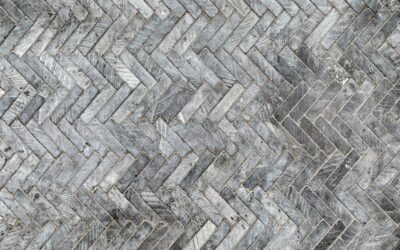
Few tile patterns telegraph “classic bathroom” faster than basketweave. The interlocking arrangement — small rectangles framed by contrasting dots or squares — has been showing up in American bathrooms since the early 1900s, and it still looks right today. A basketweave tile bathroom reads timeless because the pattern has genuinely stood the test of time. It brings visual texture without color, which is exactly why it pairs so well with everything from vintage clawfoot tubs to crisp modern vanities.
Part of our Bathroom Remodeling & Flooring guide — explore the full guide →
What Basketweave Tile Actually Is
Basketweave is a pattern, not a single product. It mimics the over-and-under look of a woven basket using small tiles laid in alternating directions. The most recognizable version sets pairs of rectangular tiles around small square or dot accents, creating that woven illusion across the floor or wall.
Most basketweave comes as mosaic sheets — the small pieces are pre-arranged on a mesh backing, typically in 12×12-inch sheets. That makes a notoriously fiddly pattern far more practical to install, because you set whole sheets instead of placing every tiny tile by hand.
Pattern Variations
Not all basketweave looks the same, and the variation you choose sets the room’s character.
- Classic basketweave: two parallel rectangles framing a contrasting dot — the traditional, period-correct look.
- Single basketweave: one larger rectangle per unit with corner accents, cleaner and a touch more modern.
- Double and triple basketweave: two or three stacked rectangles per unit, scaling the pattern up for larger floors.
- Mini basketweave: tiny tiles that create a dense, intricate texture, popular in vintage-inspired powder rooms.
Larger weaves suit bigger floors and read more contemporary; mini weaves lean vintage and work beautifully in small spaces where the busy texture becomes a feature.
Material Choices
Basketweave shows up in a range of materials, each with its own price and upkeep profile.
Marble
Carrara and Calacatta marble basketweave is the showroom favorite — soft veining, cool elegance, and serious heritage credibility. Expect $10 to $25 per square foot, and plan to seal it, since marble stains and etches from acidic products.
Porcelain and ceramic
Porcelain basketweave copies the marble look at $4 to $10 per square foot with none of the sealing chores. For a family bathroom, it is usually the more sensible choice. Ceramic versions cost even less and suit budget-conscious projects.
Natural stone blends
Travertine, slate, and pebble-and-marble blends bring more rustic texture for spa-style and farmhouse bathrooms, generally landing in the $8 to $18 range.
Where to Use It in the Bathroom
Basketweave earns its keep as a floor, especially in marble or porcelain mosaic, where the small tiles and abundant grout lines add slip resistance underfoot. A floor of basketweave anchors the room and instantly signals classic style.
It also shines as an accent — a shower floor, a wainscot band running around the walls, a niche inside the shower, or a strip framing a plain field tile. Using it as an accent rather than wall-to-wall keeps the busy pattern from overwhelming a small bathroom while still delivering the period charm.
Grout Color and Why It Matters
Grout makes or breaks a basketweave. Because the pattern relies on lots of small tiles, the grout lines are part of the design, not just filler. A contrasting grout — charcoal against white marble, for instance — outlines every tile and emphasizes the weave dramatically. A matching grout lets the pattern blur into a softer, subtler texture.
For floors, a mid-gray grout is the practical middle ground: it shows the pattern, hides dirt, and stays cleaner-looking than bright white. Whatever color you pick, test it against a sample first, because grout always dries lighter than it appears when wet.
Installation Tips
Mosaic sheets simplify the work, but a few details separate a clean job from a sloppy one.
- Dry-lay several sheets before you set anything, lining up the pattern so the weave flows continuously across seams.
- Use a white thinset under marble and light stone, since gray thinset can ghost through translucent tiles.
- Back-butter natural stone for full coverage, which prevents hollow spots that crack later.
- Keep grout lines between sheets identical to the spacing within each sheet, or the seams will show.
- Seal marble and travertine before grouting so the grout does not stain the porous stone.
If you are tiling a shower floor, confirm the mosaic is rated for floors and slopes properly to the drain. The many grout joints in basketweave provide good traction but also more places for water to sit if the slope is wrong.
Care and Maintenance
The upkeep depends entirely on the material. Porcelain basketweave needs nothing more than routine cleaning. Marble and natural stone need a penetrating sealer at installation and a refresh every year or so, plus pH-neutral cleaners — never vinegar or acidic bathroom sprays, which etch the surface. Keep grout sealed on floors to fend off staining, or use epoxy grout up front to avoid the chore entirely.
Pairing Basketweave With Other Tile
Basketweave rarely covers an entire bathroom on its own — it works best paired with a calmer field tile that lets the pattern breathe. The classic combination sets a basketweave floor against plain white subway walls, so the busy floor and the simple walls balance each other. Run the basketweave underfoot and keep the walls quiet, and the room reads sophisticated rather than chaotic.
When mixing tiles, keep the color story tight. A marble basketweave floor pairs naturally with marble or marble-look subway, while a porcelain version coordinates with matching porcelain field tile. If you want the basketweave as a wall accent instead, set a band of it at chair-rail height or inside a shower niche, framed by larger, simpler tile that contains the pattern and gives the eye a place to rest.
Is Basketweave Right for Your Bathroom
If you want a floor or accent that looks intentional and ages gracefully, a basketweave tile bathroom is hard to beat. The pattern flatters traditional and transitional spaces, plays well with both warm and cool palettes, and offers genuine slip resistance from all those grout lines. Choose porcelain for a low-maintenance family bath or marble for a statement powder room, pick your grout deliberately, and the result will look as fresh in twenty years as it does the day it goes in.
Prefer to explore on your own?
See how new flooring looks in your actual room in seconds — free, no signup.
Try the free Floor Studio →