A bathroom closet always seems to fill up faster than any other space in the house, crammed with towels, half-used shampoo bottles, and that backstock of toilet paper. Smart bathroom closet storage isn’t about owning less; it’s about using vertical space, dividing zones, and adding organizers that turn one deep, messy shelf into a system you can actually find things in. With the right layout, even a narrow linen closet can hold twice what it does now while looking tidy enough to leave the door open.
Part of our Bathroom Remodeling & Flooring guide — explore the full guide →
- Start by Measuring and Mapping Zones
- Add Adjustable Shelving
- Use Bins and Baskets to Corral Small Items
- Exploit the Back of the Door
- Maximize Vertical and Dead Space
- Fold and Store Towels the Smart Way
- Stock Backup Supplies Without Overflow
- Common Mistakes That Waste Space
- Budget-Friendly Upgrades That Make a Difference
- Maintain the System
Start by Measuring and Mapping Zones
Before buying a single bin, measure your closet’s width, depth, and the gap between each shelf. Most builder-grade linen closets have shelves spaced 12 to 16 inches apart, which wastes vertical room. Sketch out zones: towels on the most accessible shelf at chest height, daily toiletries within easy reach, and bulk backstock up high or down low. Grouping like items means you stop digging through everything to find a spare bar of soap.
Add Adjustable Shelving
The single biggest upgrade is replacing or supplementing fixed shelves with adjustable ones. A track-and-bracket system from ClosetMaid or an Elfa kit lets you set shelf heights to match what you store, so a stack of folded towels gets 14 inches while a row of spray bottles only needs 9. Adding one or two extra shelves to a tall closet can increase usable storage by 30 to 40 percent.
- Wire shelving: cheap, ventilated, good for towels; items can tip, so add a liner.
- Solid laminate or wood: sturdier and cleaner-looking, ideal for bins.
- Adjustable brackets: reconfigure as your needs change over time.
Use Bins and Baskets to Corral Small Items
Loose toiletries are what make a closet look chaotic. Clear plastic bins or woven baskets group small items by category, travel-size bottles in one, first-aid supplies in another, hair tools in a third. Clear containers let you see contents at a glance; labeled opaque bins look more polished. Choose bins that match your shelf depth so nothing gets lost in the back. Pull-out bins on a deep shelf work like drawers, letting you reach items at the rear without unloading the front.
Exploit the Back of the Door
The inside of the closet door is the most wasted real estate in any bathroom. An over-the-door organizer with clear pockets holds dozens of small items, hair brushes, sunscreen, nail kits, that would otherwise clutter a shelf. For a sturdier setup, mount a slim wire rack or adhesive baskets directly to the door for cleaning supplies or a hair dryer. A $15 over-the-door rack can effectively add a full shelf of storage.
Maximize Vertical and Dead Space
Look up and look down. The space above the top shelf often has 18 inches of unused height, perfect for stacking labeled bins of seasonal or rarely used items. Down low, a two-tier sliding drawer or a set of stackable bins keeps the floor of the closet from becoming a dumping ground. Tension rods mounted vertically between shelves create dividers that keep stacked towels from toppling, and a single horizontal tension rod can hang spray bottles by their trigger handles.
Fold and Store Towels the Smart Way
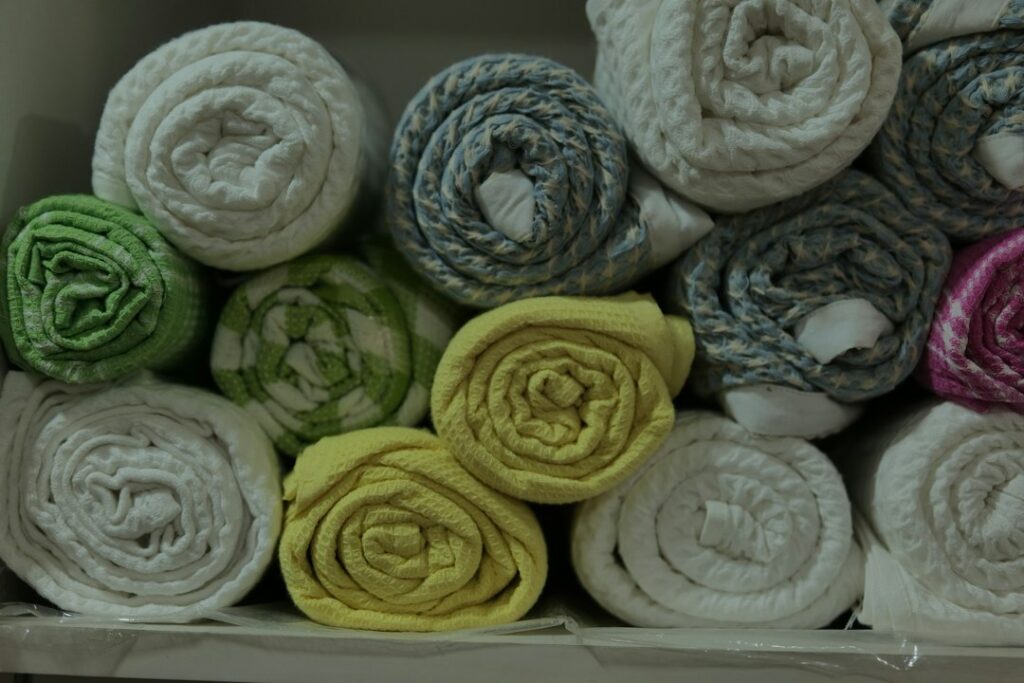
Towels eat shelf space fast. Folding them in thirds lengthwise and then rolling them, spa-style, fits more into the same footprint and lets you pull one without collapsing the stack. Reserve one shelf strictly for towels and keep the count realistic, two or three sets per person is plenty. Store guest towels separately in a labeled bin so the everyday stack stays neat. File-folding washcloths upright in a small bin, the way you’d file papers, makes every one visible.
Stock Backup Supplies Without Overflow
Bulk buying saves money, but a wall of paper towels defeats the purpose of an organized closet. Dedicate the highest or lowest shelf to backstock and cap it at what fits. A slim rolling cart tucked beside or inside the closet holds extra toilet paper and cleaning supplies while staying mobile. The goal is a clear visual line between what you use weekly and what you’re holding in reserve, so you always know when it’s time to restock.
Common Mistakes That Waste Space
Even well-intentioned organizing efforts can backfire. The most frequent error is buying storage products before measuring, which leaves you with bins that don’t fit the shelf depth or stack awkwardly. Another is stacking items so high they topple the moment you pull one out from the bottom. People also tend to store rarely used items at eye level while burying daily essentials in hard-to-reach corners, exactly backward from how a closet should function.
Cramming a closet to the brim is its own trap. When every square inch is packed, you can’t see what you have and end up rebuying duplicates. Leaving 15 to 20 percent of the space open keeps things visible and gives you room to put items back without a fight. Resist the urge to use the closet as a catch-all for items that belong elsewhere, like cleaning supplies that should live under the sink.
Budget-Friendly Upgrades That Make a Difference
You don’t need a custom closet system to transform the space. Several low-cost additions punch well above their price:
- Tension rods ($3 to $8) as shelf dividers or to hang spray bottles by the trigger
- Adhesive wall hooks for hanging robes, loofahs, or a small basket
- Shelf risers that double the usable height of a single shelf for small bottles
- Lazy Susans for deep corner shelves so nothing gets lost in the back
- Drawer organizers repurposed as shelf dividers for folded items
A complete closet overhaul using these items often costs under $60 and takes a single afternoon, no contractor required.
Maintain the System
Any organization scheme only works if you keep it up. Do a quick five-minute reset once a month: toss expired products, refill depleted bins, and return strays to their zones. Twice a year, pull everything out, wipe the shelves, and reassess whether your zones still match how you actually use the space. With adjustable shelving, the right bins, and a door organizer doing the heavy lifting, good bathroom closet storage stays functional for years and saves you from buying duplicates of things you already own.