The bathroom countertop is a defining design element that sets the tone for the entire space. Whether you are building a spa-like primary bathroom, updating a hall bath, or renovating a powder room, the countertop material you choose affects aesthetics, durability, maintenance, and your budget. From luxurious marble to practical quartz to unexpected materials like concrete and wood, the options for bathroom countertop ideas in 2026 are broader than ever.
- Quartz Countertops — Best All-Around Choice
- Marble Countertops — Luxury Classic
- Concrete Countertops — Industrial Modern
- Wood Countertops — Warm Natural Accent
- Solid Surface Countertops
- Glass Countertops
- Tile Countertops
- Bathroom Countertop Material Comparison
- Vanity Styles and Configurations
- Integrated Sink Options
- Budget-Friendly Bathroom Countertop Ideas
- Frequently Asked Questions
This guide covers the most popular bathroom countertop materials, their pros and cons, cost ranges, vanity configurations, and budget-friendly alternatives that deliver high-end looks without the premium price tag.
Quartz Countertops — Best All-Around Choice
Quartz countertops are the most popular bathroom countertop material in 2026, and for good reason. Engineered quartz combines crushed natural quartz (93%) with resin binders and pigments to create a surface that is non-porous, stain-resistant, scratch-resistant, and available in virtually any color or pattern — including remarkably realistic marble and granite looks.
Why quartz dominates bathrooms: Bathrooms are humid environments with constant water exposure, soap splashes, and cosmetic products. Quartz handles all of these without staining, etching, or requiring sealing. Unlike natural stone, quartz never needs periodic maintenance — just wipe it down with soap and water.
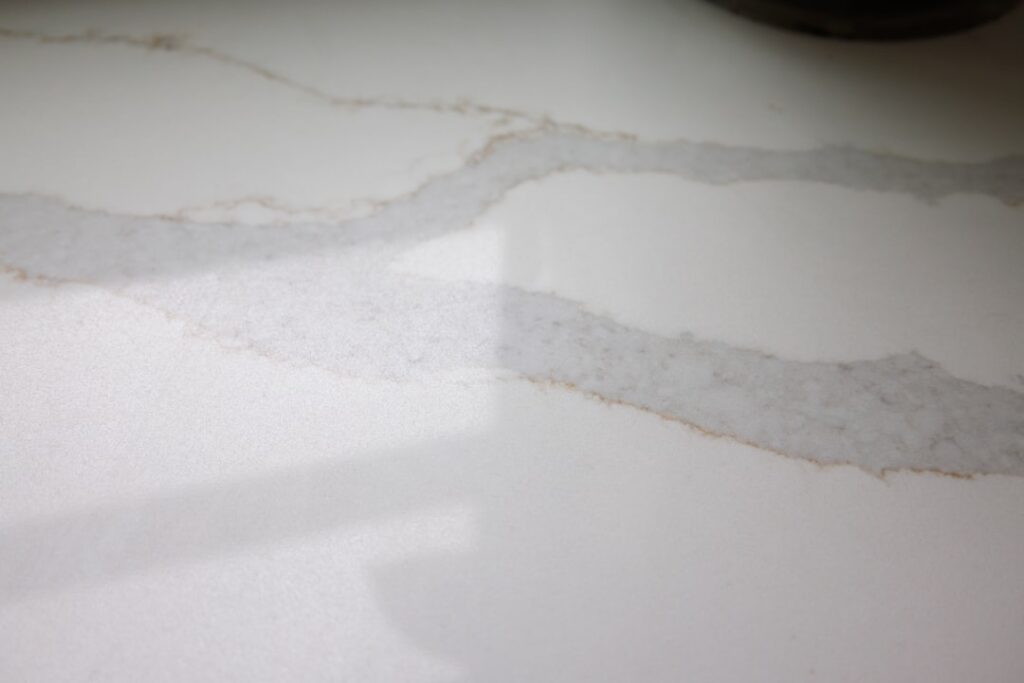
Popular quartz looks for bathrooms: Calacatta-look quartz (white with bold gray veining) is the most requested bathroom countertop design in 2026. Carrara-look (white with subtle gray veining), solid white, and warm-toned quartz with creamy beige veining are also popular. Brands like Cambria, Caesarstone, Silestone, and MSI Q all offer extensive bathroom-appropriate collections.
Cost: $50 to $120 per square foot installed, depending on brand, color, and edge profile. A typical 25-square-foot bathroom vanity countertop costs $1,250 to $3,000 installed.
Marble Countertops — Luxury Classic
Marble is the quintessential luxury bathroom material. A genuine marble vanity countertop brings a level of elegance and prestige that no engineered material can fully replicate. Carrara, Calacatta, and Statuario marble remain the most coveted varieties, with their distinctive white backgrounds and gray or gold veining patterns.
The reality of marble in bathrooms: Marble is softer than quartz and granite (Mohs hardness 3 to 4 vs 7 for quartz), which means it is vulnerable to scratching and etching from acidic products. Toothpaste, face wash, and many cosmetics are mildly acidic and will dull polished marble over time. Marble is also porous and must be sealed annually to prevent staining.
When marble makes sense: Marble is ideal for powder rooms and guest bathrooms that see light daily use. In a primary bathroom with heavy daily traffic, marble requires more maintenance commitment. Many homeowners choose marble specifically because they appreciate the patina it develops over time — the gradual softening and character marks that tell the story of use.
Cost: $75 to $200+ per square foot installed for premium varieties. Carrara marble (the most accessible grade) starts around $75 per square foot, while Calacatta Gold can exceed $200 per square foot.
Concrete Countertops — Industrial Modern
Concrete countertops are custom-poured and hand-finished, giving each piece a unique, artisanal quality. In bathroom applications, concrete delivers an industrial-modern aesthetic that pairs beautifully with exposed plumbing, matte black fixtures, and minimalist vanity designs.
Design flexibility: Concrete can be tinted any color, from charcoal to white to terracotta. It can incorporate integrated sinks, custom drain slopes, and embedded elements like stones or glass. The surface can be finished smooth and polished or left with a raw, textured appearance. This level of customization makes concrete popular for designers creating one-of-a-kind bathrooms.
Practical considerations: Concrete is porous and requires sealing every 1 to 3 years. Even sealed, it can develop hairline cracks over time — though many homeowners consider these part of the material’s character. Concrete is heavy (approximately 18 lbs per square foot at 1.5 inches thick), so the vanity cabinet must be built to support the weight.
Cost: $65 to $135 per square foot for custom-poured and installed concrete countertops. Precast concrete vanity tops from companies like Native Trails start around $500 to $1,500 for standard sizes.
Wood Countertops — Warm Natural Accent
A wood countertop in a bathroom creates warmth, texture, and visual contrast that hard surfaces cannot match. Butcher block, live-edge slabs, and reclaimed wood tops are all viable options for the right bathroom application.
Best wood species for bathrooms: Teak is the gold standard for bathroom wood countertops because of its natural oil content and water resistance. Walnut, white oak, and mahogany also perform well when properly sealed. Avoid soft woods like pine and poplar, which are too vulnerable to moisture damage.
Protection is critical: Wood countertops in bathrooms require a marine-grade or waterproof finish. Marine spar varnish, epoxy resin coatings, and Rubio Monocoat hardwax oil are the most effective sealers for wet environments. The finish must be maintained — expect to recoat every 1 to 2 years depending on use.
Best applications: Wood countertops work best for vessel sink installations where the countertop does not have a sink cutout (reducing water exposure). They also shine in powder rooms where moisture exposure is minimal. For primary bathrooms with heavy daily use, wood requires significant maintenance commitment.
Cost: $40 to $100 per square foot installed. Teak runs higher ($80 to $150+), while butcher block in walnut or white oak is more accessible at $40 to $80 per square foot.
Solid Surface Countertops
Solid surface materials like Corian, Avonite, and Staron are made from acrylic or polyester resins combined with mineral fillers. They offer seamless, non-porous surfaces that resist moisture and bacteria — qualities that make them particularly well-suited for bathrooms.
Key advantage: Solid surface countertops can be fabricated with integrated sinks, backsplashes, and edge details in a single seamless piece. No joints means no places for water to seep or mold to grow. This seamless construction is a significant hygiene and maintenance advantage in bathrooms.
Appearance: Solid surface materials come in hundreds of colors and patterns, including stone and quartz looks. They lack the depth and visual complexity of natural stone or premium quartz, but they have a clean, uniform appearance that suits modern and transitional bathroom designs.
Maintenance: Minor scratches and scuffs can be buffed out with fine sandpaper — a unique advantage over quartz and stone, which cannot be repaired without professional help. Solid surface is non-porous and never needs sealing.
Cost: $40 to $80 per square foot installed, making it a mid-range option between laminate and quartz.
Glass Countertops
Glass bathroom countertops are a niche but striking design choice. Tempered or recycled glass slabs, typically 3/4 inch to 1 inch thick, create a translucent or opaque surface that can be backlit for dramatic effect.
Types: Clear tempered glass allows the vanity cabinet or wall behind to show through. Frosted glass provides privacy while maintaining a light, airy feel. Recycled glass slabs incorporate fragments of colored glass in a resin or cement matrix for a terrazzo-like appearance. Back-painted glass offers solid colors with a high-gloss finish.
Practical reality: Glass countertops are non-porous, hygienic, and heat-resistant. However, they show water spots, fingerprints, and toothpaste splashes more than any other material. If you choose glass, expect to wipe it down after every use to maintain its clean appearance. Tempered glass is strong but can chip at the edges if struck sharply.
Cost: $50 to $125 per square foot installed. Custom shapes, edge work, and backlighting add to the cost.
Tile Countertops
Tile countertops offer the widest design flexibility of any material. Ceramic, porcelain, glass mosaic, and natural stone tiles can create patterns, colors, and textures that no slab material can match.
Current trends: Zellige tiles (handmade Moroccan tiles with slightly irregular surfaces) are very popular for bathroom countertops in 2026. Penny round mosaics, hexagonal tiles, and large-format porcelain tiles are also trending. Subway tile countertops have a classic, timeless appeal for traditional bathrooms.
Grout is the drawback: Grout lines are the biggest concern with tile countertops. Grout is porous and stains easily in bathrooms where cosmetics, hair dye, and colored products are common. Epoxy grout is more stain-resistant than cement grout but is harder to install. Minimizing grout lines with larger tiles or using dark grout colors reduces maintenance issues.
Cost: $10 to $60 per square foot installed, depending on the tile selected. Tile is often the most affordable countertop option for DIY installations.
Bathroom Countertop Material Comparison
| Material | Cost (per sq ft installed) | Water Resistance | Maintenance | Durability | Best For |
|---|---|---|---|---|---|
| Quartz | $50 – $120 | Excellent | Very low | Very high | Primary bathrooms, any style |
| Marble | $75 – $200+ | Good (needs sealing) | High | Moderate | Powder rooms, luxury baths |
| Concrete | $65 – $135 | Good (needs sealing) | Moderate | High | Modern, industrial designs |
| Wood | $40 – $150 | Fair (needs finish) | High | Moderate | Powder rooms, vessel sinks |
| Solid surface | $40 – $80 | Excellent | Low | Good | Family baths, seamless sinks |
| Glass | $50 – $125 | Excellent | Moderate (water spots) | Good | Modern, statement pieces |
| Tile | $10 – $60 | Good (grout is weak point) | Moderate | Good | Budget, custom patterns |
Vanity Styles and Configurations
The countertop material you choose should complement your vanity style. Here are the most popular configurations for 2026.
Single vanity: The standard choice for guest bathrooms, powder rooms, and smaller primary bathrooms. A single vanity with a 24-inch to 36-inch countertop costs significantly less and works well in spaces under 50 square feet. Quartz and solid surface are the most practical materials for single vanities.
Double vanity: Essential for shared primary bathrooms. A 60-inch to 72-inch countertop with two sinks provides personal space for each user. Double vanities are where countertop material choice matters most because the larger surface area is more visually dominant. Quartz and marble shine in double vanity applications.
Floating vanity: Wall-mounted vanities that “float” above the floor create a modern, airy aesthetic and make the bathroom feel larger. Floating vanity countertops should be lightweight — avoid heavy materials like concrete or thick marble slabs unless the wall structure can support the cantilever load. Quartz, solid surface, and wood are ideal for floating vanity applications.
Furniture-style vanity: Repurposed dressers, tables, or custom furniture pieces used as vanity bases. These pair beautifully with vessel sinks and natural countertop materials like wood, marble, or concrete. The countertop is often the visual centerpiece since the vanity base provides its own design interest.
Integrated Sink Options
An integrated sink — where the sink and countertop are fabricated as one seamless piece — eliminates the gap between the sink rim and the countertop where grime collects. This creates a cleaner look and easier maintenance.
Quartz integrated sinks: Available from brands like Silestone and some custom fabricators. The sink bowl is carved from the same quartz slab as the countertop, creating a seamless, easy-to-clean unit. These are premium products that cost 30% to 50% more than a standard countertop with a drop-in sink.
Solid surface integrated sinks: Corian and other solid surface brands have offered integrated sinks for decades. This is where solid surface material truly excels — the seamless bowl-to-countertop transition is smooth, elegant, and completely waterproof. Multiple bowl shapes and sizes are available.
Concrete integrated sinks: Custom-poured concrete countertops can incorporate integral sink bowls of any shape. Slot drains, trough sinks, and gently sloped surfaces are all possible. Concrete integrated sinks are true custom pieces and priced accordingly.
Budget-Friendly Bathroom Countertop Ideas
A beautiful bathroom countertop does not require a luxury budget. Here are practical alternatives that deliver style without breaking the bank.
Cultured marble ($20 to $50 per sq ft installed): This engineered material combines crusite marble dust with polyester resin to create a solid surface with a marble-like appearance. Cultured marble vanity tops with integrated sinks are available at home improvement stores for $150 to $400 for standard sizes. The look is not as refined as real marble, but the price and zero-maintenance appeal are hard to beat.
Laminate ($10 to $30 per sq ft installed): Modern laminate countertops with stone and quartz patterns have improved dramatically. Brands like Formica and Wilsonart offer designs that are surprisingly realistic at a fraction of the cost. Laminate is waterproof at the surface, though edges must be sealed to prevent swelling.
Butcher block from a big-box store ($25 to $50 per sq ft): Pre-made butcher block countertops from Home Depot or IKEA can be cut to size and sealed with marine varnish for an attractive wood countertop at a DIY-friendly price. A 25-inch by 48-inch walnut butcher block top costs $100 to $250.
Large-format porcelain tile ($15 to $40 per sq ft installed): A single large porcelain tile (24″ x 48″ or larger) set on a plywood substrate creates a slab-like appearance with minimal grout. Choose a marble-look or stone-look porcelain for a high-end appearance at a mid-range price.
Frequently Asked Questions
What is the best countertop material for a bathroom?
Quartz is the best all-around bathroom countertop material for most homeowners. It is non-porous (no sealing required), resistant to water, stains, and scratches, available in hundreds of colors and patterns, and requires virtually no maintenance. For luxury applications, marble remains the aspirational choice. For budget projects, cultured marble or solid surface offer the best value.
Is marble a good choice for a bathroom countertop?
Marble is a beautiful but maintenance-intensive choice. It must be sealed annually, is vulnerable to etching from acidic products (toothpaste, face wash, cosmetics), and will develop a patina over time. Marble works best in powder rooms and guest bathrooms with light use. If you want the marble look without the maintenance, choose a marble-pattern quartz countertop instead.
Can you use wood as a bathroom countertop?
Yes, with proper sealing and maintenance. Teak, walnut, and white oak are the best wood species for bathroom countertops because of their natural water resistance. Apply a marine-grade finish (spar varnish, epoxy, or hardwax oil) and recoat every 1 to 2 years. Wood countertops work best with vessel sinks that sit on top of the surface, minimizing direct water contact with the countertop.
How much does a bathroom countertop cost?
A bathroom countertop for a typical single vanity (25″ x 22″) costs $200 to $600 for budget materials (laminate, cultured marble), $500 to $1,500 for mid-range materials (solid surface, entry-level quartz), and $1,000 to $3,000+ for premium materials (high-end quartz, marble, custom concrete). Double vanity countertops cost roughly double these amounts.
What is the most durable bathroom countertop?
Quartz and porcelain are the most durable bathroom countertop materials. Both are non-porous, scratch-resistant, and impervious to water damage. Quartz offers a wider range of design options and a warmer feel, while porcelain is slightly more heat-resistant and can mimic virtually any natural stone pattern.
Are integrated sinks worth it?
Integrated sinks (where the sink and countertop are one seamless piece) cost 30% to 50% more than a standard countertop with a drop-in or undermount sink. They are worth it if you value easy cleaning (no gap where grime collects), a sleek modern aesthetic, and long-term hygiene. Solid surface materials offer the best value for integrated sinks, while quartz integrated sinks are the premium option.