
A bathroom is the easiest room in the house to transform with a weekend and a couple of gallons of paint. The catch is that it is also the most demanding room to paint well, thanks to steam, splashes, and tight quarters. The right bathroom paint inspiration goes beyond a pretty swatch; it accounts for moisture, lighting, the size of the space, and how the color plays against your tile and flooring. Get those pieces working together and even a builder-grade powder room starts to feel designed.
Part of our Bathroom Remodeling & Flooring guide — explore the full guide →
- Start With the Right Paint, Not the Color
- Color Ideas That Always Work
- Match Paint to Bathroom Size and Light
- Coordinate With Your Tile and Flooring
- Where to Use Color and Where to Hold Back
- Don’t Forget the Trim and Ceiling
- Prep Is What Makes It Last
- Paint Ideas by Bathroom Type
- Finishing Touches That Tie It Together
- Putting It All Together
Start With the Right Paint, Not the Color
Before you fall in love with a shade, understand that bathroom walls live in a humid environment. Choose a paint formulated to resist moisture and mildew. A satin or semi-gloss finish is the standard recommendation because it sheds water, wipes clean, and holds up to scrubbing. Flat and matte paints look beautiful but trap grime and can grow mildew in a high-steam room. Many manufacturers sell bath-specific lines with built-in mildew resistance, and they are worth the few extra dollars per gallon.
Color Ideas That Always Work
If you want a look that stays fresh for years rather than dating quickly, lean on these proven directions:
- Soft whites and warm greiges: They bounce light, make small bathrooms feel larger, and pair with almost any tile.
- Spa blues and seafoam greens: Cool, calming tones that echo water and read clean against white fixtures.
- Deep moody hues: Charcoal, navy, and forest green turn a windowless powder room into a dramatic jewel box.
- Earthy terracotta and clay: Warm neutrals that flatter natural stone and wood-look flooring.
- Sage and muted olive: A current favorite that brings in nature without feeling trendy in a year.
Match Paint to Bathroom Size and Light
Small bathrooms benefit from lighter colors and a single continuous shade from wall to ceiling, which removes the visual break that makes a room feel boxed in. Larger primary baths can handle a bold accent wall or a saturated color all around. Pay attention to your lighting too: north-facing rooms and windowless baths cast a cool, gray light that makes blues and grays look dingy, so warm the palette up. South-facing rooms flooded with sun can carry cooler tones beautifully.
Always test before you commit. Paint a two-foot square on two different walls and look at it in the morning, at night under your vanity lights, and with the door closed. A color can shift dramatically between daylight and a warm LED bulb.
Coordinate With Your Tile and Flooring
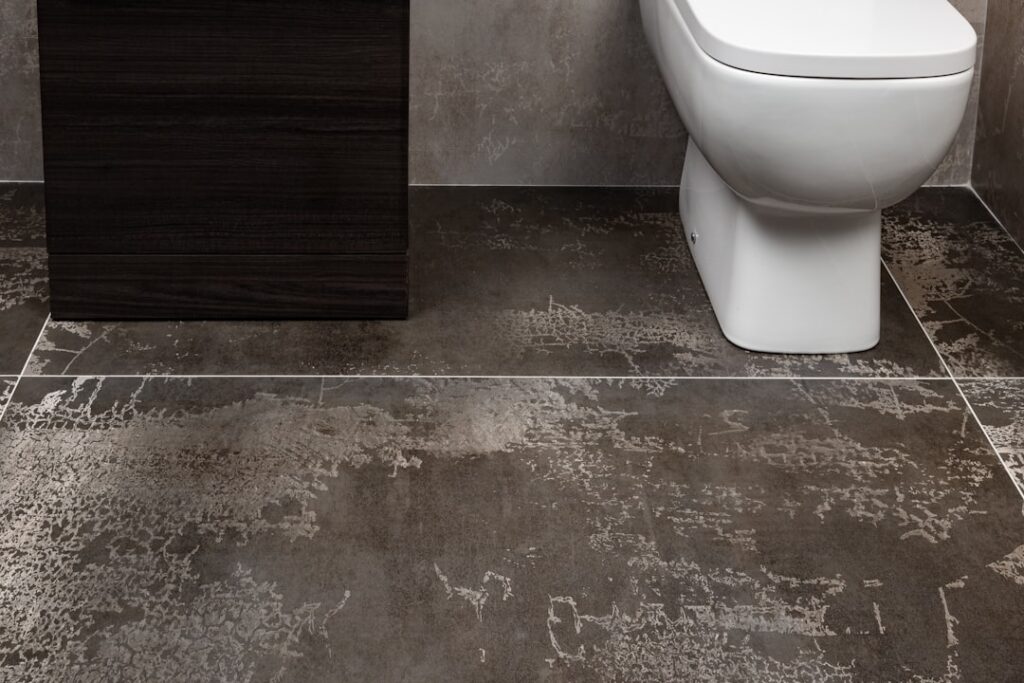
Paint never lives in isolation. The most common mistake is choosing a wall color that fights the floor or shower tile. Pull an undertone from your existing materials and build around it. If your tile floor has warm tan and beige tones, a cool blue-gray wall can feel jarring; a warm greige or soft white will harmonize instead.
For wood-look vinyl or tile flooring, earthy and warm neutrals make the planks feel intentional. With crisp white subway tile, you have freedom to go bold on the walls because the tile reads as a neutral. Marble or marble-look surfaces, with their gray and white veining, pair effortlessly with both moody charcoals and airy whites.
Where to Use Color and Where to Hold Back
You do not have to paint every surface the same way. Consider these approaches:
- Accent wall: Paint the wall behind the vanity or tub a deeper shade and keep the rest light.
- Color-drenching: Walls, trim, and ceiling all in one color for a seamless, enveloping look that suits small spaces surprisingly well.
- Painted vanity: A bold cabinet color against neutral walls adds personality without overwhelming the room.
- Ceiling moment: A soft tint on the ceiling instead of stark white adds quiet warmth overhead.
Don’t Forget the Trim and Ceiling
Trim takes abuse from splashes and cleaning, so use a durable semi-gloss in white or a shade that contrasts gently with the walls. The ceiling, often skipped, collects the most steam in the room. Use a mildew-resistant ceiling paint rather than leftover wall paint, and you will avoid the flaking and spotting that plagues poorly painted bathroom ceilings.
Prep Is What Makes It Last
Even the best color fails over peeling paint. Run the exhaust fan and let the room dry fully before you start. Clean the walls to remove soap film and skin oils, sand any glossy patches, and spot-prime stains or repairs. Caulk gaps along the trim. Two thin coats beat one heavy coat every time, and giving the first coat a full dry before the second prevents the streaky look that shows up in bathroom lighting.
Paint Ideas by Bathroom Type
Different bathrooms call for different approaches, so tailor your palette to the room’s job:
- Powder room: With no shower steam to fight, this is the place to be bold. A deep navy, emerald, or dramatic wallpaper-style color turns a small guest bath into a memorable space.
- Primary bath: Lean into a calm, spa-like palette of soft blues, warm whites, or muted greens that hold up to daily steam and feel restful.
- Kids’ bathroom: Choose a durable, scrubbable semi-gloss in a cheerful but not overwhelming shade that hides fingerprints and survives splashes.
- Windowless bath: Avoid cool grays that read dingy under artificial light; warm whites and soft warm neutrals keep the space feeling fresh.
Finishing Touches That Tie It Together
Paint sets the stage, but the supporting cast completes the look. Coordinate your hardware, mirror frame, and light fixtures with the new color so the room feels designed rather than just freshly painted. Towels and a bath mat in a complementary or contrasting tone add an easy layer of color you can swap seasonally. If you painted a bold accent wall, repeat a hint of that shade in accessories elsewhere in the room to tie it together. And do not underestimate the impact of good lighting; a warm-white bulb around 2700K to 3000K flatters most paint colors and makes the whole space feel inviting, while harsh cool bulbs can make even a beautiful color fall flat.
Putting It All Together
The best bathroom paint inspiration balances mood with maintenance. Pick a moisture-tough satin or semi-gloss, choose a color that flatters your light and harmonizes with your tile and flooring, and decide whether you want a calm neutral or a bold drenched look. Test your swatches in real light, prep the surfaces properly, and a single weekend of work will give you a bathroom that looks polished and holds up for years.


