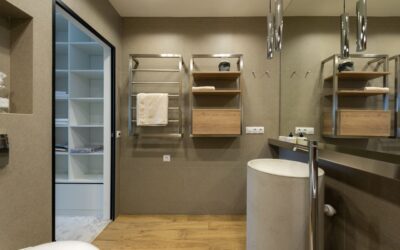
A towel bar gives you one spot for one towel. A bathroom towel ladder gives you four to six rungs in the same slice of wall, which is why it has become the go-to fix for small bathrooms with no room for a second bar. The catch is that a leaning ladder is also a tall, narrow object standing on a wet floor, so choosing the right size and material and anchoring it properly matters as much as how it looks.
Part of our Bathroom Remodeling & Flooring guide — explore the full guide →
The short version: pick a ladder about 60 to 72 inches tall with rungs spaced 10 to 14 inches apart, choose a finish built for humidity such as powder-coated metal, stainless steel, teak or bamboo with a sealed finish, and secure it to the wall with a tip-over anchor even if it is sold as freestanding. Vertical wall-mounted towel racks do the same job with zero footprint when floor space is tight.
Here is how to size one, which materials survive a steamy bathroom, and how to place it safely.
Bathroom Towel Ladder Styles: Leaning vs Wall-Mounted
There are three basic designs, and each one suits a different room.
Leaning ladders
These rest on the floor and tilt back against the wall at a slight angle. They need no drilling to stand up, move easily, and add a casual, spa-like look. Most bathroom towel ladders sold today are this style. Their downside is floor footprint (usually 12 to 18 inches out from the wall at the base) and the fact that they can slide or tip if bumped.
Wall-anchored ladders
Same shape, but screwed or bracketed to the wall at the top and sometimes the bottom. They look like a leaning ladder yet stay put, which makes them the better choice in homes with kids, pets or tight traffic paths.
Vertical towel racks and bars
A vertical towel rack mounts flat to the wall, with short horizontal bars stacked one above another inside a slim frame. A vertical towel bar or vertical towel holder can also be a single upright rod with arms or hooks. These use almost no floor space and fit narrow spots beside a vanity, behind a door or between a toilet and a shower. They are the ladder-style option for bathrooms under about 40 square feet.
Sizing: Height, Width and Rung Spacing
Getting the dimensions right is what separates a ladder towel rack that works from one that just holds a single folded towel.
- Height: 60 to 72 inches is standard. Taller ladders suit high ceilings but need more lean distance at the base. Shorter ladders around 48 inches work over low windowsills or beside tubs.
- Width: 16 to 24 inches. A bath towel folded in thirds is roughly 18 to 20 inches wide, so a 20-inch ladder lets it hang without bunching. Hand towels fit on 14 to 16 inch rungs.
- Rung spacing: 10 to 14 inches between rungs lets a folded towel hang without covering the one below and gives air room to circulate, which helps towels dry. Tighter spacing looks tidy but traps moisture.
- Rung count: Four to six rungs covers most households. More rungs on a short ladder usually means cramped spacing.
- Base depth: Measure 12 to 18 inches out from the wall for a leaning style and make sure a door, drawer or toilet lid will not hit it.
Mark the footprint on the floor with painter’s tape before you buy. It is the easiest way to see whether the ladder will crowd the walkway.
Moisture-Proof Materials That Last
Bathrooms swing between steamy and dry every day, which is hard on wood joints and cheap metal finishes. Choose materials that tolerate humidity.
| Material | Moisture Performance | Care Notes |
|---|---|---|
| Stainless steel | Excellent | Wipe dry; minimal upkeep |
| Powder-coated steel or aluminum | Very good if coating is intact | Touch up chips to prevent rust |
| Teak | Very good, naturally oily | Occasional oiling keeps color |
| Bamboo, sealed | Good | Reseal if finish wears |
| Painted pine or MDF | Poor near showers | Swells and peels with steam |
Look for fully sealed wood, including end grain and the insides of rung joints, since water wicks into unfinished ends first. For metal, stainless or a thick powder coat beats thin chrome plating, which can pit and flake. Rubber or silicone feet protect tile and add grip.
Where to Place a Towel Ladder
Good placement keeps towels within reach and away from trouble:
- Within one or two steps of the shower or tub exit, so nobody walks across the floor dripping.
- Out of the direct spray zone. Constant soaking ruins wood and speeds rust on metal.
- Out of door swing paths and away from the toilet, where bumps and splashes happen.
- Not in front of a heating vent or radiator unless the manufacturer allows it; the heat can dry out wood and warp joints.
- On a level, dry part of the floor with good airflow so towels dry between uses.
A spot beside the vanity or on the wall opposite the tub often works well. In very small rooms, the back of the door or the narrow wall beside the shower is a natural home for a vertical rack.
How to Anchor a Leaning Towel Ladder Against Tip-Over
A leaning ladder loaded with damp towels is top-heavy, and a child grabbing a rung, a dog brushing past or a slip on a wet floor can pull it down. Anchoring takes about 15 minutes.
- Set the lean. Place the ladder so the base sits the recommended distance from the wall and the top rests evenly. Check it does not rock.
- Add grip at the feet. Use non-slip pads under the feet if they did not come with them, especially on glossy tile.
- Locate a stud. Use a stud finder near where the top of the ladder touches the wall. Before drilling, check that no plumbing or wiring runs behind the spot; stay clear of the area directly above or below outlets, switches and fixtures.
- Install a tip-over strap or bracket. Attach a furniture anti-tip strap or a small L-bracket from the back of the top rung to the wall. Screw into a stud where possible; in drywall without a stud, use a rated anchor such as a toggle bolt sized for the load.
- Test it. Pull firmly on the middle rungs. The ladder should not move forward or slide sideways.
For wall-mounted towel ladders and vertical racks, follow the included template and hardware, hit studs where you can, and use toggle anchors or tile anchors where you cannot. When drilling through tile, use a carbide or diamond tile bit at low speed with painter’s tape over the spot to prevent the bit from skating, and seal the holes with silicone so water does not get behind the tile.
Troubleshooting Common Problems
- Ladder slides on tile: Add silicone or rubber pads to the feet and anchor the top.
- Towels stay damp and smell musty: Rungs are too close, or the room lacks ventilation. Hang fewer towels, spread them out, and run the exhaust fan during and after showers.
- Wood rungs turning gray or black: Moisture is getting into the grain. Clean, let dry fully, and reseal with a finish rated for bathrooms.
- Rust spots on metal: Coating damage. Sand lightly, prime and touch up with matching paint before it spreads.
- Wall marks where the ladder rests: Add clear felt or bumper pads at the contact points.
Cost and When to Get Help
Basic leaning towel ladders in bamboo or powder-coated metal typically cost in the range of $30 to $100. Solid teak or stainless steel models and designer vertical racks often run $100 to $300 or more. Anchoring hardware adds only a few dollars.
Installation is a straightforward DIY job for most people. Call a handyman if you need to drill into stone or large-format porcelain tile and are worried about cracking it, or if the only good location sits over hidden plumbing. Heated towel racks are a different product: hardwired models require turning off the breaker and confirming power is off with a non-contact voltage tester before any work, and a new circuit or outlet for one is a job for a licensed electrician. Any bathroom outlet used for a plug-in towel warmer should be GFCI protected.
Frequently Asked Questions
How tall should a bathroom towel ladder be?
Most are 60 to 72 inches tall. Choose a height that leaves a few inches below the ceiling or any shelf above, and make sure the base will not intrude into walkways.
Do leaning towel ladders need to be anchored?
They stand without drilling, but anchoring the top rung to a stud with an anti-tip strap or bracket is safer, especially in homes with children or pets or on slippery tile floors.
What is the best material for a towel ladder in a humid bathroom?
Stainless steel, well-applied powder-coated metal and naturally oily teak handle steam best. Sealed bamboo works well too. Avoid painted MDF or unsealed softwood near a shower.
Is a vertical towel rack better for a small bathroom?
Often yes. A vertical towel rack mounts flat to the wall and uses no floor space, so it fits beside a vanity, behind a door or in narrow gaps where a leaning ladder would block the path.
How far apart should towel ladder rungs be?
Spacing of 10 to 14 inches lets folded towels hang freely without covering the rung below and allows air to circulate so towels dry faster.