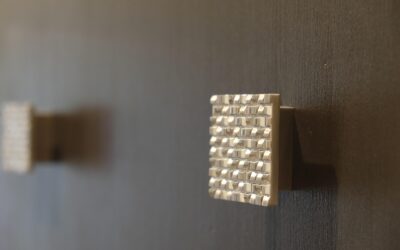
Swapping the hardware on a bathroom vanity is the cheapest, fastest upgrade in the whole room, and it changes the look more than you would expect. The right bathroom vanity handles pull a space from dated to designer for the price of a few pieces of metal. But between knobs and pulls, hole spacing, finishes, and sizes, there is more to picking hardware than grabbing whatever looks nice. Here is how to choose the styles, size them, and install them straight.
Part of our Bathroom Remodeling & Flooring guide — explore the full guide →
- Knobs vs. Pulls: The First Choice
- Understanding Hole Spacing (Center-to-Center)
- Sizing Handles to Your Vanity
- Finishes and Coordinating Your Bathroom
- Material and Quality
- How to Install Vanity Hardware
- Using a Template for Consistency
- Budget and Where to Save
- Placement Conventions That Look Right
- Handling Different Door and Drawer Materials
- Handles for Bathroom Cabinets Beyond the Vanity
- Frequently Asked Questions
Knobs vs. Pulls: The First Choice
The core decision is knobs, pulls, or a mix. Each has a role:
- Knobs mount with a single screw and suit smaller doors and traditional or transitional styles. They are simple and forgiving to install because there is only one hole.
- Pulls (handles) mount with two screws and span a range of lengths. They are easier to grip, work well on drawers, and lean modern.
- Mixed hardware uses knobs on doors and pulls on drawers, a designer trick that adds interest and improves function.
For a contemporary vanity, pulls throughout look sleek. For a classic look, knobs on doors with pulls on drawers is a timeless combination.
Understanding Hole Spacing (Center-to-Center)
The single most important measurement for pulls is the center-to-center distance, the span between the two mounting screw holes, not the overall length of the pull. Get this wrong and the pull will not line up with existing holes.
Common center-to-center sizes include 3 inches, 3.75 inches, 5 inches, 6.25 inches, and larger for oversized drawers. If you are replacing existing pulls, measure the current hole spacing precisely and buy matching hardware, or you will be drilling new holes and patching the old ones. Knobs, using a single hole, avoid this issue entirely.
Sizing Handles to Your Vanity
Proportion makes hardware look intentional. A tiny knob on a big drawer looks lost; an oversized pull on a small door looks clumsy. Use these guidelines:
- For drawers, a common rule is the pull length should be roughly one-third the drawer width.
- For wide drawers, consider two pulls or one long appliance-style pull for balance.
- For doors, knobs between 1 and 1.5 inches in diameter suit most standard cabinet doors.
- For a modern look, longer, slimmer pulls read more current than short, chunky ones.
Hold a sample against the vanity before buying a full set if you can; seeing the scale in place beats guessing from a package.
Finishes and Coordinating Your Bathroom
Finish ties the hardware to the rest of the room. The goal is coordination with your faucet, towel bars, and light fixtures, though they need not match perfectly. Popular finishes include:
- Brushed nickel: Warm, versatile, and forgiving of fingerprints.
- Matte black: Bold, modern, and high-contrast against light vanities.
- Chrome: Bright and classic, pairs with chrome faucets.
- Brushed brass or champagne bronze: Warm, upscale, and trending.
- Oil-rubbed bronze: Dark and traditional for classic baths.
A safe approach is to match the hardware to the faucet finish, since those two metals sit closest together and clashing tones are most obvious there.
Material and Quality
Hardware takes daily abuse from wet hands, so material matters. Solid metal handles (zinc alloy, brass, or stainless steel) hold up far better than hollow or plated plastic pieces that chip and corrode in a humid bathroom. Heft is a good quick test: a quality pull feels solid in the hand, while a cheap one feels light and hollow.
Spending a few dollars more per piece for solid construction pays off, since these get touched countless times a day and cheap finishes wear through at the grip points first.
How to Install Vanity Hardware
Installing new hardware on existing holes is a 15-minute job. Installing on bare doors and drawers takes more care to get everything aligned. For matching existing holes:
- Unscrew the old hardware from inside the door or drawer.
- Hold the new piece in place and thread the screws through from behind.
- Tighten snugly, not so hard you strip the screw or crack the piece.
For new installations without existing holes, use a hardware jig, a drilling template that ensures every knob and pull lands in exactly the same spot. Mark and drill carefully, since a hole in the wrong place on a cabinet face is a permanent, visible mistake.
Using a Template for Consistency
When drilling fresh holes, consistency across every door and drawer is what separates a professional result from a sloppy one. A cabinet hardware jig clamps onto the door edge and gives you repeatable positions. Decide on placement first: knobs typically go in the bottom corner of upper doors and the top corner of lower doors, while drawer pulls center horizontally and either center vertically or sit in the upper third.
Drill from the front with a backer block behind to prevent blowout, and measure twice before every hole. Rushing this step is how you end up with crooked or misaligned hardware.
Budget and Where to Save
Vanity hardware ranges from about $2 to $20-plus per piece. For a typical vanity with a couple of doors and a few drawers, you might need four to eight pieces, so even nice hardware costs under $100 for the whole update. This is one place where spending a little more for solid metal and a durable finish is worth it, given how often you touch it.
New bathroom vanity handles deliver an outsized upgrade for minimal cost and effort. Match the center-to-center spacing when replacing, size the pieces to your doors and drawers, coordinate the finish with your faucet, and use a jig for straight, consistent holes. In an afternoon you can give your vanity, and the whole bathroom, a fresh, finished look.
Placement Conventions That Look Right
Where you put the hardware is as important as which piece you choose. There are conventions that read as correct because they match how the doors and drawers actually work. On lower cabinet doors, knobs and pulls typically go in the top corner nearest the opening edge. On upper cabinets, they sit in the bottom corner. Drawer pulls center horizontally, and vertically they either sit dead center or in the upper third for a slightly more modern feel.
For a run of drawers stacked in a vanity, keep the pulls aligned in a straight vertical line so the front reads as clean and orderly. Inconsistent placement is what makes an otherwise nice vanity look amateur.
Handling Different Door and Drawer Materials
Most vanity fronts are painted MDF, solid wood, or thermofoil, and each drills a little differently. Painted and wood fronts take a clean hole with a sharp bit and a backer block behind to prevent the finish from chipping out. Thermofoil, a vinyl-wrapped MDF, can tear at the surface if the bit is dull, so use a fresh brad-point bit and let the tool do the cutting without forcing it.
For any material, drill a small pilot hole first, then step up to the final size. Rushing straight to a large bit is the fastest way to splinter a door face you cannot easily repair. Painter’s tape over the drill spot also helps; it scores a clean edge and keeps the bit from wandering on a smooth surface. If you are unsure of the screw length, measure the door thickness and add the depth the hardware needs to seat; most vanity hardware comes with standard screws sized for typical door fronts, but thick shaker doors sometimes need longer ones.
Handles for Bathroom Cabinets Beyond the Vanity
Handles for bathroom cabinets have to cope with steam and splashes every day, so the best choices are solid brass or stainless steel bodies with a durable finish, fixed with screws that will not rust. Beyond the vanity, linen towers, over-the-toilet cabinets and medicine cabinets each call for slightly different hardware. Planning them together keeps the whole room in one finish family.
Materials and Finishes That Handle Humidity
| Material or finish | How it holds up in a bathroom | Good for |
|---|---|---|
| Solid brass with a lacquered or PVD finish | Very good; the core will not rust | Main vanity, linen cabinets |
| Stainless steel | Very good; resists corrosion even near showers | Modern bathrooms, coastal homes |
| Zinc alloy, plated | Fair to good; plating can wear at grip points | Budget updates, low-use cabinets |
| Unlacquered brass | Darkens and develops patina quickly | Owners who want a living finish |
| Plastic or acrylic | Will not corrode, but can crack or yellow | Kids’ baths, rentals |
PVD (physical vapor deposition) finishes bond the color to the metal and generally resist tarnish and scratches better than standard plating, which makes them worth the higher price in a busy family bathroom.
Linen Towers and Over-the-Toilet Cabinets
Tall linen cabinets usually have a long door, so a longer vertical pull, roughly 6 to 8 inches center to center, looks better than a small knob and gives a better grip. Place it at a comfortable hand height near the middle of the door rather than at the very top or bottom. Over-the-toilet cabinets sit high and are reached from underneath, so a knob or short pull near the bottom corner of each door is easiest to reach.
Medicine Cabinets
Many mirrored medicine cabinets open with a finger edge or push latch, so adding a handle is optional. If you add one, choose a slim, low-projection pull that will not hit your face or bump the mirror frame of a neighboring cabinet.
Small Details That Prevent Problems
- Swap any steel screws for stainless or brass screws so rust does not stain painted doors.
- Pick rounded, smooth pulls in a child’s bathroom to avoid scrapes.
- Wipe hardware dry after cleaning and avoid bleach-based sprays on metal finishes.
- Buy all bathroom cabinet hardware from the same line at once so finishes match exactly.
Frequently Asked Questions
What measurement matters most for pulls?
The center-to-center distance between the two screw holes, not the overall length. Match it exactly when replacing existing pulls.
Should hardware match my faucet?
Coordinating with the faucet finish is the safest approach, since those metals sit closest together and clashing tones show most there.
Knobs or pulls for a vanity?
Both work. A popular designer approach is knobs on doors and pulls on drawers, which looks intentional and improves grip on heavier drawers.