
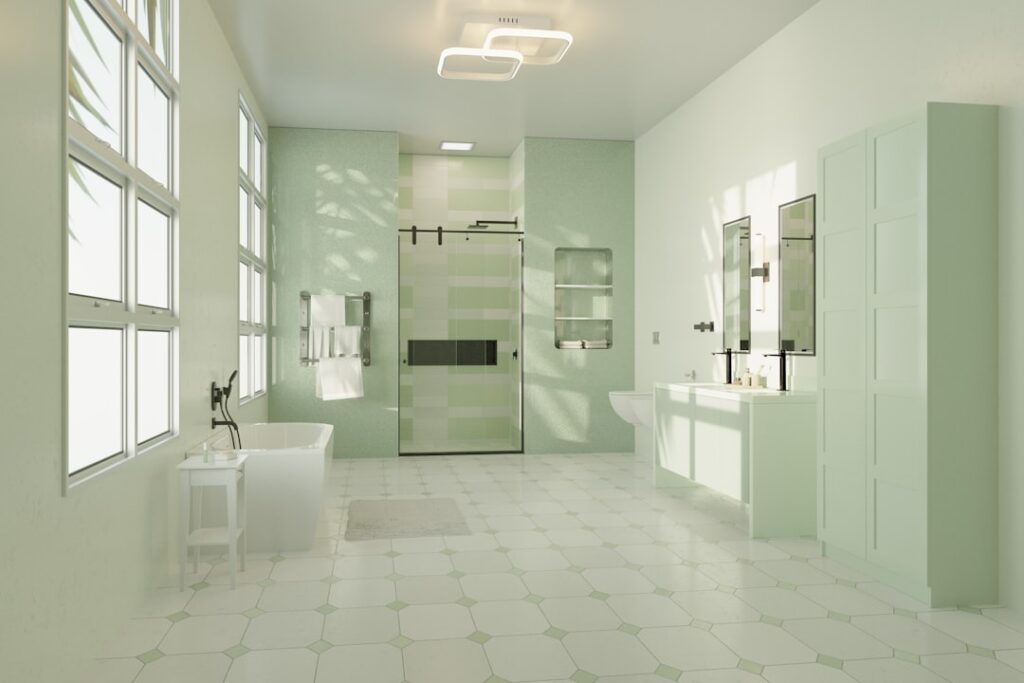
Open vanities look great in photos: rolled towels, a woven basket, a single plant. Then real life arrives with a jumbo pack of toilet paper, a hair dryer and three half-empty bottles of cleaner. A bathroom vanity with open shelf storage can be a smart choice, but only if you know what will actually live on that shelf and how your bathroom handles moisture and dust.
Part of our Bathroom Remodeling & Flooring guide — explore the full guide →
Here is the quick answer. Open shelf vanities make small bathrooms feel lighter, make towels easy to grab and often cost less than fully enclosed cabinets. The tradeoffs are visible clutter, more dusting, exposed plumbing on many designs and wood that faces more humidity. They suit tidy households, guest baths and powder rooms best, while busy family bathrooms usually do better with at least some closed storage.
- Types of Bathroom Vanity With Open Shelf Designs
- Pros and Cons Compared With Closed Cabinets
- What Actually Fits on the Shelf
- Moisture, Mold and Finish Choices
- Exposed Plumbing: Make It Look Intentional
- Installation and Anchoring
- Styling Ideas That Hold Up
- Troubleshooting Common Issues
- General Cost Ranges
- When to Call a Licensed Professional
- Frequently Asked Questions
We focus on the open design itself: what fits, what the plumbing looks like, and how to keep the shelf from becoming a moisture or mold problem.
Types of Bathroom Vanity With Open Shelf Designs
Not all open vanities are alike. The style you pick changes how much you can store and how much plumbing you will see.
Open bottom shelf
The most common design is a bathroom vanity with open bottom shelf space: a countertop and sink on top, sometimes a drawer, and a slatted or solid shelf a few inches above the floor. The area between the shelf and the sink is open, so the drain trap and supply lines are visible.
Vanity with shelves and drawers
A hybrid design pairs one or two drawers under the counter with an open shelf below. Drawers hide small items like toothpaste and makeup, while the shelf holds towels and baskets. This is often the best balance for a primary bathroom.
Vanity side shelves
Some vanities have a closed cabinet in the center with open cubbies on one or both ends. Vanity side shelves are great for rolled hand towels or a small plant, and the plumbing stays hidden behind doors.
Wall-mounted open vanities
A floating vanity with a shelf underneath leaves the floor visible, which makes small rooms feel bigger and simplifies mopping. These need solid anchoring into wall studs or blocking, which is covered in the installation section.
Pros and Cons Compared With Closed Cabinets
| Factor | Open shelf | Closed cabinet |
|---|---|---|
| Visual weight | Light, airy | Solid, heavier look |
| Clutter | Always visible | Hidden |
| Dusting | More frequent | Less frequent |
| Plumbing | Often exposed | Concealed |
| Airflow | Better, dries faster | Can trap damp air |
| Cost | Often lower | Often higher |
One benefit people overlook: open shelves get more airflow. A closed cabinet under a sink can trap damp air, and a slow leak may go unnoticed for weeks. With an open design, you see a drip right away. On the other hand, open storage puts towels and wood surfaces directly in the bathroom’s humid air every time someone showers.
What Actually Fits on the Shelf
Before you buy, list what needs to live under the sink. Then decide what goes on the shelf, what goes in drawers and what moves elsewhere.
- Good on the shelf: rolled or folded towels, lidded baskets, a few attractive jars, extra toilet paper in a bin, a small plant that tolerates humidity.
- Better hidden: cleaning products, medications, razors, hair tools with cords, and anything you would not want guests to see.
- Keep out of reach of kids: cleaners and medications should never sit on an open low shelf in a home with children.
Measure shelf height and depth. Many open vanities have 8 to 12 inches of clearance on the bottom shelf, which fits rolled towels and short baskets but not tall bottles. Lidded baskets or bins are the secret to a tidy open shelf: they give you hidden storage while keeping the open look.
Moisture, Mold and Finish Choices
Bathrooms are one of the toughest environments in a house for wood and fabric. Steam, splashes and temperature swings all work on an open vanity’s surfaces.
Choose moisture-resistant materials
- Solid hardwood with a durable finish: sealed on all sides, including the underside of the shelf and the back edges.
- Teak or other naturally oily woods: resist moisture well and age gracefully.
- Plywood with a quality veneer: more stable than particleboard when exposed to humidity.
- Avoid raw particleboard or MDF edges: they swell quickly when wet. If the vanity uses engineered board, make sure every edge is sealed or banded.
- Metal frames: powder-coated steel or aluminum resist humidity and suit industrial styles.
Keep mold away
Fix moisture first. Run the bathroom exhaust fan during showers and for at least 20 minutes after, and make sure it vents outside, not into the attic. Wipe up splashes on the shelf right away, and do not store damp towels on it; hang them to dry first. Leave a little space between baskets so air can circulate. If you notice musty smells, spots on the shelf underside or dark staining around the drain trap, find the source before cleaning. Small areas of surface mold can be cleaned with a mild detergent solution while wearing gloves and eye protection. Mold covering more than about 10 square feet, or mold that returns, calls for a mold remediation professional.
Maintain the finish
Inspect the vanity’s finish every few months. Touch up scratches or worn spots before water gets into the wood. A clear water-based polyurethane or similar bathroom-rated topcoat is easy to refresh on most painted or stained vanities.
Exposed Plumbing: Make It Look Intentional
With an open bottom shelf, everyone can see the drain trap and supply lines. Plastic traps and braided hoses can look messy. A few upgrades help:
- Swap a plastic trap for a decorative metal one in a finish that matches the faucet.
- Use matching supply lines and stop valves for a clean, deliberate look.
- Choose a vanity designed for open plumbing, where the drain sits in the wall and the trap is compact.
- Consider a wall-mounted vanity with the drain rough-in positioned so the plumbing is tucked high.
Swapping a trap on an existing drain is a common DIY task. Shut off the water, keep a bucket under the trap and hand-tighten slip nuts before snugging them gently. Moving supply or drain lines to fit a new vanity is a different job. Relocating plumbing inside the wall should be done by a licensed plumber, who will follow local plumbing code and pull a permit where required.
Installation and Anchoring
Freestanding open vanities still need to be secured. Without the back panel and sides of a closed cabinet, many open designs are less rigid and can rack or tip if someone leans on the counter.
- Shut off the water at the stop valves and open the faucet to relieve pressure.
- Locate wall studs with a stud finder and mark them at the vanity height.
- Level the vanity front to back and side to side, shimming the feet if needed.
- Anchor the vanity to studs with screws through a rail or included brackets. For wall-mounted vanities, use the maker’s hardware into studs or blocking, never drywall anchors alone.
- Set the counter and sink, seal the joints with bathroom-rated silicone, and connect the faucet.
- Connect the drain and supply lines, then turn the water on slowly and check every joint for drips.
If your vanity needs an outlet nearby for hair tools, make sure the bathroom outlets are GFCI protected. Adding or moving an outlet is a job for a licensed electrician.
Styling Ideas That Hold Up
- Spa look: rolled white towels, a teak tray, a single plant.
- Farmhouse: woven baskets with lids, a painted wood vanity and a vintage-style faucet.
- Modern: a floating vanity with a slim shelf and matte black bins.
- Industrial: metal frame, wood counter, exposed metal trap and wire baskets.
Limit the shelf to two or three item types. More than that starts to look cluttered no matter how good the containers are.
Troubleshooting Common Issues
Shelf looks messy: move small items into lidded bins and keep only towels and one decorative piece in view.
Wood swelling or finish peeling: moisture is getting in. Improve ventilation, dry splashes promptly and refinish exposed edges.
Dust on everything: dust weekly with a damp microfiber cloth, and store towels in baskets.
Musty smell: check for leaks at the trap and supply lines, and confirm the exhaust fan runs long enough.
Vanity wobbles: it is not anchored. Secure it to studs.
General Cost Ranges
Basic open shelf vanities with engineered materials can start in the low hundreds of dollars, while solid hardwood or teak designs and custom pieces often run from several hundred to a couple thousand dollars or more. Installation by a handyman on existing plumbing is usually a modest charge. Moving plumbing lines with a licensed plumber, adding blocking for a floating vanity or adding an outlet increases the total.
When to Call a Licensed Professional
Call a licensed plumber if supply or drain lines need to move for the new vanity, if you find corroded pipes or shutoff valves that will not close, or if a leak has damaged the wall or subfloor. A licensed electrician should handle new or relocated outlets. Bring in a mold professional for growth over about 10 square feet. With the right materials and good ventilation, a bathroom vanity with open shelf storage can look polished for years.
Frequently Asked Questions
Are open shelf bathroom vanities practical?
They are practical for tidy households, guest baths and powder rooms. Busy family bathrooms usually work better with a mix of drawers and open shelves so clutter and cleaners stay hidden.
How do I hide plumbing on an open vanity?
Upgrade to a decorative metal trap and matching supply lines so the plumbing looks intentional. Moving drain or supply lines into the wall requires a licensed plumber.
Will an open vanity get moldy?
Open designs actually dry faster than closed cabinets, but wood and towels still face humidity. Run the exhaust fan, wipe splashes and choose sealed, moisture-resistant materials.
What should I store on an open vanity shelf?
Rolled towels, lidded baskets, spare toilet paper in a bin and a humidity-tolerant plant work well. Keep cleaners and medications in closed storage, away from children.
Does an open shelf vanity need to be anchored to the wall?
Yes. Open designs are less rigid than closed cabinets, so secure them to wall studs. Floating vanities must be mounted into studs or solid blocking.


