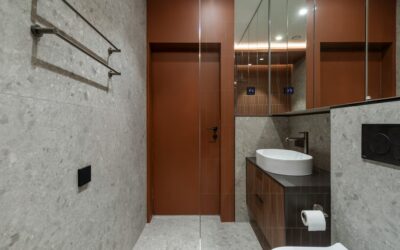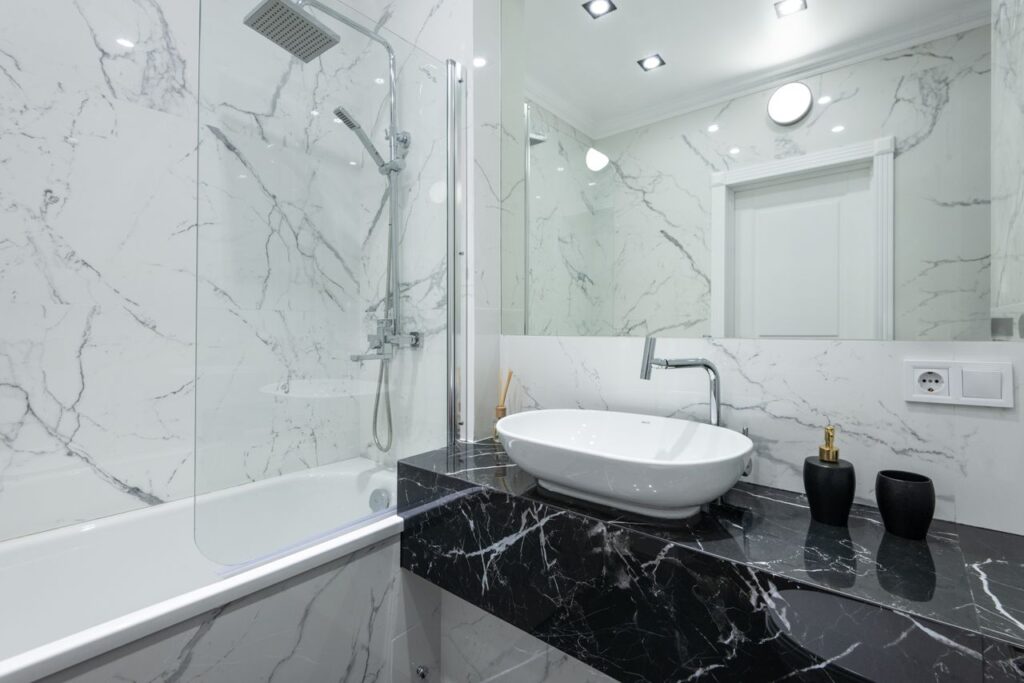
A basin that sits proudly on top of the counter instead of dropping into it turns an ordinary bathroom into something that feels like a boutique hotel. A bathroom vanity with vessel sink delivers exactly that sculptural, spa-like presence, and it remains one of the most requested upgrades in powder rooms and primary baths alike. But this style comes with real trade-offs in height, faucet selection, and cleaning that catch buyers off guard, so it pays to understand the full picture before you order a beautiful stone bowl that ends up too tall to use comfortably.
Part of our Bathroom Remodeling & Flooring guide — explore the full guide →
What Makes a Vessel Sink Different
A vessel sink rests entirely above the countertop surface rather than being undermounted or drop-in. The bowl might be glass, ceramic, natural stone, hammered copper, or concrete, and it connects to the drain through a hole cut in the counter. Because the whole basin sits on top, it adds anywhere from 4 to 6 inches of height above the vanity surface, which is the single most important number to plan around.
That extra height is why the vanity cabinet itself should be shorter than a standard model. A conventional bathroom counter sits at 32 to 36 inches, but with a vessel sink adding 5 inches of bowl, you want the cabinet in the 29-to-32-inch range so the rim of the basin lands near a comfortable 34 to 36 inches. Buy a standard-height vanity and mount a tall bowl on it, and you’ll be reaching up to wash your hands like a child at a grown-up sink.
Pros and Cons Worth Weighing
This style is polarizing among designers, and understanding why helps you decide if it fits your household.
The Advantages
- Striking, high-end visual impact that makes the sink the room’s centerpiece
- Easy retrofit onto almost any flat vanity top, including furniture pieces repurposed as vanities
- Huge variety of materials, shapes, and colors not available in undermount basins
- Simple to swap out later since the bowl sits on top rather than being sealed underneath
The Drawbacks
- Water and toothpaste splash more because the basin is shallow and high
- The exposed rim and the seam where bowl meets counter collect grime and need regular wiping
- Less usable counter space around the raised bowl
- Glass and stone bowls can chip or crack if hit by a heavy dropped bottle
For a low-traffic powder room where looks matter most, the pros usually win. In a busy kids’ bathroom, the splashing and cleaning demands make an undermount sink the smarter pick.
Choosing the Right Bowl Material
Material sets both the look and the maintenance level. Each has a personality.
Tempered Glass
Clear or frosted glass vessels feel light and modern and run $60 to $200. They show water spots readily and need frequent wiping, but nothing else looks quite as airy.
Ceramic and Porcelain
The most practical choice, ceramic bowls resist stains, wipe clean easily, and cost $80 to $250. They come in every shape from crisp rectangles to organic ovals.
Natural Stone
Marble, travertine, and granite vessels bring earthy texture and cost $150 to $500. They must be sealed periodically and can etch from acidic products, but the material feels genuinely luxurious.
Copper and Metal
Hammered copper develops a living patina and offers natural antimicrobial properties. Expect $200 to $600 and a warmer, artisanal look.
Faucet Selection Is Critical
You cannot use a standard faucet with most vessel sinks because the spout would sit too low to clear the raised rim. You have two correct options. A tall vessel faucet is designed to arc high above the counter and pour down into the bowl, and it’s the most common pairing. Alternatively, a wall-mounted faucet mounts to the wall above the basin and keeps the counter clear, which looks clean and simplifies cleaning around the bowl.
Whatever you choose, check the spout reach and height against your specific bowl. The stream should land in the center of the basin, not near the rim where it splashes out. Budget $80 to $300 for a quality vessel or wall-mount faucet, and confirm your rough-in plumbing supports a wall mount before committing to that route.
Installation Basics
Mounting a vessel sink is well within reach for a confident DIYer. The counter needs a single hole for the drain, sized to your bowl’s specification, typically 1.75 inches. Some bowls sit flat on the counter with a ring of silicone sealant, while others drop partway into a recessed hole for stability. A mounting ring often supports round bowls.
The drain uses a special vessel or “grid” drain, and many bowls have no overflow hole, so you must buy a non-overflow drain to match. Seal the base of the bowl to the counter with a thin bead of clear silicone to stop water from creeping underneath. Because the P-trap and supply lines sit largely as they would for any sink, most homeowners finish the plumbing in an afternoon.
What It All Costs
Plan a realistic budget across the components. A complete setup breaks down roughly as follows:
- Vanity cabinet with counter: $200 to $1,200 depending on size and material
- Vessel bowl: $60 to $600 by material
- Vessel or wall-mount faucet: $80 to $300
- Drain, supply lines, and sealant: $30 to $80
- Professional installation, if hired: $200 to $500
A tasteful mid-range powder-room setup typically lands around $700 to $1,500 fully installed, while a stone bowl on a custom vanity can climb past $2,500.
Keeping It Looking Great
The exposed rim and counter seam are the maintenance reality of this style. Wipe the bowl and the silicone line daily to prevent buildup, and use a non-abrasive cleaner suited to your material, especially on glass and sealed stone. Reseal natural-stone bowls every 6 to 12 months. Because the basin sits high and shallow, teach household members to run water gently to cut down on splash on the surrounding counter and mirror.
Choosing the Right Bowl Shape and Size
Beyond material, the shape and dimensions of the basin affect both looks and daily usability. Round bowls read soft and traditional, rectangular basins feel modern and architectural, and low-profile oval or boat-shaped bowls split the difference. The height of the bowl is the number that most affects comfort: a tall cylinder bowl of 6 inches sits high and demands a shorter cabinet, while a shallow 4-inch basin is more forgiving on a standard-height vanity.
Diameter matters for splash control and counter space. A compact 14- to 16-inch round bowl suits a small powder room, while an 18- to 20-inch basin gives more room to actually wash your hands without water sheeting over the rim. Whatever you choose, leave at least a few inches of clear counter on either side of the bowl so the vanity stays functional for soap, a toothbrush cup, or a hand towel. Measure your cabinet depth too, since a large bowl on a shallow 18-inch vanity can crowd the faucet and the backsplash.
Common Mistakes to Avoid
A handful of predictable errors trip up first-time buyers, and all of them are easy to sidestep with a little planning:
- Mounting a tall bowl on a standard-height cabinet, leaving the rim uncomfortably high to use
- Pairing a standard faucet that’s too short to clear the raised basin, causing splashing at the rim
- Buying a bowl with no overflow but installing a standard overflow drain, which won’t seal properly
- Skipping the silicone bead at the base, letting water seep under the bowl and breed mildew
- Choosing a delicate glass or thin stone bowl for a heavily used family bathroom
Plan around the finished rim height of 34 to 36 inches, confirm your faucet clears the bowl, match the drain to whether the basin has an overflow, and you’ll avoid nearly every regret people report with this style.
Is It the Right Choice for You?
A bathroom vanity with vessel sink rewards you with genuine wow factor and endless design flexibility, and it’s an easy way to give a small powder room a custom, upscale identity. Just size the cabinet shorter to keep the rim usable, pair it with a proper tall or wall-mount faucet, and accept a little extra wiping in exchange for the look. Get those details right and you’ll have a bathroom feature that draws compliments for years.