The bathtub decision shapes everything else in a bathroom remodel — the plumbing rough-in, the surround material, the door swing, even the floor joist spacing if the tub is heavy enough. Bathtub options range from $250 stamped-steel rentals’ staples up to $8,000 cast iron clawfoot freestanding pieces, and the right choice depends on your budget, the space, and how often the tub will actually get used.
Part of our Bathroom Remodeling & Flooring guide — explore the full guide →
The Five Main Categories
Alcove tubs install against three walls with a finished apron facing the room. They are the standard 60-inch builder special, accounting for the majority of US installations. Drop-in tubs slot into a tiled or stone deck, common in primary baths. Undermount tubs sit below a slab deck with no visible rim. Freestanding tubs are exposed on all four sides as a sculptural fixture. Walk-in tubs include a sealed door for safe entry without stepping over the rim, marketed to seniors and accessibility-focused remodels.
Within each category, the material matters as much as the shape. Acrylic, fiberglass-reinforced gel coat, cast iron, enameled steel, copper, stone resin, and natural stone each have specific durability, weight, and warmth-to-touch characteristics.
Acrylic: The Default Choice
Acrylic tubs from Kohler, American Standard, MAAX, and Aquatica run $400 to $2,200 for alcove sizes and $1,800 to $5,500 for freestanding. The material is vacuum-formed sheet acrylic backed with fiberglass reinforcement. It feels warm to the touch, weighs 60 to 120 pounds for an alcove, and resists chipping better than enameled cast iron.
The drawbacks are real: acrylic flexes underfoot if not properly supported with a mortar bed underneath, scratches with steel wool, and discolors from harsh cleaners over time. Stick to non-abrasive cleaners like Bar Keepers Friend or Soft Scrub, and the surface holds up 20+ years. Kohler’s Underscore line at $1,100 is a representative high-volume seller.
Cast Iron: The Forever Tub
Cast iron with porcelain enamel coating is the heaviest, longest-lasting bathtub material. A 60-inch alcove cast iron tub weighs 280 to 350 pounds empty. Filled, it adds another 350 pounds of water. Older homes with original 1920s cast iron tubs still in service are common — these things last a century with reasonable care.
Kohler’s Bellwether and Villager cast iron alcove tubs run $700 to $1,400, undercutting most acrylic premium tubs while delivering vastly better durability. The trade-off: floor joists must support the load, and the enamel coating can chip if you drop something heavy on the deck. Chipped enamel is repairable with porcelain touch-up kits but never invisible.
Enameled Steel: Budget Workhorse
Enameled steel tubs are stamped from a single sheet of steel with a porcelain enamel coating fused at high heat. They weigh 60 to 120 pounds and cost $150 to $450 at any big-box store. American Standard’s Princeton and Bootz are the common builder-grade names.
The enamel finish is the same as cast iron, so durability against scratches and stains is good. The downsides: steel transfers heat fast, so the water cools quickly and the tub feels cold against bare skin. The thinner construction also produces a hollow drumming sound when water hits it. For rentals, secondary bathrooms, or budget remodels where the tub sees occasional use, the value is real.
Freestanding Soaker Tubs
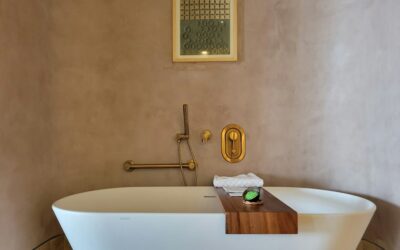
Freestanding tubs are the photogenic centerpiece of modern primary baths. Acrylic freestanding tubs from Signature Hardware, Vintage Tub & Bath, and Aquatica run $1,800 to $5,500 for standard 60 to 72-inch sizes. Cast iron clawfoot tubs cost $3,500 to $8,500 new from Sign of the Crab or vintage from architectural salvage at $800 to $2,400 unrestored.
Plumbing considerations matter most for freestanding installs. The drain comes up through the floor rather than from the wall, requiring exact placement on the rough-in. Tub fillers (the floor-mounted faucet some freestanding tubs use) need their own valves rough-in 8 inches off the floor, with concealed valves under the tub footprint. Get the plumbing wrong and the tub sits 4 inches from where it was supposed to.
Walk-In Tubs for Aging in Place
Walk-in tubs from Safe Step, American Standard, Kohler Walk-In Bath, and Jacuzzi cost $4,000 to $14,000 installed. The door is the key feature: hinged to swing inward or outward, sealed with EPDM gaskets, locking with a lever handle. Water fills after you sit down and drains before you exit.
The trade-offs are significant. Fill time runs 6 to 10 minutes for the larger units, drain time another 5 to 8 minutes, and the bather sits in the tub during the entire process. Heated seats and quick-drain options add cost but reduce the wait. For households with mobility limitations, walk-in tubs prevent the falls that the CDC identifies as the leading cause of injury for adults over 65.
Size and Depth Considerations
- Standard alcove (60×30 inches, 14 inches deep): fits most builder bathrooms, water capacity 42 to 55 gallons
- Extra-deep soaker (60×32 inches, 18 to 22 inches deep): water covers shoulders when seated, 65 to 80 gallons
- Japanese ofuro (47 to 55 inches long, 27 to 30 inches deep): upright seated soak, 50 to 70 gallons
- Freestanding (60 to 72 inches long, 27 to 32 inches wide): ample interior, requires 4 inches clearance on sides
- Two-person (72 to 84 inches long): water capacity hits 90 to 120 gallons, needs upgraded water heater
Plumbing and Water Heater Sizing
A standard 50-gallon water heater fills a typical 14-inch deep alcove tub once before running cold. A deep soaker or two-person tub needs 60 to 80 gallons of hot water — upgrade the water heater or accept colder tub fills. Tankless water heaters at 9.5 GPM (Rinnai RU199, Navien NPE-240A) supply unlimited hot water but cost $1,800 to $3,500 installed.
The drain line size also matters for big tubs. Standard 1.5-inch drains move 3.5 gallons per minute. An 80-gallon soaker tub takes 23 minutes to drain through the standard line, which is annoying. Upgrading to a 2-inch drain doubles flow to 7 GPM and drops drain time to 12 minutes.
Total Project Cost Reality
Tub price is roughly half of the install for any remodel. A $1,000 alcove tub becomes $2,800 to $4,200 installed when you add demo, plumbing, surround tile, and disposal of the old unit. A $5,000 freestanding tub installs at $8,000 to $12,000 with new floor framing, dedicated water heater capacity, and finished plumbing. Walking into a remodel with full project budget in mind — not just the tub price — prevents the discovery that the dream tub doubles the renovation cost.