You don’t need to live within sight of the ocean to bring its relaxed, sun-washed feeling indoors. A beachy rug is one of the fastest ways to give a room that airy, coastal mood, grounding a space in soft sand tones, breezy blues, and natural textures that echo the shoreline. The look works far beyond the beach house, softening a suburban living room, a sunroom, or a bedroom that could use a lighter, more casual touch. This guide breaks down the colors, materials, and patterns that define coastal style and how to choose a rug that both looks the part and survives real life.
What Makes a Rug Look Beachy
Coastal style is less about literal seashells and more about a palette and a feeling. A beachy rug typically leans on light, sun-bleached colors, sandy beige, driftwood gray, soft white, and the blues and aquas of water and sky. Texture matters just as much as color; natural, woven, and slightly imperfect surfaces read as coastal, while glossy or ornate rugs feel formal and out of place. The overall impression should be relaxed and unpretentious, as though the room has been gently faded by salt air and sunshine.
Colors That Capture the Coast
Choosing the right palette is the heart of the look. A few color families dominate coastal rugs.
- Neutrals like ivory, sand, and taupe form the foundation and keep the space feeling light and open.
- Blues from pale sky to deep navy evoke water; a striped blue-and-white rug is the quintessential coastal choice.
- Soft greens and aquas suggest sea glass and reads fresh in a sunroom or bath.
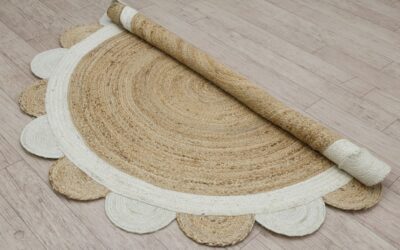
- Warm sandy tones in a jute or sisal weave bring the beach itself underfoot.
Keep the palette soft and slightly muted. Bright, high-saturation colors break the sun-washed illusion that makes coastal style feel calm.
Materials for a Coastal Look
Natural fibers do most of the heavy lifting in beachy design because their texture and color already suggest the shore.
Jute and Sisal
These woven plant fibers deliver that sandy, organic texture better than anything else and are the backbone of coastal rooms. They are durable and affordable, though sisal in particular is best kept out of damp areas and away from spills, since natural fibers stain easily.
Cotton Flatweaves
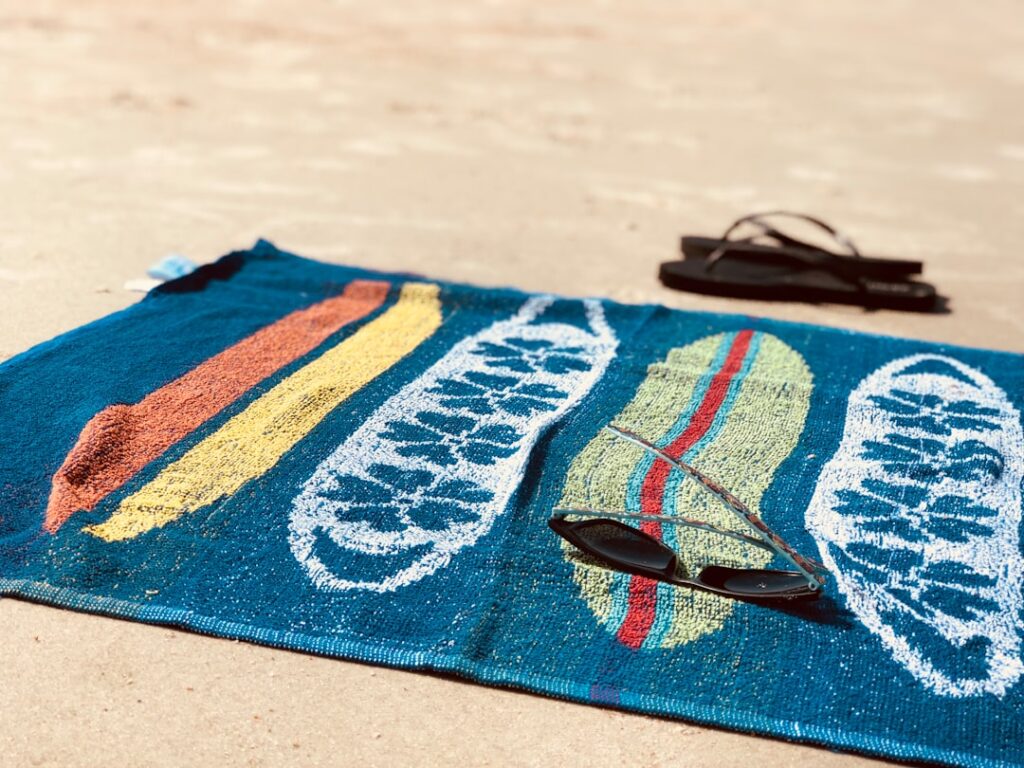
Lightweight, often reversible, and frequently machine washable, cotton dhurrie-style rugs in blue-and-white stripes are a coastal classic and practical for casual, high-use rooms.
Performance Synthetics
Polypropylene rugs printed in coastal colors and patterns handle moisture, fading, and traffic far better than natural fibers, making them the smart pick for sunrooms, entryways, and homes with kids or pets. Many double as indoor-outdoor rugs.
Patterns and Motifs
Pattern sets the tone between subtle and literal. Stripes are the safest and most versatile coastal motif, evoking beach towels and cabana awnings without being on the nose. Organic textures and solid natural weaves feel effortlessly coastal and pair with any decor. If you want something more overt, look for subtle motifs like faded medallions, watercolor waves, or a distressed vintage pattern in seaside colors. Reserve heavy nautical themes, anchors, ropes, and literal seashells, for a light touch or a single accent piece, since too many can tip a sophisticated room into kitsch.
Styling a Beachy Rug
The rug works best as part of a broader light, airy scheme. Pair it with white or slipcovered furniture, weathered or driftwood-toned wood, and plenty of natural light. Layer a smaller patterned rug over a large jute base for depth, a favorite designer trick that adds texture without clutter. Bring in linen textiles, rattan accents, and a few green plants to complete the relaxed feeling. Keep surrounding colors soft so the rug’s palette carries through the whole room rather than fighting with bold walls or dark furniture.
Choosing the Right Size and Placement
Coastal rooms feel open, so size the rug generously enough to anchor the furniture without crowding the airy look. In a living room, get at least the front legs of the sofa and chairs on the rug; an 8×10 suits most groupings. Under a dining table, size up so chairs stay on the rug when pulled out. For a layered look, place a large neutral jute rug first and center a smaller patterned coastal rug on top. Leave a border of exposed floor around the edges so the light, open feeling stays intact.
Care and Longevity
Care depends on the fiber. Natural jute and sisal should be vacuumed regularly and kept dry, with spills blotted immediately since they do not tolerate wet cleaning well. Cotton flatweaves often go in the washing machine, a real advantage in sandy, high-traffic coastal homes. Synthetic performance rugs handle spot cleaning and even a hose-down for indoor-outdoor versions. Rotate any beachy rug periodically to keep sun fading even, and use a rug pad to prevent slipping and add cushioning. With the right material matched to the room, a beachy rug keeps its relaxed, shoreline charm for years.
Get the palette soft, the texture natural, and the size generous, and a beachy rug brings a permanent sense of vacation calm to whatever room it lands in, whether or not the ocean is anywhere nearby.
Beachy Rugs Room by Room
The look adapts to nearly every part of the home with small adjustments. In a living room, a large jute or blue-and-white striped rug anchors the seating and sets a relaxed tone for the whole space. In a bedroom, a soft, low-pile coastal rug warms the floor beside the bed and keeps mornings gentle underfoot. Bathrooms and sunrooms welcome a smaller washable cotton rug in sea-glass tones that can handle humidity and the occasional splash. Even an entryway benefits, where a durable synthetic coastal runner greets guests and hides the sand and grit that a beach-inspired home inevitably collects. Matching the fiber to each room’s traffic and moisture keeps the look practical rather than precious.
Indoor-Outdoor Options
Many of the best beachy rugs are indoor-outdoor pieces, and that versatility is a real advantage near the coast or the pool. Woven from UV-stable polypropylene, these rugs resist fading, dry quickly, and can be hosed off when sandy or dirty, so they move easily from a screened porch to a covered patio to a mudroom. Their flatweave construction lies flat, shakes clean, and shrugs off the moisture that would ruin a natural jute rug outdoors. If your beachy room opens onto a deck or sees damp bathing suits and wet feet, an indoor-outdoor rug delivers the coastal look with none of the fragility.
Budget and Where to Shop
Coastal rugs span a wide price range, so there is a version for most budgets. A synthetic printed beachy rug in an 8×10 often runs $80 to $250, a natural jute of the same size lands around $150 to $400, and a hand-woven wool or a designer layered look climbs higher. Home centers, big-box stores, and online retailers all carry seasonal coastal collections, especially in spring and summer. Buy the fiber that matches your room’s demands rather than the cheapest option, since a bargain natural rug in a wet, high-traffic spot will disappoint quickly, while a modest synthetic in the right place looks great for years.