The porch is the first thing guests see and the last thing you cross on your way out the door, so it deserves a floor covering that works as hard as it looks good. A porch rug adds warmth, color, and traction to an entry while taking on rain, sun, muddy shoes, and pollen without falling apart. The trick is choosing a rug built for the conditions your porch actually faces, because an indoor rug tossed outside will mildew and fade within a season.
Match the Rug to Your Porch Type
Porches range from fully exposed to completely enclosed, and that exposure dictates what rug will last.
- Open front porches: Full sun and wind-driven rain demand a true outdoor rug with UV and moisture resistance.
- Covered porches: Protected from direct rain but still humid and dusty, these handle most outdoor-rated rugs well.
- Screened porches and sunrooms: The most forgiving, where you can use indoor-outdoor rugs and even some softer indoor styles.
Knowing your exposure first saves you from buying a beautiful rug that simply cannot survive where you want to put it.
Best Materials for Porch Rugs
For anything that sees weather, synthetic fibers are the clear winner. They resist water, mold, and fading in ways natural fibers cannot.
- Polypropylene (olefin): The most popular porch-rug fiber. Non-absorbent, fade-resistant, affordable, and easy to hose off.
- PET polyester: Often made from recycled plastic, soft underfoot, and weather-tough.
- Recycled plastic flatweaves: Reversible, lightweight, and very easy to clean.
Natural fibers like jute and sisal look beautiful but are not suited to damp or exposed porches because they absorb moisture, mildew, and break down. Reserve those for fully enclosed, dry spaces, or choose a synthetic woven to mimic their look.
Sizing Your Porch Rug
A well-sized rug frames the entry and feels intentional. As a general guide, leave a few inches of porch floor visible around the rug rather than running it wall to wall. For a standard front door, a 2 by 3 foot or 3 by 5 foot rug works as a welcome mat, while a larger covered porch with seating benefits from a 5 by 8 or 8 by 10 foot rug that anchors the furniture.
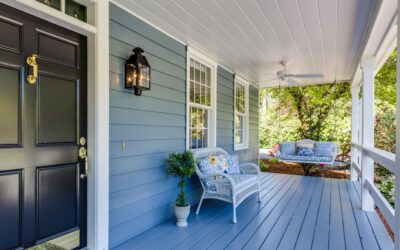
If you have a porch seating arrangement, aim to get at least the front legs of the chairs onto the rug so the grouping reads as a cohesive space. Measure your porch and any furniture before buying, and account for door swing so the rug does not bunch when the door opens.
Backing and Slip Resistance
Wet porches get slippery, so traction matters. Look for a rug with a low-profile, non-slip, or rubberized backing, or pair the rug with an outdoor-rated rug pad. A flatweave rug dries faster and is less likely to trap water against the floor than a thick pile. On smooth surfaces like painted wood, composite decking, or concrete, a non-slip pad is especially important to keep the rug from sliding underfoot.
Be mindful of what sits under the rug. Trapped moisture between a rubber-backed rug and a wood porch can discolor or even rot the boards, so lift the rug periodically to let the surface dry, especially after heavy rain.
Style and Color
Because the porch sets the tone for the whole house, the rug is a chance to add personality. Darker colors and patterns hide dirt and the inevitable foot traffic better than pale solids, which is practical for a high-use entry. Coordinate the rug with your door color, planters, and seating cushions for a pulled-together look. Geometric patterns, classic stripes, and indoor-outdoor versions of traditional rug designs are all popular and widely available.
Cost Expectations
Porch rugs are an affordable upgrade. Small welcome-mat sizes in polypropylene often run $20 to $50, mid-size covered-porch rugs land around $50 to $150, and large outdoor area rugs for big porches can range from $150 to $400 depending on size and quality. Recycled-plastic flatweaves tend to sit at the budget-friendly end while still performing well, making them a smart starting point.
Indoor-Outdoor Rugs: The Versatile Middle Ground
Many of the best porch rugs are sold as indoor-outdoor rugs, and the label is worth understanding. These rugs are made from weather-tough synthetics but designed with the colors, patterns, and softer feel of an indoor rug. That makes them ideal for covered and screened porches that blur the line between inside and out. You get a rug that looks at home next to your living-room decor but can also be hosed off when it gets dirty. For most porches short of a fully exposed, rain-soaked deck, an indoor-outdoor rug is the sweet spot.
Patterns That Hide Dirt and Wear
Since porches collect leaves, pollen, and foot traffic, pattern selection has a practical side. Busy patterns and medium-to-dark colorways disguise dirt between cleanings far better than a pale solid, which shows every footprint. Stripes and geometric prints camouflage uneven fading over time, while a flatweave construction is easier to sweep clean than a deep pile that traps grit. If you love a light, airy look, accept that it will need more frequent cleaning to stay crisp.
Care and Longevity
Maintenance keeps a porch rug looking fresh for years. Shake or sweep off debris regularly, and hose the rug down when it gets dusty or muddy, scrubbing stubborn spots with mild soap and water. Always let it dry completely, ideally hung or laid flat in the sun, before placing it back, since a rolled-up damp rug invites mildew. In harsh winters, store the rug indoors or in a dry shed to extend its life, and rotate it occasionally so sun and traffic wear it evenly.
A porch rug is a small purchase that makes a big first impression while protecting your entry floor. Choose a synthetic fiber suited to your porch’s exposure, size it to frame the space, add slip resistance, and keep it dry. Get those basics right and your porch will look welcoming and stay that way through every season.