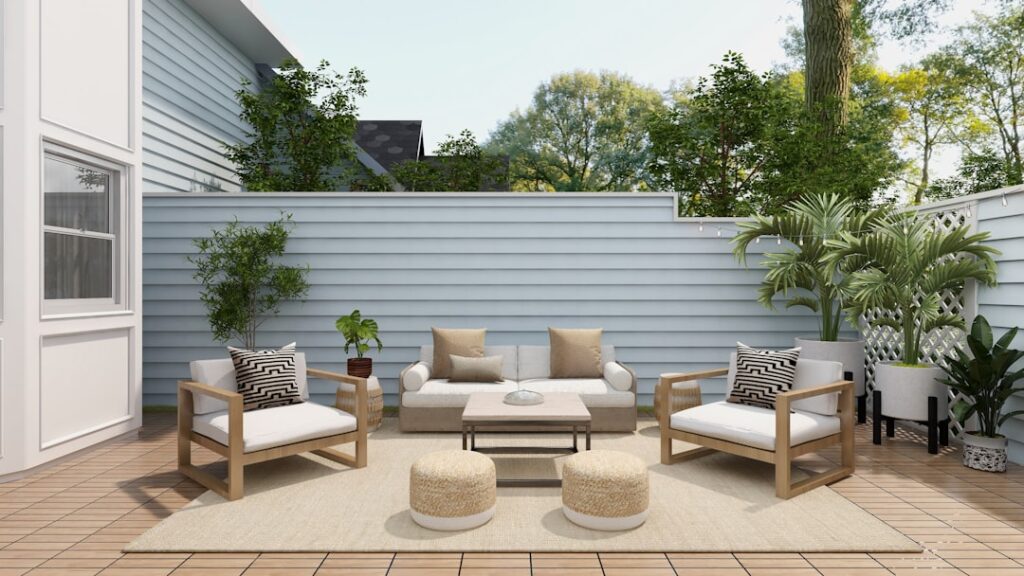
An empty patio or deck always feels half-finished, no matter how nice the furniture. An outside rug instantly defines the space, softens hard surfaces underfoot, and pulls a seating area together the same way an indoor rug anchors a living room. The key is choosing one built to survive sun, rain, and foot traffic without fading, molding, or falling apart, which means paying attention to material as much as color and pattern. Get those right, and an outdoor rug turns a plain slab into an inviting outdoor room.
Why an Outdoor Rug Is Worth It
Beyond looks, an outdoor rug does real work. It adds traction on slick surfaces, cushions concrete or wood underfoot, and visually carves out a defined zone for dining or lounging on a large patio. It can hide stains and cracks on an aging slab, and it ties together mismatched furniture under one cohesive color scheme.
An outdoor rug also extends the indoor-outdoor flow many homeowners want, making a covered porch or deck feel like a continuation of the living space. For a modest price, it is one of the easiest upgrades to a patio or balcony.
Best Materials for Outside Rugs
Material is everything outdoors, because the wrong fiber rots, fades, or grows mold fast. The leading choices are:
- Polypropylene (olefin): The most popular outdoor fiber. It resists water, fading, mold, and stains, dries fast, and is affordable.
- Polyester: Soft and colorfast, with good fade resistance; quality varies by construction.
- PET (recycled plastic): Durable, eco-friendly, soft underfoot, and easy to clean.
- Natural fibers like jute and sisal: Beautiful but best reserved for fully covered, dry areas, since they absorb moisture and can rot or mold if exposed to rain.
For an uncovered patio that sees real weather, stick with synthetics labeled for outdoor use. Reserve natural fibers for screened porches and covered spaces that stay dry.
Where You Plan to Use It Matters
A fully exposed deck demands a fast-drying, mold-resistant synthetic that shrugs off rain and direct sun. A covered porch is more forgiving, opening the door to softer or more decorative options, and even some natural-fiber rugs if they stay dry. A balcony or small patio may call for a flatweave that lies flat and does not curl in wind.
Sun exposure is the other factor. South- and west-facing areas get intense UV that fades cheaper dyes, so look for solution-dyed or UV-stabilized fibers where the color runs through the fiber rather than sitting on the surface. These hold their color for years instead of a single season.
Sizing Your Outdoor Rug
The same proportion rules that apply indoors apply outside. The rug should be large enough that the furniture relates to it, ideally with at least the front legs of seating on the rug, and it should leave a balanced border of decking or pavers around the edges. Common outdoor sizes include 5 by 8, 8 by 10, and 9 by 12 feet, plus round options for bistro sets.
For a dining set, choose a rug big enough that chairs stay on it when pulled out, adding about 24 inches beyond the table on every side. For a conversation grouping, size it to sit under the front of the sofa and chairs and unify the coffee table.
Keeping It in Place and Dry
Wind and moisture are the two enemies of an outdoor rug. A low-profile outdoor rug pad adds grip, cushioning, and crucial airflow underneath so water can escape and the surface below dries. The gap the pad creates helps prevent mold on both the rug and the deck.
To stop a rug from blowing or curling, use the pad, weight the corners with furniture, and consider outdoor rug stakes or anchors on an exposed deck. After heavy rain, lift the rug or hang it so both it and the surface beneath can dry fully, which prevents trapped moisture from staining wood or breeding mildew.
Cleaning and Care
One of the joys of a synthetic outdoor rug is how easy it cleans. For routine care, shake or vacuum off debris, then hose it down and let it air dry. For tougher grime, scrub with mild soap and water and rinse thoroughly. Always check the care label, since some rugs can take a pressure washer on a gentle setting while others should not.
Prevent the most common problems with a few habits: rinse off pollen and dirt periodically, treat spills promptly, and store the rug rolled and dry over winter or during long rainy stretches if it is not on a covered surface. Lift it occasionally to sweep underneath and let the deck breathe.
Choosing the Right Look
With durability settled, you can have fun with style. Outdoor rugs come in bold geometrics, classic stripes, faux-natural textures, and traditional patterns that mimic indoor designs. Lighter colors keep a hot patio cooler but show dirt sooner, while medium tones and patterns hide everyday grime best.
Coordinate the rug with your cushions and planters for a pulled-together look, and do not be afraid of pattern outside, where a bolder design reads as cheerful rather than busy. With a weather-ready material, the right size, a breathable pad, and simple care, an outside rug delivers comfort and style that lasts season after season.
Indoor-Outdoor Rugs Explained
Many of the best patio rugs are labeled indoor-outdoor, which means they are built from weather-resistant synthetic fibers yet styled to look at home inside too. This versatility is handy, since you can move the same rug from a covered porch to a mudroom or sunroom as seasons change. The fibers shrug off moisture and fading while still offering patterns that feel decorative rather than utilitarian.
When shopping, read the label closely. A rug marketed as indoor-outdoor is generally safe for covered or moderately exposed areas, but for a fully open deck in a rainy or sun-baked climate, confirm it is rated for direct weather and UV exposure. The construction that makes a rug suitable for a screened porch is not always the same as what survives months of direct rain and intense sun.
Longevity and When to Replace
Even the best outdoor rug eventually wears out, and knowing the signs helps you plan. Expect a quality synthetic rug to last several years with proper care, while bargain options may fade or fray within a season or two of hard exposure. Fading is usually the first thing you notice, followed by flattened pile in traffic lanes and fraying along the edges.
You can stretch a rug’s life considerably by rotating it to even out sun exposure and foot traffic, storing it dry over winter, and keeping it clean of abrasive grit. When the color has clearly washed out or the backing starts breaking down, it is time to replace it. Given how affordable a good synthetic outdoor rug is, refreshing it every few years is a small price for keeping your outdoor space looking sharp.