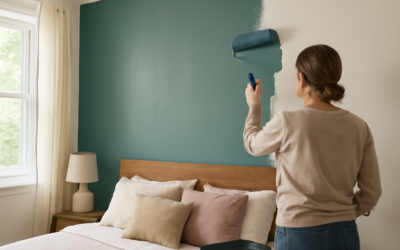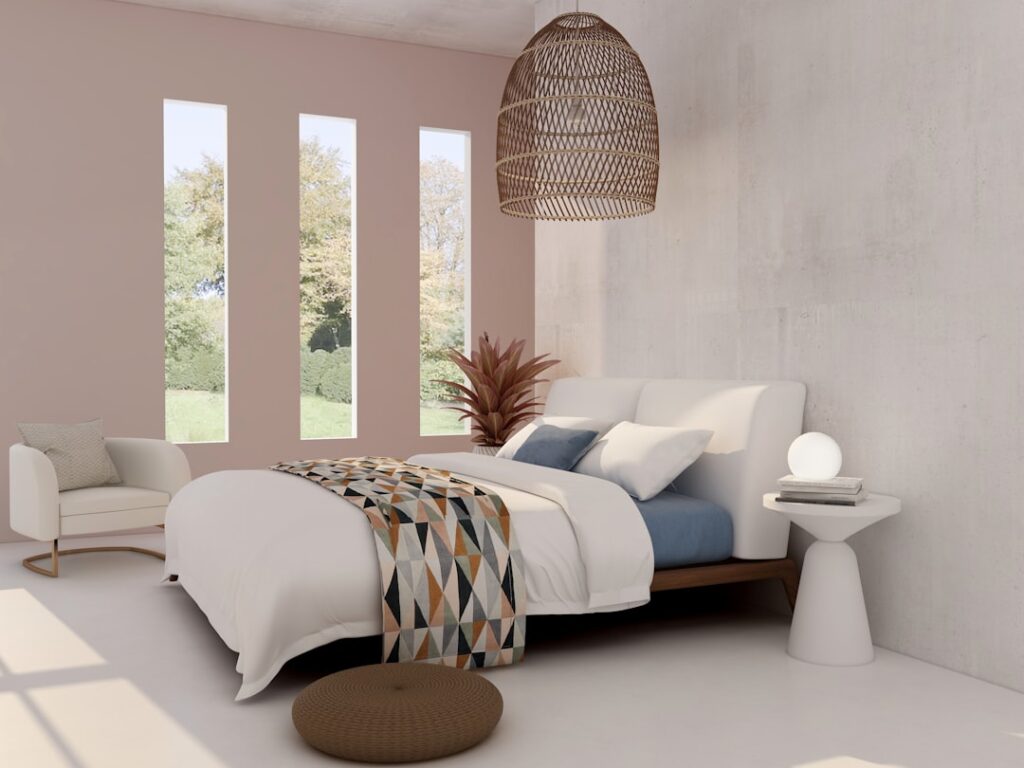
An accent wall can make a bedroom feel intentional and layered, or it can look like you ran out of paint halfway through — and the difference usually comes down to which wall you chose and whether the color has enough conviction. The best bedroom accent wall paint ideas aren’t about slapping a random bold color on a random wall; they’re about picking the wall your eye naturally lands on and choosing a shade that adds depth without fighting the rest of the room. Done well, a single painted wall creates a focal point, makes the space feel more custom, and costs you one afternoon and a quart of paint. Here’s how to get it right.
Part of our Paint & Walls guide — explore the full guide →
- Choosing the Right Wall First
- Deep, Moody Colors for a Cozy Retreat
- Soft, Serene Tones for Calm
- Making the Accent Color Relate to the Room
- Beyond Solid Color: Techniques With Impact
- Getting the Contrast Level Right
- Accent Colors for Different Bedroom Styles
- Coordinating the Rest of the Room
- Sheen and Sampling
Choosing the Right Wall First
Before you pick a color, pick the wall — this decision matters more than the shade. The strongest accent wall is the one your eye goes to first when you walk in, and in most bedrooms that’s the wall behind the headboard. It frames the bed, which is already the room’s focal point, and reinforces it rather than competing with it.
Avoid accenting a wall broken up by windows, doors, or a closet, because the interruptions fragment the color and dilute the effect. A solid, unbroken wall gives the color room to work. If your headboard wall has windows, consider the wall opposite the bed instead, which you see every time you enter. The wall you face while lying in bed is another good candidate for a calming color you’ll look at as you fall asleep.
Deep, Moody Colors for a Cozy Retreat
Bedrooms can carry more drama than shared living spaces because you experience them mostly in soft, low, evening light — which flatters rich, saturated colors that would feel heavy elsewhere. A deep navy behind the headboard reads as sophisticated and enveloping, pairing beautifully with white bedding and warm wood or brass accents. Benjamin Moore’s Hale Navy and Sherwin-Williams Naval are proven choices.
Charcoal and near-black shades create a dramatic, hotel-like backdrop that makes light bedding and metallic fixtures pop. Deep forest and emerald greens bring a natural, restful depth that works especially well with plants and natural textures. These darker colors visually recede, which can actually make the bed feel more prominent and the room feel more layered rather than smaller.
Soft, Serene Tones for Calm
If drama isn’t your goal, a muted, low-saturation accent wall adds subtle depth while keeping the room peaceful. These options soothe rather than energize:
- Sage and eucalyptus greens: calming, natural, and easy to pair with neutrals and wood
- Dusty blues and blue-grays: restful and slightly cooling, great for a serene sleep space
- Warm terracotta and clay: cozy and grounding without going dark
- Soft blush and muted mauve: warm and gentle, more sophisticated than bright pink
- Greige a few shades deeper than the other walls: subtle contrast that adds dimension quietly
A tonal approach — the same color family as your other walls but noticeably deeper — is the safest way to get depth without any risk of clashing.
Making the Accent Color Relate to the Room
An accent wall works when the color connects to something else in the room rather than floating alone. Pull the accent shade from an existing element — a color in your bedding, a rug, artwork, or curtains — so the wall feels woven into the design instead of tacked on. This single principle separates accent walls that look designed from ones that look accidental.
Balance is the other half. Echo the accent color in a couple of small touches elsewhere — throw pillows, a lamp, a piece of art on an adjacent wall — so the eye reads it as intentional. Keep your bedding and larger furniture in colors that complement, not compete with, the wall.
Beyond Solid Color: Techniques With Impact
A flat coat of color is the classic move, but a few techniques elevate an accent wall further. A color-drenched approach — painting the accent wall, its trim, and even the ceiling in one deeper shade — creates an immersive, cocoon-like nook that’s especially striking behind a bed. It’s a bolder commitment but a designer-favorite for good reason.
Other options add texture and interest:
- Vertical or horizontal color blocking: paint the lower two-thirds or a geometric shape for a modern, graphic look
- Limewash or textured finishes: soft, cloudy depth with organic movement, popular in warm neutrals and terracottas
- An arch or half-circle painted behind the headboard to frame the bed like a designed alcove
- Two-tone with a painted “headboard” shape where the wall doubles as the headboard itself
These need only tape, a level, and patience, and they read as far more custom than a plain wall.
Getting the Contrast Level Right
The amount of contrast between the accent wall and the others sets the mood. High contrast — a deep navy against white walls — feels bold and graphic. Low contrast — a soft sage against a warm off-white — feels subtle and sophisticated. Neither is wrong, but decide which energy you want the room to have and choose your contrast to match.
For small bedrooms, a common myth says dark walls shrink the space, but a moody accent wall often does the opposite by adding depth that makes the room feel richer, not smaller. Just keep the other three walls light so the room stays balanced and the accent has something to play against.
Accent Colors for Different Bedroom Styles
Match the accent color to the room’s overall style so it reinforces the look rather than fighting it. A modern, minimalist bedroom carries a crisp charcoal, deep navy, or clean muted color beautifully, keeping the rest of the palette restrained. A boho or eclectic space welcomes warmer, earthier accents — terracotta, rust, mustard, or a warm clay — layered with texture and pattern.
A traditional bedroom suits classic deep colors like Hale Navy or a rich hunter green that feel timeless against wood furniture. For a coastal or calm, airy bedroom, soft blues, sage, and misty gray-greens keep the serene feeling while still adding a focal wall. And in a romantic or feminine space, a muted mauve, dusty rose, or soft plum brings warmth without reading juvenile. The point is that the accent wall should feel like a natural extension of the style you already love, not a color grafted on because it was trendy.
Coordinating the Rest of the Room
An accent wall never works in isolation — the surrounding elements decide whether it looks polished or piecemeal. Keep the other three walls in a light, quiet color that lets the accent stand out, and choose bedding that either complements the accent or provides clean contrast, like crisp white against a deep navy. Repeat the accent color in two or three small touches around the room, such as a throw, a lampshade, or artwork, so the eye connects them and reads the scheme as deliberate.
Pay attention to the headboard, too. Against a bold accent wall, a simple upholstered or wood headboard in a neutral tone lets the wall be the star, while a low or backless bed frame gives the painted wall room to breathe as the focal point. Balance the visual weight so the wall, the bed, and the surrounding decor feel like parts of one composed room rather than competing elements.
Sheen and Sampling
Use a flat or matte finish on a bedroom accent wall. Matte absorbs light, deepens the color, and hides minor wall imperfections, giving that soft, velvety look that suits a restful room — glossier sheens reflect light and can cheapen a deep color. Because bedrooms live under low, warm light, a matte deep color reads especially rich in the evening.
Always sample before committing. Paint two coats on poster board and prop it against the headboard wall, then look at it in the evening under your actual bedside lamps, not just in daylight. Deep colors in particular shift dramatically between bright afternoon sun and warm 2700K bulbs, and you want to love the color when you’re actually in the room using it. Among all the bedroom accent wall paint ideas here, the ones that succeed share the same recipe: the right wall, a color pulled from the room, a contrast level that matches the mood you want, and a matte finish confirmed under real light. Follow that, and one wall and one afternoon will genuinely transform how your bedroom feels.