
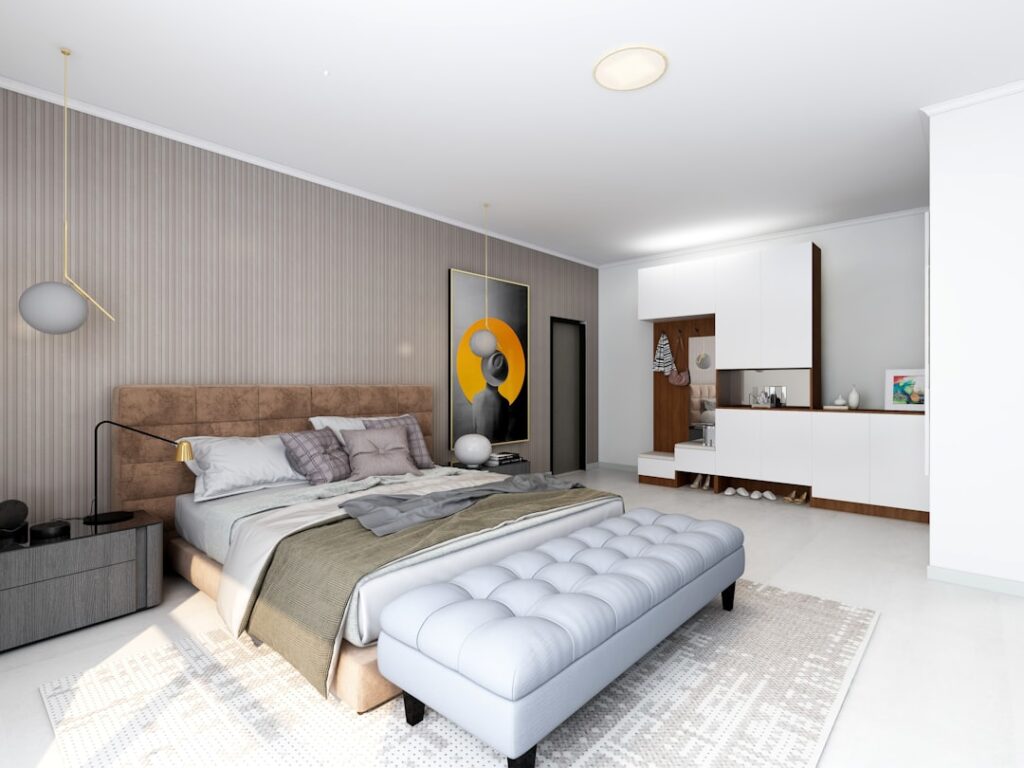
You spend roughly a third of your life in the bedroom, so the energy in this room affects everything from sleep quality to stress levels. Bedroom feng shui is the practice of arranging furniture, choosing colors, and managing clutter to create an environment that promotes rest and harmony. Whether you fully subscribe to the philosophy or simply want a bedroom that feels more peaceful, these principles consistently produce a calmer, more inviting space.
The Command Position: Where to Place Your Bed
Bed placement is the single most important element in bedroom feng shui. The guiding rule is the “command position” — place the bed so you can see the bedroom door from the bed without being directly in line with it.
- Position the bed diagonally opposite the door when possible. You want a clear sightline to the entrance while lying down.
- Never place the bed with your feet pointing directly at the door (known as the “coffin position” in feng shui). This alignment is believed to drain energy during sleep.
- Avoid placing the bed directly under a window. If your layout forces this, use a solid headboard and heavy curtains to provide symbolic support and block drafts.
- Keep the bed away from the wall shared with a bathroom — the water energy on the other side is considered disruptive to restful sleep.
If your room layout makes the command position impossible, place a mirror where it reflects the door so you can see it from bed. This is a widely accepted feng shui remedy for challenging floor plans.
Headboard Selection
A solid headboard represents stability and support in feng shui. Wood and upholstered headboards are the strongest choices — they provide both physical and visual grounding. Metal headboards with bars or open designs are less ideal because they lack the solid, protective quality that promotes a sense of security.
The headboard should be firmly attached to the bed frame or mounted to the wall. A wobbly headboard symbolizes instability in relationships and personal foundation.
Best Colors for Bedroom Feng Shui
Color directly influences the room’s energy. For the bedroom, calming and warm tones support relaxation and intimacy.
- Earth tones: Warm beige, terracotta, soft browns, and sand colors ground the space and promote stability. These work well on all four walls or as an accent.
- Soft greens: Sage, moss, and muted olive represent growth and renewal. Green also connects to health energy in the feng shui system.
- Muted blues: Light blue and blue-gray calm the nervous system and pair well with wood tones. Avoid bright or electric blues — they are too stimulating for a sleep environment.
- Warm whites and creams: Clean and versatile. Off-whites with warm undertones feel cozy, while stark cool whites can feel clinical.
- Pinks and soft corals: These colors activate relationship energy. A blush accent wall behind the bed is a popular bedroom feng shui application for couples.
Avoid bold red (too fiery), black (too heavy), and bright orange or yellow (too stimulating) as primary bedroom colors. Small accents in these shades are fine, but large areas disrupt the calm energy you want in a sleep space.
Furniture Layout Rules
Beyond the bed, every piece of furniture contributes to or detracts from the room’s energy flow.
- Matching nightstands: Place one on each side of the bed, even if you sleep alone. Symmetry creates balance and signals openness to partnership.
- Clear under the bed: Storage bins and clutter under the bed block energy flow. If you must use under-bed storage, limit it to soft items like linens and off-season clothing.
- No desk or workspace: A desk in the bedroom brings work energy into your rest space. If the bedroom doubles as an office (common in small apartments), separate the zones with a screen or curtain and cover the desk at night.
- Minimal electronics: TVs, laptops, and phones emit stimulating energy. Ideally, keep the bedroom screen-free. At minimum, turn off and cover the TV before sleep.
- Dresser placement: Position dressers and tall furniture away from the bed. Looming furniture near your head creates a subconscious sense of being weighed down.
Mirrors in the Bedroom
Mirrors are powerful in feng shui, and their placement in the bedroom requires care. The most common guideline: do not position a mirror where it reflects the bed while you sleep. The reflection is believed to bounce energy around the room and disturb rest. Many people also report that a mirror facing the bed makes a room feel less private.
If your closet has mirrored doors facing the bed, cover them with curtains or replace them with solid panel doors. A mirror on the wall perpendicular to the bed — where it reflects a window or artwork instead — is perfectly fine.
Decluttering for Better Energy Flow
Clutter is the biggest feng shui offender in any room. In the bedroom specifically, excess belongings create stagnant energy that disrupts sleep and increases anxiety. Go through the room and remove anything that does not serve rest or intimacy — exercise equipment, stacks of books you will never read, piles of laundry, and collections of items on every surface.
Keep nightstand surfaces minimal: a lamp, a small plant or candle, and one or two personal items. Close closet doors before bed. A tidy room signals to your brain that the space is orderly and safe, making it easier to fall asleep.
Plants and Natural Elements
Feng shui traditionally advises caution with plants in the bedroom because their active growing energy can be too stimulating. However, a single small plant on a nightstand or windowsill — such as a snake plant, pothos, or peace lily — adds a grounding natural element without overwhelming the space. Avoid large plants, multiple pots, or anything with thorns or sharp leaves like cacti.
Applying Bedroom Feng Shui on a Budget
You do not need to redecorate entirely. Start with the three highest-impact changes: move your bed into the command position, remove clutter from under the bed and surfaces, and choose soft, warm bedding in earth or muted tones. These adjustments cost nothing to minimal and produce the most noticeable improvement in how the room feels. From there, add matching nightstands, adjust lighting to warm bulbs (2700K), and address mirror placement as your budget allows.


