A primary bedroom remodel returns 50 to 75 percent of cost at resale and dramatically improves daily quality of life, yet many homeowners overspend on trends that will date in 5 years. Smart bedroom remodel ideas focus on storage, light, flooring, and acoustics, the four factors that consistently rank highest in postoccupancy surveys. This guide breaks down realistic remodels across four budget tiers, design directions that age well, and the upgrades that actually pay back at resale.
- Tier 1: Cosmetic Refresh ($1,500 to $3,500)
- Tier 2: Mid-Range Renovation ($5,000 to $9,000)
- Tier 3: Full Remodel ($12,000 to $18,000)
- Tier 4: Down-to-Studs Remodel ($22,000 to $40,000)
- Layout Tweaks That Transform Small Bedrooms
- Flooring Options Ranked by ROI
- Lighting Plan for Better Sleep
- Storage Upgrades With High Payback
- Common Bedroom Remodel Pitfalls
- Final Pro Tips
Tier 1: Cosmetic Refresh ($1,500 to $3,500)
The cheapest impactful remodel touches paint, lighting, hardware, and textiles. Skip the flooring and built-ins for now and focus on the visible surfaces.
- Premium paint job (Benjamin Moore Regal Select), $400 to $800 DIY or $1,800 contractor
- New ceiling fan with light kit ($175) or pendant fixture ($250)
- Nightstand lamps ($120 pair) and dimmer switches ($28 pair)
- New bedding ensemble from Brooklinen or Parachute ($300 to $500)
- Window treatments: blackout cellular shades ($180 to $350 for two windows)
- Closet door swap to mirrored bypass or barn door ($300 to $700)
Tier 2: Mid-Range Renovation ($5,000 to $9,000)
Add new flooring, a feature wall, and built-in lighting at this tier. Engineered hardwood at $4 to $7 per square foot installed runs $1,200 to $2,800 for a 250 square foot bedroom.
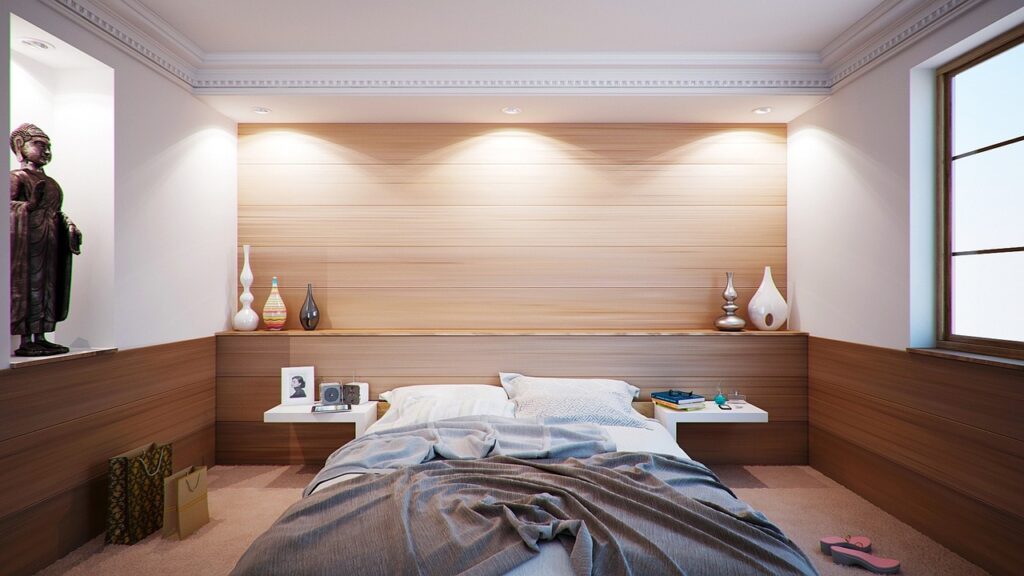
A shiplap or board and batten accent wall behind the bed costs $300 to $700 in materials and one weekend of DIY labor. Pair with two USB-equipped wall sconces from Hinkley Lighting or Visual Comfort ($175 each) hardwired into the wall, eliminating bedside lamp clutter.
Tier 3: Full Remodel ($12,000 to $18,000)
This budget unlocks closet redesign, electrical updates, and proper soundproofing. Add a custom Container Store Elfa or California Closets system ($2,500 to $5,500) that doubles usable closet capacity.
Update electrical with two USB-C outlets per side of the bed, a ceiling smoke alarm, hardwired sconces, and dedicated closet lighting. Permit and electrician cost runs $1,200 to $2,200. Replace the hollow-core door with a solid-core door ($350) for noticeable noise reduction.
Tier 4: Down-to-Studs Remodel ($22,000 to $40,000)
A complete teardown adds new insulation, drywall, electrical, HVAC zoning, flooring, ceiling treatment, and built-ins. Expect 4 to 8 weeks of construction time and a temporary sleeping arrangement.
Worthwhile add-ons at this tier include a coffered or tray ceiling ($1,800 to $3,500), spray-foam insulation in exterior walls for noise control ($1,200 to $2,400), wall-to-wall wool carpet over a memory-foam pad ($3,500 to $6,500), and wired smart blinds from Lutron Sivoia QS ($1,200 to $2,800).
Layout Tweaks That Transform Small Bedrooms
Most bedrooms under 130 square feet feel cramped because the bed is in the wrong spot. Center the bed on the longest wall, away from the door, with at least 24 inches of clearance on each side. Move the dresser opposite the bed to create symmetry.
If the room has only one usable wall for the bed, consider a wall-mounted headboard with floating nightstands. IKEA Malm floating side tables ($45 each) save 16 inches of floor space versus traditional nightstands.
Flooring Options Ranked by ROI
Wall-to-wall carpet still leads in primary bedrooms for warmth and noise dampening. Stainmaster PetProtect with a 7 pound memory foam pad runs $5 to $8 per square foot installed and lasts 10 to 15 years.
- Engineered hardwood: $5 to $9 per sq ft installed, top resale value
- Wool berber carpet: $7 to $12 per sq ft, premium quiet underfoot
- Luxury vinyl plank: $4 to $7 per sq ft, best for kids’ rooms
- Solid hardwood refinish: $3 to $5 per sq ft, if existing floors are sound
Lighting Plan for Better Sleep
Sleep researchers recommend layered, dimmable lighting in primary bedrooms. Combine an overhead ambient fixture, two bedside task lights, and one accent light like a floor lamp in a reading corner. All on dimmers, all 2700K warm white or warmer.
Avoid recessed cans directly over the bed, which create harsh glare when looking up. Center the overhead fixture above the foot of the bed or skip overhead entirely in favor of two strong wall sconces.
Storage Upgrades With High Payback
Reach-in closet conversions to walk-ins are not always worth it. A well-organized 6 foot reach-in with adjustable rods, double-hang sections, and shoe shelves often holds more than a cluttered 8 by 5 walk-in. Spend $2,000 on the system, not $15,000 on the conversion.
Under-bed storage adds 12 to 20 cubic feet of hidden capacity. Use the South Shore Step One platform bed with 6 drawers ($349) or add 2 California Closets rolling drawers ($300) under any standard bed.
Common Bedroom Remodel Pitfalls
Painting the ceiling the same white as the trim is a missed opportunity. A ceiling 2 to 3 shades lighter than the walls in a soft warm white makes the room feel taller and more enveloping.
Skipping window treatment investment is another regret. Cheap PVC blinds rattle, leak light, and look dated within 2 years. Cellular shades with blackout liners cost $90 to $180 per window and last 10 plus years.
Final Pro Tips
Order all the materials before demo starts. Backordered cabinets, flooring, or lighting fixtures stretch a 4 week project to 12 weeks and force the family to sleep on the couch. Verify lead times in writing before committing.
For maximum resale, keep the design direction neutral. Bold paint, accent walls in trendy colors, and statement chandeliers lose appeal fast. Save the personality for textiles, artwork, and bedding that the next owner can swap easily.