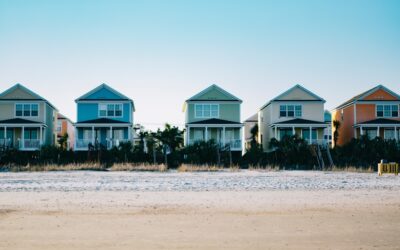
A coastal room does not need seashell decor to feel like the beach. It needs the right light, airy colors: pale blue-greens like sea glass, clean whites like sun-bleached cotton, and a few sandy neutrals to keep things warm. The best benjamin moore coastal paint colors do exactly that, and Benjamin Moore describes its own coastal palette as soft blues, sandy neutrals and fresh whites.
Part of our Paint & Walls guide — explore the full guide →
The short list: for walls, start with Ocean Air 2123-50, Palladian Blue HC-144 or Sea Foam 2123-60. For whites and trim, look at White Dove OC-17 or Chantilly Lace OC-65. For warm, sandy neutrals, sample Muslin OC-12 or Linen White OC-146. For a nautical accent, Hale Navy HC-154 is the classic choice.
- Benjamin Moore Coastal Paint Colors Swatch Table
- Sea-Glass Greens and Airy Blue-Greens
- Airy Blues and Nautical Navy
- Coastal Whites and Sandy Neutrals
- Room Pairings That Work
- How to Choose and Test Coastal Colors
- Troubleshooting Coastal Paint Colors
- General Cost and When to Hire a Painter
- Frequently Asked Questions
Codes, descriptions and Light Reflectance Values (LRV) here come from Benjamin Moore’s own color pages. LRV runs from 0 (black) to 100 (pure white) and tells you how much light a color reflects, which matters a lot in a breezy coastal scheme.
Benjamin Moore Coastal Paint Colors Swatch Table
The table lists a coastal palette sorted by color group. Use the LRV column to compare lightness: anything over about 70 reads very light on the wall, and colors in the 50s and 60s show clearer color.
| Color | Code | LRV | Character | Best rooms |
|---|---|---|---|---|
| Sea Foam | 2123-60 | 82.71 | Blue-green almost as light as a white | Bathrooms, bedrooms, ceilings |
| Ocean Air | 2123-50 | 71.84 | Soothing pale blue-green | Bedrooms, bathrooms, living rooms |
| Palladian Blue | HC-144 | 60.4 | Soft, airy blue-green | Living rooms, kitchens, bedrooms |
| Yarmouth Blue | HC-150 | 55.82 | Classic airy blue | Bedrooms, bathrooms, porches |
| Wythe Blue | HC-143 | 48.11 | Blue-green with a subtle gray cast | Dining rooms, offices, cabinets |
| Quiet Moments | 1563 | 60.73 | Blue-gray mix, tranquil | Bedrooms, bathrooms |
| Palest Pistachio | 2122-60 | 83.84 | Barely-there hue with crisp blue notes | Whole-house walls, ceilings |
| Chantilly Lace | OC-65 | 90.04 | Clean, crisp white | Trim, ceilings, bright walls |
| White Dove | OC-17 | 83.16 | Clean, classic white | Walls, trim, cabinets |
| Hale Navy | HC-154 | 8.36 | Use-anywhere navy, maritime feel | Accent walls, doors, islands |
Two sandy neutrals round out the palette: Linen White OC-146 (LRV 80.94), a white with a touch of cream, and Muslin OC-12 (LRV 66.54), a warm neutral that Benjamin Moore says captures the charm of organic materials.
Sea-Glass Greens and Airy Blue-Greens
Sea glass is the signature coastal color, and Benjamin Moore’s 2123 family covers it well. Sea Foam 2123-60 is the lightest; Benjamin Moore calls it almost as light as a white, with a cool, cleansing quality. It is ideal for a small bathroom or a bedroom ceiling where you want a whisper of color.
Ocean Air 2123-50 is one step deeper and appears among the most popular colors on the brand’s coastal page. Benjamin Moore describes it as a go-to blue-green for instantly soothing spaces. With an LRV of 71.84, it still reflects a lot of light, so it works in rooms without much sun.
Palladian Blue HC-144 is a long-time favorite from the Historical Colors collection, described as a soft, airy blue-green that conjures clear skies. At an LRV of 60.4 it shows more color than Ocean Air, so it suits bright living rooms and kitchens. Wythe Blue HC-143 is deeper again (LRV 48.11), a genteel blue-green with a subtle gray cast that looks great on a dining room wall or a kitchen island.
For the faintest hint of green, Palest Pistachio 2122-60 (LRV 83.84) is described as a barely-there hue with crisp notes of blue. It reads almost white and works on every wall of an open-plan beach house.
Airy Blues and Nautical Navy
Clear blues bring the sky into a coastal room. Yarmouth Blue HC-150 is described as a classic airy blue that can instantly freshen up a room. With an LRV of 55.82 it holds its color well in bright southern light, where paler blues can wash out. Benjamin Moore suggests White Dove OC-17 among its coordinating colors.
Quiet Moments 1563 sits between blue and gray (LRV 60.73) and is listed among the most popular coastal colors. It suits bedrooms where you want a calm, restful look that is not obviously blue.
Hale Navy HC-154 is the anchor of a nautical scheme. Benjamin Moore calls it a use-anywhere shade of navy with a classic maritime feel, and its LRV of 8.36 means it reads very dark. The brand’s own most popular coastal combination is White Dove OC-17 walls with Hale Navy HC-154 and Caliente AF-290, a red that was Benjamin Moore’s 2018 Color of the Year. That trio gives a classic red, white and navy seaside look.
Coastal Whites and Sandy Neutrals
Whites set the tone of a coastal room. White Dove OC-17 (LRV 83.16) is described as a clean and classic white; it is soft enough for walls and works as trim with almost any blue. Chantilly Lace OC-65 (LRV 90.04) is brighter and crisper, a strong choice for trim and ceilings beside blue-green walls.
Sandy neutrals keep coastal schemes from feeling cold. Linen White OC-146 is fresh and delicately shaded with a touch of cream, according to Benjamin Moore. Muslin OC-12 is warmer and deeper. For crisp trim beside Muslin, Atrium White OC-145 (LRV 85.08), a fresh white with a touch of pink, lists Muslin among its coordinating colors.
Room Pairings That Work
Benjamin Moore’s coastal page also notes that light colors work well with wood and linen, and it suggests decor such as sea glass, woven baskets and driftwood. Paint is only one layer of the look; the pairings that follow assume natural textures in furniture and fabrics, which soften cool blue-greens and keep whites from feeling sterile. Hardware choices matter as well: brushed nickel and chrome keep a crisp, breezy feel, while aged brass warms up navy and sandy neutrals.
- Bathroom: Sea Foam walls, Chantilly Lace trim and ceiling, white tile and light wood or gray flooring.
- Primary bedroom: Ocean Air or Quiet Moments walls with White Dove trim, linen bedding and a jute rug.
- Living room: Palladian Blue walls, White Dove trim, Muslin on an adjoining hallway for warmth.
- Kitchen: White Dove cabinets with a Hale Navy island, or a Wythe Blue island with Chantilly Lace uppers.
- Whole house: Palest Pistachio or Linen White on main walls, with blue-green accent rooms.
- Front door or porch: Hale Navy door with white trim, or Yarmouth Blue on a porch ceiling.
Most Benjamin Moore coastal paint colors look their best next to natural textures such as linen, rattan, jute and weathered wood. Flooring matters for coastal palettes. Light oak, whitewashed wood and pale gray luxury vinyl plank keep the look airy. Very orange or red-toned wood floors can make blue-greens look muddy, so choose blues with less green in that case.
How to Choose and Test Coastal Colors
- Check light direction. North light makes blue-greens look cooler and grayer; choose a warmer or lighter option like Ocean Air. South light can wash out pale colors; try a deeper shade like Palladian Blue.
- Use LRV for dark rooms. In low-light rooms, pick colors with an LRV over about 65 to keep the space bright.
- Sample generously. Peel-and-stick paint sample sheets or brush-on samples should go on several walls, including near windows and in corners.
- Review at night. Warm bulbs can turn blue-greens gray or slightly green. Test under your actual lighting.
- Pick trim last. Once you choose the wall color, compare two whites against it before committing.
- Choose sheen by room. Matte or eggshell for living areas and bedrooms, satin for baths and kids’ rooms, semi-gloss for trim.
Troubleshooting Coastal Paint Colors
Most coastal color problems come from light, not from the paint itself. Blue-greens are especially sensitive to bulb temperature and reflected color from floors, cabinets and the view outside, so diagnose the cause before you repaint.
- Too green: switch to a bluer option like Yarmouth Blue or Quiet Moments.
- Too cold: add a warmer white (White Dove or Linen White) on trim and warm wood or rattan accents.
- Washed out: go one step deeper on the same strip, such as Sea Foam to Ocean Air.
- Too dark: move up in LRV, or limit deep colors to one wall, the island or the door.
General Cost and When to Hire a Painter
Your cost for Benjamin Moore coastal paint colors depends mostly on the product line and the room size, not the color. Plan on about 2 gallons for two coats in an average bedroom. Professional painting runs from a few hundred dollars to over a thousand per room depending on size and prep. Hire a pro for tall ceilings, stairwells and cabinets where a smooth finish matters. In homes built before 1978, test old paint for lead before sanding and use lead-safe practices. In bathrooms, fix any moisture problems and ensure good ventilation before painting.
Frequently Asked Questions
What is the most popular Benjamin Moore coastal blue?
Benjamin Moore lists Ocean Air 2123-50 first among its most popular coastal colors, alongside Quiet Moments 1563. Palladian Blue HC-144 and Yarmouth Blue HC-150 are other long-standing airy blue options.
What Benjamin Moore color looks like sea glass?
Sea Foam 2123-60 and Ocean Air 2123-50 are pale blue-greens that read like sea glass. Palladian Blue HC-144 and Wythe Blue HC-143 are deeper blue-green options.
What white goes with Benjamin Moore coastal blues?
White Dove OC-17 is a soft classic white for trim and walls. Chantilly Lace OC-65 is brighter and crisper, and works well on trim and ceilings.
Is Hale Navy a good coastal color?
Yes. Benjamin Moore describes Hale Navy HC-154 as a navy with a classic maritime feel, and pairs it with White Dove and Caliente in its popular coastal combination.
What LRV should a coastal paint color have?
For an airy coastal look, most wall colors sit at an LRV of about 55 or higher. Use deeper colors like Hale Navy for accents, doors or islands.