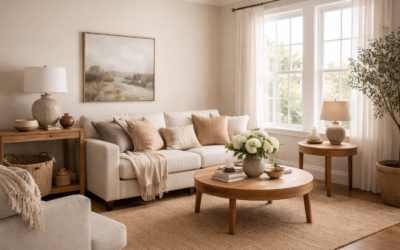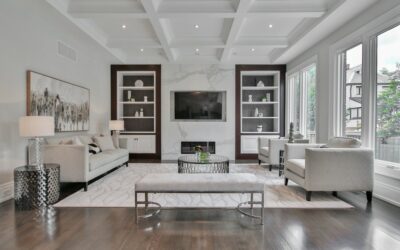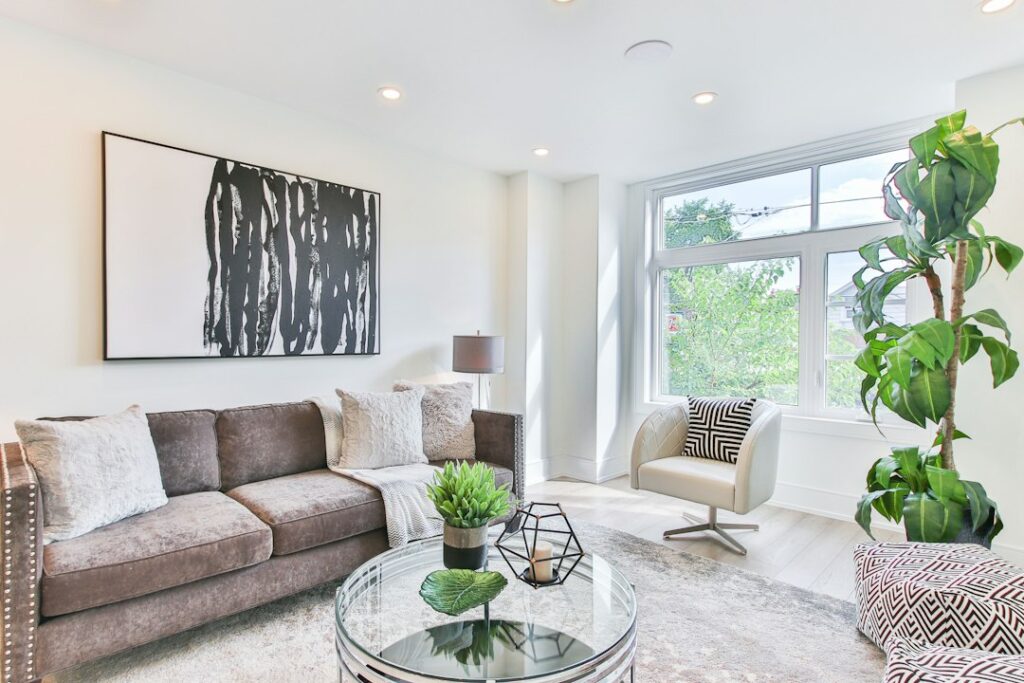
When a bright white feels too stark and a beige feels too heavy, homeowners usually end up hunting for a soft, warm off-white. Benjamin Moore Soft Chamois is one of those in-between colors: Benjamin Moore describes it as a soothing white with a warm, delicately shaded cast. It carries the code OC-13 (it is also listed under the number 969), sits in the Off-White Collection, and has a light reflectance value (LRV) of 77.4 on the manufacturer’s color page.
On the wall it reads as a creamy, slightly deeper white with visible warmth. That makes it a comfortable choice for living rooms, bedrooms, traditional kitchens and whole-house color schemes, and a soft trim color next to warm walls. Because its LRV is lower than most popular whites, it looks noticeably more like a color than a white, especially in dim rooms.
- Benjamin Moore Soft Chamois at a Glance
- What an LRV of 77.4 Means
- How Soft Chamois Behaves in Different Light
- Best Rooms for Soft Chamois
- Coordinating Trim and Accent Colors
- Soft Chamois vs White Dove vs Swiss Coffee
- How to Test Soft Chamois
- Painting Tips and Supplies
- Troubleshooting Common Issues
- Pairing Soft Chamois With Floors and Finishes
- Cost and Coverage
- Frequently Asked Questions
Benjamin Moore Soft Chamois at a Glance
The specs come from Benjamin Moore’s color page. Published data can be revised, so check the current page or a physical sample before you buy.
| Spec | Value | What it means |
|---|---|---|
| Color name | Soft Chamois | A warm off-white |
| Color number | OC-13 (also 969) | Either number should mix the same color; give the code at the counter |
| Collection | Off-White Collection | Benjamin Moore’s range of curated whites |
| LRV | 77.4 | Light, but deeper than a bright white |
| Color family | White | Reads as a creamy white, not a beige |
| Undertone | Warm, delicately shaded | Creamy warmth with a soft shadow, not a crisp white |
| Coordinating colors listed | Tapestry Beige, Saybrook Sage, Annapolis Gray, Mink | Benjamin Moore’s suggested pairings |
| Similar color listed | Dove Wing (960) | A close alternative to sample alongside it |
What an LRV of 77.4 Means
LRV runs from 0 for black to 100 for a theoretical perfect white. Popular bright whites typically land in the 80s or close to 90, so at 77.4 Soft Chamois sits a clear step under them. It still reflects plenty of light and keeps a room bright, but it has enough depth that you see its warmth on the wall rather than just a clean white surface.
The practical effect: in a sunny room it looks like a warm, glowing white; in a dim room it can look like a pale cream or even a very light greige-beige. That depth is useful when you want a soft, enveloping feel, and it hides minor scuffs and shadows better than a stark white.
How Soft Chamois Behaves in Different Light
North-facing rooms
Cool northern light tones down warm colors, which works in Soft Chamois’s favor. Its warmth keeps north rooms from feeling gray and cold, though it can look slightly deeper and more muted than the chip.
South-facing rooms
Strong warm sunlight intensifies warm undertones. In a bright south-facing room, Soft Chamois can lean noticeably creamy or slightly yellow at midday. Test it here before painting a whole room.
East and west light
Expect a warmer, glowing look during the hours the room gets direct sun and a calmer, slightly shaded look the rest of the day.
Artificial light
Warm 2700K bulbs make it read cozy and creamy. Neutral 3000K to 3500K bulbs keep it balanced. Cool, high-Kelvin bulbs can make it look flat or slightly dingy, so avoid them with this color.
Best Rooms for Soft Chamois
- Living and family rooms: A warm, relaxed backdrop for wood furniture, leather and natural fabrics.
- Bedrooms: Soft and restful, without the clinical feel of a bright white.
- Traditional kitchens: Pairs well with warm wood cabinets, cream or beige countertops and brass hardware. It can also work on cabinets for a soft, classic look.
- Whole-house color: Its gentle depth makes it an easy color to flow through hallways and open plans.
- Trim next to warm walls: Next to beige, tan or warm greige walls, it looks softer and more cohesive than a stark white trim.
It is a weaker fit for very modern spaces built around cool gray, black and stainless steel, where a cooler, brighter white usually looks cleaner.
Coordinating Trim and Accent Colors
Benjamin Moore lists four coordinating colors for Soft Chamois, and together they show the warm, earthy palette it belongs to.
- Tapestry Beige (OC-32): A warm neutral for adjoining rooms or a tone-on-tone scheme.
- Saybrook Sage (HC-114): A soft green that gives a calm, natural contrast for an accent wall, cabinets or a nearby room.
- Annapolis Gray (HC-176): A deeper gray for doors, an island, built-ins or exterior shutters.
- Mink (2112-10): A deep brown for strong contrast on accent walls, doors or furniture.
For trim, many people paint Soft Chamois walls with a slightly brighter warm white on the trim, or simply use Soft Chamois itself on trim in a higher sheen for a soft, monochrome look.
Soft Chamois vs White Dove vs Swiss Coffee
All three are warm Benjamin Moore whites with OC (Off-White Collection) codes, and they often end up on the same sample board. The LRVs come from Benjamin Moore’s color pages.
| Color | Code | LRV | How it compares |
|---|---|---|---|
| Soft Chamois | OC-13 | 77.4 | Deepest of the three; creamiest and most shaded |
| Swiss Coffee | OC-45 | 81.91 | Lighter warm white with a creamy feel |
| White Dove | OC-17 | 83.16 | Brightest of the three; a soft, warm white |
White Dove is brighter and reads more clearly as white, which is why it is so common on trim, cabinets and walls in bright rooms. If Soft Chamois feels too creamy or too dark for your space, White Dove is the natural next sample.
Swiss Coffee falls between the two in brightness. It keeps a creamy warmth but lifts the room more than Soft Chamois. Choose Soft Chamois when you want the most warmth and depth, especially to keep a north-facing room from feeling cold.
How to Test Soft Chamois
- Paint two large sample boards, or use peel-and-stick sample sheets, at least 12 by 12 inches.
- Place them on different walls, including one in shadow and one near a window.
- Set a sheet of white printer paper beside each sample to reveal the undertone.
- Check morning, afternoon and evening light, and again under your own lamps.
- Hold samples against your flooring, countertops, cabinets and upholstery before deciding.
Painting Tips and Supplies
A good paint roller and tray kit with a 3/8 inch nap cover handles most smooth interior walls; use a 1/2 inch nap for lightly textured surfaces. A 2 to 2 1/2 inch angled sash brush makes cutting in along trim and ceilings easier.
- Walls: matte or eggshell for living spaces and bedrooms.
- Kitchens, baths and hallways: eggshell or satin for easier cleaning.
- Trim and cabinets: satin or semi-gloss.
- Over dark colors: prime first, then apply two finish coats.
Sheen availability varies by product line, so confirm which finishes the paint you pick offers.
Troubleshooting Common Issues
- Looks yellow: usually strong warm sun or warm bulbs. Switch to neutral bulbs, or try a brighter warm white such as White Dove.
- Looks dingy or gray: the room is dim or lit with cool bulbs. Warmer bulbs help.
- Clashes with cool white trim: a crisp, cool white can make Soft Chamois look dirty. Use a warmer white or the same color for trim.
- Touch-ups show: match the sheen and batch, and feather the edges.
Pairing Soft Chamois With Floors and Finishes
Warm whites and wood floors are natural partners. Soft Chamois sits comfortably with red oak, white oak, hickory and walnut, and it softens the contrast with darker stained floors so a room does not look choppy. With warm-toned luxury vinyl plank or laminate, it reads cohesive and calm. Very cool gray floors are the exception: next to them, the creamy undertone can look slightly yellow, so test carefully or choose a more neutral white.
For countertops and tile, cream, beige, warm-veined marble-look and butcher block surfaces all work well. Brushed brass, bronze and aged nickel hardware suit the color better than bright chrome. If you are planning an exterior scheme, the same warmth makes Soft Chamois a pleasant trim choice against tan, sage or warm gray siding, though exterior colors always look lighter outdoors, so sample them outside.
Cost and Coverage
Color does not change the price; the paint line and sheen do. Premium interior paint generally costs about $50 to $100 per gallon, and a gallon covers roughly 350 to 400 square feet per coat. Plan on two coats for walls.
Frequently Asked Questions
Is Benjamin Moore Soft Chamois warm or cool?
It is warm. Benjamin Moore describes it as a soothing white with a warm, delicately shaded cast, and it reads as a creamy off-white.
What is the LRV of Soft Chamois?
Benjamin Moore lists Soft Chamois, OC-13, with an LRV of 77.4, which is lighter than most colors but deeper than popular bright whites.
Is Soft Chamois darker than White Dove?
Yes. White Dove has an LRV of 83.16, so it looks brighter and whiter, while Soft Chamois looks creamier and more shaded.
What colors go with Soft Chamois?
Benjamin Moore pairs it with Tapestry Beige, Saybrook Sage, Annapolis Gray and Mink. Warm woods, sage greens and soft grays also suit it.
Is Soft Chamois good for trim?
It works well on trim next to warm walls such as beige or tan. Next to cool gray walls, a brighter, cooler white usually looks cleaner.