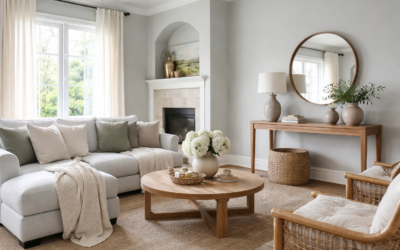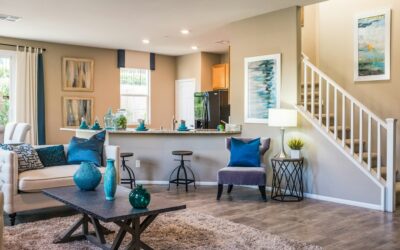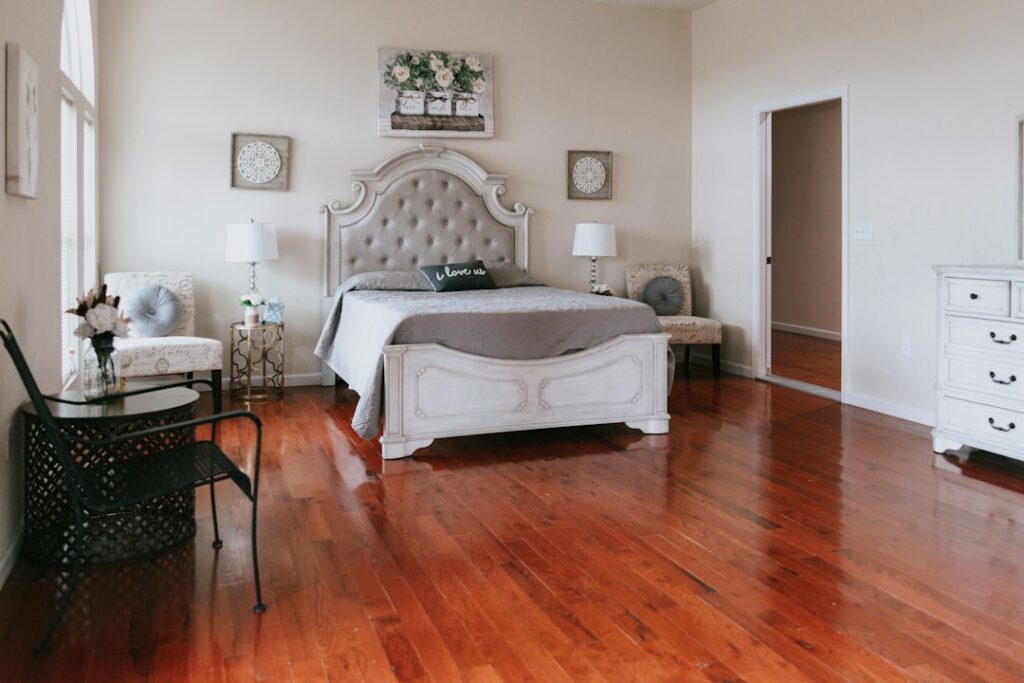
Here is the first surprise: despite the name, Benjamin Moore Wedgewood Gray is filed under blues, not grays. It is color HC-146 in the brand’s Historical Colors collection, it has a light reflectance value (LRV) of 49.59 on the maker’s color page, and Benjamin Moore describes it as a classic soft blue with endless versatility.
On the wall it reads as a muted, dusty blue with a noticeable gray softness. That gray content keeps it from feeling bright or childlike, and it is why the name still makes sense. Think coastal, colonial and calm rather than sky blue. In cool light it looks more gray-blue; in warm light the blue steps forward.
- Benjamin Moore Wedgewood Gray Specs at a Glance
- Undertones and How Light Changes It
- Rooms and Surfaces Where It Works Best
- Coordinating Colors and Pairings
- Wedgewood Gray vs Nearest Look-Alikes
- How to Test and Apply Wedgewood Gray
- Troubleshooting
- Is Benjamin Moore Wedgewood Gray Right for Your Space?
- Cost and When to Hire a Painter
- Frequently Asked Questions
With an LRV just under 50, it is a true mid-tone. It shows up clearly as a color, works on walls, cabinets and exteriors, and pairs easily with white trim. In small or dark rooms it will look deeper than the chip, so test it where you plan to use it.
Benjamin Moore Wedgewood Gray Specs at a Glance
These values come from the Benjamin Moore color page for Wedgewood Gray HC-146. Confirm the code when ordering, since collection listings can change.
| Spec | Value | What it means |
|---|---|---|
| Color code | HC-146 | Give this code at the counter for the correct formula |
| Collection | Historical Colors | The maker’s palette of classic, traditional shades |
| Color family | Blue | A soft, grayed blue despite the gray in its name |
| LRV | 49.59 | Mid-tone; reflects about half the light that hits it |
| Undertone tendency | Blue softened by gray | Dusty and muted rather than bright; can lean gray in cool light |
| Suggested sheens | Matte or eggshell walls; satin or semi-gloss trim and cabinets | Lower sheens soften the color; higher sheens add durability |
| Maker’s similar colors | Rhine River 689, Gossamer Blue 2123-40, Yarmouth Blue HC-150, Paradiso 717 | Close cousins to sample side by side |
| Maker’s color combinations | White OC-151, Steam AF-15, Winter Ice 866, Branchport Brown HC-72 | Suggested trim, accent and contrast partners |
LRV runs from 0 (black) to 100 (white). At 49.59, Wedgewood Gray sits right at the midpoint, which is a sweet spot for a color you want to notice without making the room feel dark, as long as the space gets reasonable daylight.
Undertones and How Light Changes It
Muted blues are mixed with gray or black to soften them, and Wedgewood Gray carries enough of that softening to stay calm. Its exact look depends heavily on light direction.
North-facing rooms
Cool northern light pulls out the gray, so the color reads as a cool blue-gray, sometimes close to slate. Warm bulbs and warm wood help keep it from feeling chilly.
South-facing rooms
Warm southern light brings the blue forward and can make it look lighter and fresher. This is where the color looks most like its soft-blue description.
East and west exposures
Expect the blue to come and go through the day. Check samples in the morning, afternoon and evening before deciding.
Next to flooring and finishes
Honey oak and warm pine create a pleasing blue and orange contrast. Gray tile and white marble make it look cooler and more gray. Brass, nickel and black hardware all work; brass adds warmth.
Rooms and Surfaces Where It Works Best
- Bedrooms: restful and calm, especially with white bedding and natural textures.
- Bathrooms: a classic with white tile and nickel fixtures; use a humidity-rated product.
- Dining rooms and studies: enough depth to feel cozy without going dark.
- Kitchen cabinets and islands: a soft blue island against white perimeter cabinets is a popular look.
- Front doors and shutters: a muted blue that suits traditional homes.
- Exterior siding: a common choice for coastal and colonial houses with white trim; ask your retailer about exterior products in this color.
Rooms that may struggle include windowless spaces and north-facing rooms with only cool LED lighting, where the color can look heavier and grayer than expected.
Coordinating Colors and Pairings
Trim and ceilings
Benjamin Moore pairs Wedgewood Gray with White OC-151, a clean white that keeps the blue crisp. Steam AF-15 is the maker’s other light partner and a soft option for trim or ceilings when you want less contrast.
Accents and contrast
Branchport Brown HC-72 is the maker’s suggested deep partner, a natural fit for an exterior door, stained-look accents or furniture. Winter Ice 866, also in the maker’s combination palette, is a light blue-green (LRV 75.12) that works as a pale companion on a ceiling or adjoining room. Navy, warm wood, terracotta and soft coral accents also play well with this muted blue.
Wedgewood Gray vs Nearest Look-Alikes
These colors are often sampled together. Numbers and descriptions come from each color’s Benjamin Moore page.
| Color | Code | LRV | How it compares |
|---|---|---|---|
| Yarmouth Blue | HC-150 | 55.82 | Lighter and airier; maker calls it a classic airy blue |
| Wedgewood Gray | HC-146 | 49.59 | Mid-tone soft blue with gray softening |
| Boothbay Gray | HC-165 | 43.26 | Deeper; maker calls it a timeless blue-gray |
| Puritan Gray | HC-164 | 34.29 | Much deeper blue-gray; better as an accent |
Yarmouth Blue is the pick for darker rooms or anyone who wants a lighter, fresher blue. Boothbay Gray reads more gray and a step deeper, which suits exteriors and rooms with plenty of light. Wedgewood Gray sits between them: clearly blue, but soft enough for a whole room. The maker’s own similar list also includes Gossamer Blue 2123-40 and Rhine River 689, both worth sampling if you want small shifts in depth or warmth.
How to Test and Apply Wedgewood Gray
- Start with large samples. Peel-and-stick paint sample swatches are an easy way to move a color around the room; painted boards at least 12 by 12 inches work too.
- Compare neighbors. Put Yarmouth Blue and Boothbay Gray beside it to see which depth suits your light.
- Check at different times. Look in morning, afternoon and night lighting.
- Prep walls or cabinets. Clean, patch and sand. Cabinets need degreasing, scuff sanding and a bonding primer.
- Prime when changing color a lot. Going from a dark or warm color to this blue may need a tinted primer.
- Roll two coats. A roller and tray kit with a 3/8-inch nap suits smooth walls; use a fine foam roller on cabinet doors.
- Let it cure. Paint feels dry within hours, but cabinets and trim need longer to harden before heavy use; follow the label.
Sheen picks
Matte gives the dustiest, softest look on bedroom and living room walls. Eggshell adds a bit of washability for halls and dining rooms. Satin or a humidity-rated finish works in bathrooms. Satin or semi-gloss suits cabinets, doors and trim. Higher sheens make the color look slightly deeper and more saturated.
Troubleshooting
- Looks too gray or cold: north light or cool bulbs. Warm bulbs, or try Yarmouth Blue for more blue.
- Looks too bright or blue: strong southern light. Boothbay Gray is grayer and deeper.
- Looks dark: the room may lack light. Step lighter or add lamps.
- Uneven color: unprimed patches or thin coats; spot prime and recoat.
- Cabinet paint scratching: often from skipped bonding primer or not waiting for full cure.
Is Benjamin Moore Wedgewood Gray Right for Your Space?
Benjamin Moore Wedgewood Gray suits homes that want color without drama. It fits traditional, coastal and farmhouse interiors, pairs with both warm and cool woods, and holds its own on cabinets and exteriors. It is less suited to very dark rooms, where a lighter blue keeps things brighter, and to spaces where you want a crisp, saturated blue, since this one is intentionally muted.
Try it first on a single surface, such as an island, a bathroom vanity or a front door, if you are unsure about a whole room of blue. That lets you see how it behaves in your light and next to your finishes before you commit. If you like it there, carry it into a bedroom or study with white trim and natural textures. Repeating it in small doses, such as a painted bookcase or a pillow fabric, helps tie the scheme together across rooms.
Cost and When to Hire a Painter
Premium paint runs in the mid to upper range per gallon. A 12 by 14 foot room typically needs about 2 gallons for two coats on the walls. Professional interior painting usually costs around $2 to $6 per square foot of floor area, and cabinet painting is priced separately by door and drawer count.
Hire a pro for multi-story exteriors, stairwells, extensive drywall repair or a sprayed cabinet finish. In homes built before 1978, test old paint for lead before sanding or scraping and follow lead-safe practices.
Frequently Asked Questions
Is Wedgewood Gray blue or gray?
Benjamin Moore places Wedgewood Gray HC-146 in its blue family and describes it as a classic soft blue. Gray softening makes it look dusty and muted, especially in cool light.
What is the LRV of Wedgewood Gray?
The maker lists an LRV of 49.59, a mid-tone value that reads clearly as a color without being dark in a well-lit room.
What trim color goes with Wedgewood Gray?
Benjamin Moore pairs it with White OC-151 and Steam AF-15. A clean white keeps the blue crisp.
Is Wedgewood Gray good for kitchen cabinets?
Yes. It is a popular island and lower-cabinet color. Use a cabinet-grade enamel in satin or semi-gloss over a bonding primer.
What is lighter than Wedgewood Gray but similar?
Yarmouth Blue HC-150, with an LRV of 55.82, is a lighter, airier blue from the same collection.