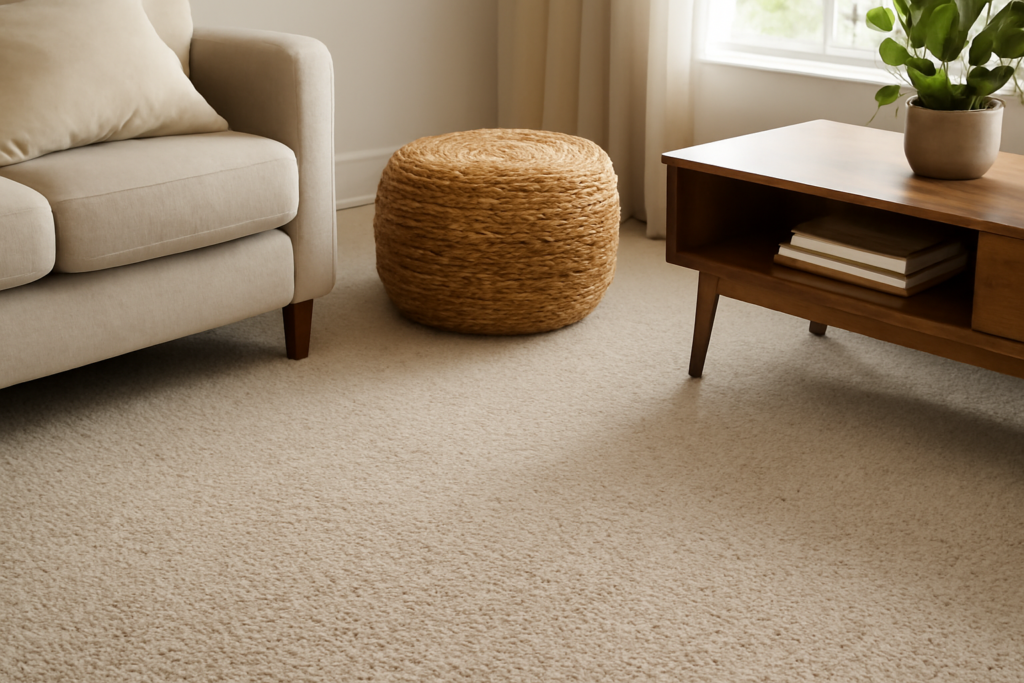
Walk into any 1990s-built suburban living room and there’s a 70 percent chance you’ll see beige berber loop carpet with the characteristic flecks of brown and tan. The style fell out of fashion in custom builds for a decade as cut-pile shag and pattern carpets took over, but berber is now climbing back into commercial-grade residential installs because the looped construction wears better than almost any cut-pile carpet on the market. The CRI (Carpet and Rug Institute) Green Label Plus certified berber loops from Mohawk’s SmartStrand line carry 25-year wear warranties, more than double the standard 10-year warranty on builder-grade Saxony cut pile.
What Berber Actually Means
True Berber refers to a level-loop construction style originally hand-woven by the Berber people of North Africa from undyed wool. Modern berber-style carpets keep the looped construction but use synthetic fibers — olefin (polypropylene), nylon, or polyester (PET) — in either flecked or solid colorways. The defining feature is uncut loops of yarn standing perpendicular to the backing, which creates a tight, dense, walk-on-and-bounce-back surface.
The flecked beige aesthetic is just one option. Modern multi-level loop berbers from Shaw, Mohawk, and Dixie Home come in solid charcoal, deep navy, slate, and warm taupe with no flecks at all.
Fiber Choices That Determine Durability
Three fibers dominate berber loop construction. Olefin (polypropylene) is the budget choice at $1.50 to $3.50 per square foot installed. It resists moisture and most water-based stains but crushes under heavy furniture and melts at low heat from dropped curling irons and skid friction. Nylon (Type 6,6 from Invista’s Stainmaster or Anso Caress lines) is the workhorse at $3 to $6 per square foot, with superior resilience and proper stain treatment.
Wool berber, primarily from manufacturers like Karastan and Stanton, ranges $6 to $12 per square foot and lasts 25 to 40 years with proper care. Wool is naturally flame-resistant, holds dye beautifully, and self-recovers from compression better than any synthetic. The catch is moth susceptibility and the higher price.
Loop Density and Why It Matters
The density rating on the back of the carpet sample card tells you everything about wear life. Look for face weight (ounces per square yard) above 35 oz for residential berber and above 45 oz for commercial-grade. Loop pile height matters less than density; a 0.20-inch loop at 50 oz face weight outwears a 0.30-inch loop at 30 oz every time.
Check the tuft twist rating too. Heat-set yarn with at least 5 twists per inch resists untwisting and fuzzing along walked paths. Anything below 4 twists will look matted within two years in main traffic areas.
The Snag Problem and How to Avoid It
The biggest reputation hit berber loop carpet takes is snagging. A pulled loop runs like a knit sweater, creating a long visible streak across the carpet face. Three things cause snags: pet claws (especially cats), vacuum cleaners with rotating brush bars set too aggressively, and dragging furniture without lifting.
Fix snags immediately by cutting the pulled loop flush with surrounding loops using sharp scissors. Never pull the snag back through; you’ll only extend the run. Vacuum with the brush bar disengaged or set to the highest carpet height setting. Miele Complete C3 and SEBO Felix canister models both have brush-off settings ideal for berber.
Padding Selection That Extends Life
Berber loop carpets need firmer, denser padding than cut-pile carpets. Spec a 6-pound density pad at 7/16-inch thickness for residential berber. Going thicker or softer (the common 8-pound rebond at 1/2-inch thickness sold for plush carpet) lets the carpet flex too much and breaks the loop backing over time.
Shaw recommends and warranties their berber lines only when installed over CRI-certified pad with a density of 6 to 8 pounds per cubic foot. Pad runs $0.45 to $0.95 per square foot and is the single most under-invested layer in carpet installs.
Stain Resistance and Treatment
Solution-dyed nylon berber, where pigment is added to the polymer before extrusion, holds color through bleach exposure and aggressive cleaning. Look for “solution dyed” on the spec sheet, not “yarn dyed” or “stock dyed.” Mohawk SmartStrand Forever Clean and Shaw Anso Lifetime carpets both use solution-dyed fiber with permanent stain protection.
Treat oil and food stains within 10 minutes for best results. Blot with white cotton, then apply Folex Carpet Spot Remover or Resolve Pet Stain Remover with a clean cloth. Avoid OxiClean and other oxygen bleaches on wool berber; they remove color along with the stain.
Installation Methods and Common Mistakes
Berber installs with tackless strips around the perimeter and a power stretcher across the room, identical to other broadloom carpets. The critical difference is seaming: berber loops are prone to row separation at seams. Insist your installer uses a heat-activated seam tape rated for berber (Roberts 50-540 or Tec 11) and a hot-glue seaming iron at 280°F minimum.
Inspect every seam under raking light at the end of the install. A properly seamed berber shows a barely visible line; a poor seam shows loop misalignment and visible tape edges. Reject any visible seam at walk-off; reputable installers will redo it.
Daily Maintenance for 20-Year Life
Vacuum twice weekly in high-traffic areas with the brush bar off or raised. Professional hot-water extraction every 18 to 24 months by an IICRC-certified cleaner removes embedded soil that vacuums miss. Spot-clean spills with pH-neutral cleaners (Bissell Professional Spot & Stain or Capture powder). Skip the wet steam-mops sold for hard floors; they over-wet the backing and cause wicking stains. Treated this way, a quality nylon berber loop carpet looks acceptable at year 15 and replaceable around year 22 — three times the life of a typical builder-grade cut pile.