Mention Berber and most homeowners picture the flecked tan loop carpet that covered every basement rec room from 1995 to 2010. That style is still on shelves, but the category has quietly expanded into solids, tonal stripes, and saturated jewel colors you would never have seen in that era. The right berber carpet colors can make a room feel larger, hide dirt between vacuums, and coordinate with furniture for a decade without looking dated — as long as you know which palettes age well and which scream their install year.
- What Makes a Carpet "Berber"
- Classic Flecked Berbers
- Modern Solid Berbers
- Jewel Tones and Statement Colors
- How to Pick a Color for the Room
- Color Psychology in Carpet Choice
- Fleck Density and Pattern Scale
- Fiber and Color Stability
- Pairing Berber Colors with Paint
- Watch Out for Snags
- Longevity and Replacement Cycles
- Frequently Asked Questions
What Makes a Carpet “Berber”
Berber describes loop pile carpet with a tight, low profile, typically 1/4 to 3/8 inch tall. The name comes from the flecked weaves originally made by Berber weavers in North Africa. Modern Berber is machine-tufted from olefin, nylon, or wool. The looped structure shrugs off footprints and wear patterns better than almost any cut pile, which is why it dominates basements, offices, and family rooms.
Classic Flecked Berbers
The traditional flecked look remains popular because it hides a lot of sins. A neutral field with dark specks masks pet hair, crumbs, and small stains between cleanings. Common flecked palettes:
- Tan with brown flecks: the original Berber pattern. Warm, universally neutral, works with almost any wood tone.
- Cream with taupe and beige flecks: lighter and more contemporary than tan. Pairs with white oak, painted cabinets, and gray paint.
- Oatmeal with chocolate flecks: warmer than gray, cooler than tan. Safe for resale-focused installs.
- Sand with black flecks: reads coastal. Good in beach-house and transitional rooms.
- Gray with charcoal flecks: the 2010s update. Still popular, but beginning to feel specific to its era.
Modern Solid Berbers
Solid-color loop carpet has become the fresher option for new builds and remodels. Without flecks, the tight loop texture carries the visual interest.
- Greige (gray-beige blend): the current best-selling solid. Looks like cashmere, coordinates with almost any paint color.
- Warm ivory and cream: lifts dark basements and below-grade spaces.
- Soft mushroom brown: rich and cozy in home offices and dens.
- Deep charcoal: dramatic in media rooms. Hides traffic marks well but shows lint.
- Muted sage and dusty blue: under-the-radar accent colors in guest rooms and sunrooms.
Solid Berber looks more contemporary than flecked but is slightly less forgiving of crumbs between vacuum passes.
Jewel Tones and Statement Colors
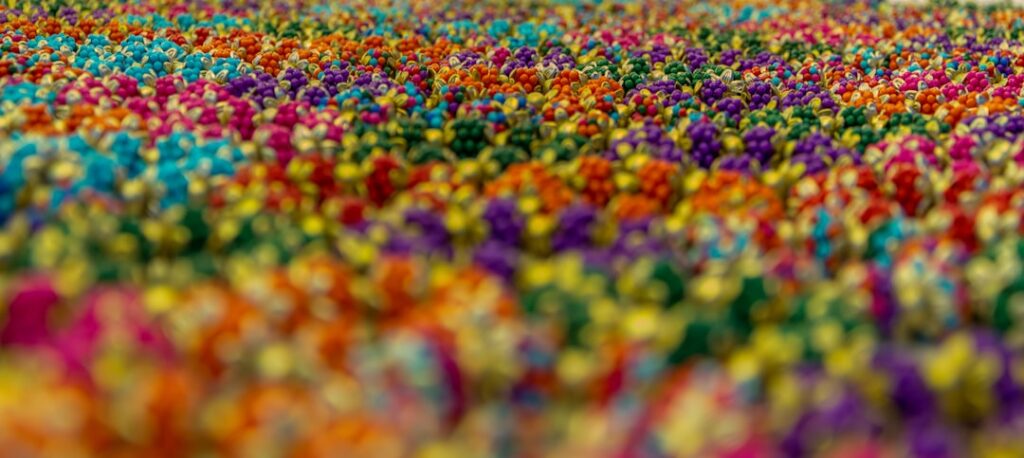
Manufacturers like Stanton, Kane Carpet, and Prestige Mills now produce Berber in saturated colors that would have been unthinkable a decade ago. Navy, forest green, burgundy, mustard, and deep teal all exist as loop pile broadloom, particularly in the custom-runner and stair market. These are not basement-friendly choices; they are bold design moves for media rooms, offices, and stairs where a pattern can anchor the space.
How to Pick a Color for the Room
Three practical considerations should drive the choice.
Light Level
Dark-colored Berber in a north-facing basement makes the room feel like a cave. In a sunlit family room, that same dark gray or navy looks rich and grounded. Light-test samples at different hours before buying.
Traffic Pattern
Hallways, stairs, and kitchen-adjacent areas get relentless foot traffic. Mid-tone flecked patterns hide wear paths best. Solid light carpet in a main hallway shows traffic tracks within two years.
Pet and Kid Load
Dogs, cats, and young kids each demand a different strategy. Flecked browns and grays hide pet hair invisibly. Solids show every clump. Light-color carpet with active kids invites constant stain anxiety.
Color Psychology in Carpet Choice
Neutral floors let the rest of the room change around them. Deep colors commit the room to a specific mood for the life of the carpet (10-15 years). Because carpet is a large horizontal surface, saturated colors have an outsized effect compared to a painted wall. If you are not sure, pick a tonal neutral — you can always add colored rugs over it.
Fleck Density and Pattern Scale
Flecked Berbers vary from barely-visible specks to bold multi-color blends. A subtle 5-10 percent fleck reads almost solid from five feet away. A heavily flecked “confetti” style (20-30 percent contrast) reads as pattern and competes with furniture. Bring a 12×12 sample home and walk around it before you commit.
Fiber and Color Stability
Color permanence varies by fiber.
- Solution-dyed olefin: the gold standard for color fastness. Pigment is extruded into the fiber, so bleach and sunlight barely affect it. Ideal for basements with small bars.
- Solution-dyed nylon: stain-resistant and color-stable. Premium option, $4-7/sq ft installed.
- Piece-dyed nylon: wider color palette but more prone to fading near big windows.
- Wool: naturally rich colors but more expensive ($8-15/sq ft installed) and less stain-resistant without treatment.
Pairing Berber Colors with Paint
Some high-success pairings I have specified in remodels:
- Tan flecked Berber with Benjamin Moore Revere Pewter walls and white trim.
- Greige solid Berber with Sherwin-Williams Agreeable Gray or Accessible Beige.
- Charcoal solid Berber with warm white walls and brass fixtures.
- Cream Berber with sage green walls (Farrow and Ball Mizzle) for a garden-room feel.
- Navy Berber on stairs flanked by off-white walls and natural wood treads.
Watch Out for Snags
Berber’s one real weakness regardless of color: pulled loops. A dog claw or vacuum beater bar can snag a loop and pull a visible line across the carpet. Trim snags flush with sharp scissors immediately — never yank. Choose a vacuum with a manual brush height adjustment and raise the beater bar for loop carpet.
Longevity and Replacement Cycles
A quality Berber in a well-chosen color can last 15 years in a primary living space, 20+ years in a lightly used bedroom. The color matters nearly as much as the fiber for perceived longevity — a timeless neutral still looks current 15 years in, while a trendy color starts to feel stale by year eight. Pick berber carpet colors like you pick flooring: with the long game in mind.
Frequently Asked Questions
Can berber carpet be dyed a different color?
It depends on the fiber. Olefin berber, the most common type, cannot really be redyed because the fiber does not absorb dye, which is also why its color is so fade and bleach resistant. Nylon and wool berber can be spot dyed or color corrected by a professional carpet dyer, usually to fix bleach spots or fading rather than to change the whole color. Test any dye in a closet first.
How do you patch berber carpet so the color matches?
Use a remnant from the original install, or cut a patch from inside a closet, so the fiber, color and dye lot match. New carpet in the same color name can look different because dye lots vary between production runs. Cut the patch along the loop rows, keep the rows running the same direction and secure it with seaming tape. Because berber loops can run, a carpet repair pro often gets a cleaner result.
What color berber carpet goes with hardwood floors?
Pick a berber that contrasts with the wood rather than one that nearly matches it, since close-but-not-equal tones look like a mistake where the floors meet. Cream, greige and light gray flecked berbers sit well beside medium and dark wood, while warmer oatmeal or tan suits gray-washed or white oak. Lay a large sample next to the actual floor at the transition and check it in daylight and lamplight.