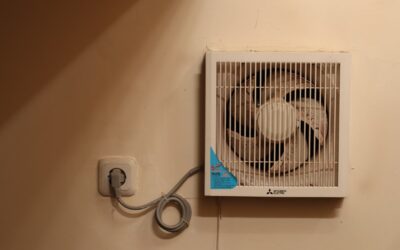
A bathroom fan that hums like a lawnmower and barely moves the steam off your mirror is doing nothing for your drywall, your paint, or your sanity. Picking the best bathroom fan with light means matching airflow to room size, sound level to your tolerance, and lumens to how much overhead light the room actually needs. The good news: you can buy a quiet, bright, code-compliant combo unit for under $200 if you know what to look for.
Part of our Bathroom Remodeling & Flooring guide — explore the full guide →
Why a Combo Unit Beats a Separate Fan and Light
Combination fan-light fixtures cut your ceiling holes in half, simplify wiring, and consolidate two switches into one cluster. For most 5×8 to 8×10 bathrooms, a single combo fixture mounted between the toilet and shower handles ventilation and provides the general lighting that supplements your vanity sconces.
The other advantage is install simplicity. Most combos use the same 4-inch duct, 4-inch ceiling cutout, and standard 120V wiring as a fan-only unit. You are not running a second circuit or cutting a second hole.
Sizing the Fan: CFM Per Bathroom
The Home Ventilating Institute (HVI) sets the standard most building codes follow. Take square footage and multiply by 1.0 for bathrooms under 100 sq ft. For larger bathrooms, add 50 CFM for the toilet, 50 for the shower, and 100 for a jetted tub.
- 5×7 powder room (35 sq ft): 50 CFM minimum.
- 5×8 standard bath (40 sq ft): 50 CFM, 80 if you take long showers.
- 8×10 master bath with separate shower: 100-110 CFM.
- 10×12 bath with jetted tub: 150-200 CFM, often split into two units.
Buying a fan rated 20% higher than the minimum gives you margin against duct losses. A 110 CFM rated fan pushing through 15 feet of flex duct and an exterior cap may only deliver 70 CFM in real-world airflow.
Sound Ratings: Sones Are What Matters
Fan noise is measured in sones, not decibels. One sone equals the sound of a quiet refrigerator from 10 feet away. Anything 1.0 sones or under is genuinely quiet — you will not hear it in the next room. At 3.0 sones, you hear the fan over a normal conversation. At 4.0 sones and up, you reach for the switch within a minute.
Premium fans like the Panasonic WhisperCeiling DC and Broan-NuTone Roomside hit 0.3 to 0.8 sones. Builder-grade units cluster around 2.0 to 3.5 sones. The price gap between them is roughly $80 to $150 — worth every dollar over the 15-year life of the fan.
Top Picks for 2026
Panasonic WhisperWarm DC FV-0511VKL2
Variable-speed DC motor delivers 50, 80, or 110 CFM with a flip of the selector. Integrated LED panel pushes 850 lumens at 3000K. Sone rating starts at 0.3 — effectively silent on low. Heater function adds 1450W for cold-climate bathrooms. Around $400, but the build quality justifies the price for a primary bath.
Broan-NuTone AE110LK Roomside Series
110 CFM at 1.0 sones with a flat LED light pushing 800 lumens. The “Roomside” install design lets you swap the motor without going into the attic — handy on second-floor bathrooms where the duct connection is buried. Around $130. The everyday choice for most homeowners.
Delta BreezGreenBuilder GBR80LED
80 CFM at 1.5 sones with integrated LED rated at 700 lumens. Energy Star certified, around $90. The budget pick for a guest bathroom or smaller secondary bath where premium quietness is not a priority.
Panasonic WhisperFitEZ FV-0511VFL1
Designed for retrofit installs where joist spacing is tight. Adjustable 50, 80, or 110 CFM, 0.6 to 1.3 sones, 970 lumens of LED light. The 5-3/4-inch deep housing fits between 2×6 joists. Around $250.
Lighting Specs You Should Not Ignore
Combo units used to ship with incandescent or CFL sockets that gave anemic light. Modern integrated LED panels in the better units deliver 800-1000 lumens at 3000K to 4000K — equal to a 60W incandescent or better. Look for fixtures with a CRI (color rendering index) of 80 or higher; below that, skin tones look washed out, which is not what you want over a bathroom mirror.
Some premium units offer color-temperature switching (2700K, 3000K, 4000K, 5000K) on a small DIP switch behind the lens. If you swap bulbs in the rest of your house seasonally, this feature is worth the upgrade.
Code Requirements You Must Meet
The 2024 IRC requires mechanical ventilation for any bathroom without an operable window. Even with a window, most home inspectors prefer a fan because nobody opens a window in January. The fan must vent to the outside — not into the attic — through rigid metal duct or insulated flex duct, terminating at a wall or roof cap with a backdraft damper.
Bathrooms are also wet locations. Fans installed over a tub or shower must be GFCI-protected and rated for damp or wet location use; check the UL listing on the box. Most modern combo units carry this rating, but verify before you buy a discount unit online.
Installation: DIY or Pro?
Replacing an existing fan-light combo with a similar new unit is a Saturday DIY project — about three hours if the duct and wiring are already in place. New installations involving cutting joists, running ducts through an attic, or adding a switch leg run $250-$500 in labor on top of the fixture cost.
If you are gut-remodeling the bathroom, place the fan in the ceiling near the shower and the light fixture between the shower and toilet. Two separate fixtures usually outperform one combo unit in larger bathrooms, even if the bill is $50 higher. For smaller baths, a well-chosen combo is the cleaner solution and the best bathroom fan with light remains the Broan AE110LK for its balance of price, quiet operation, and proven longevity.