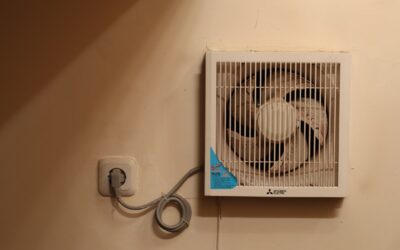
Most people buy a speaker fan for the music and forget that it is, first and foremost, a ventilation device responsible for keeping mold off the ceiling. A bathroom exhaust fan with bluetooth speaker combines a standard ceiling fan housing with a small built-in audio driver that pairs with your phone, so you can stream podcasts in the shower without a gadget on the vanity. When it is sized and wired correctly, it does both jobs well. When it is chosen for the speaker alone, you get a bathroom that sounds nice and still grows mildew. Here is how to choose and install one properly.
Part of our Bathroom Remodeling & Flooring guide — explore the full guide →
- How a Bathroom Exhaust Fan with Bluetooth Speaker Works
- Sizing the Fan: CFM Comes First
- Noise Rating and Why Sones Matter More Here
- What to Expect From the Speaker
- Lights, Heaters and Other Combo Features
- Wiring and Switch Options
- Installing a Speaker Fan: The Basic Steps
- Price Range and Is It Worth It?
How a Bathroom Exhaust Fan with Bluetooth Speaker Works
Inside the housing are two separate systems. The ventilation side is a normal blower motor and impeller that pulls moist air through the grille and pushes it out a 4-inch or 6-inch duct to the exterior. The audio side is a speaker driver, typically 2 to 3 inches across, mounted in or behind the grille, plus a small Bluetooth receiver and amplifier on a circuit board.
Most models are wired so the speaker gets power whenever the fan’s circuit is live. On many units, the speaker powers up when you flip the switch, plays a short tone, and waits for a phone to pair. Some models run the speaker on a separate power lead so you can listen with the fan off, which is useful in winter when you do not want to exhaust warm air for a long bath. That wiring detail is one of the most important things to check before buying.
Sizing the Fan: CFM Comes First
Ventilation capacity is rated in CFM (cubic feet per minute). The Home Ventilating Institute’s rule of thumb for bathrooms up to 100 square feet is 1 CFM per square foot of floor area, with a minimum of 50 CFM. For larger bathrooms, add up the fixtures:
- Toilet: 50 CFM
- Shower: 50 CFM
- Bathtub: 50 CFM
- Jetted tub: 100 CFM
An 8×10 bathroom (80 sq ft) needs at least 80 CFM. A 12×12 primary bath with a separate shower, tub, and toilet needs around 150 CFM. For ceilings taller than 8 feet, calculate by volume: multiply length by width by height, divide by 60, and multiply by 8 (for eight air changes per hour).
Speaker fans are commonly sold in the 80 to 110 CFM range, which covers most standard bathrooms. If your space needs more, you may be better off with a high-capacity fan and a separate ceiling speaker, since speaker fan options thin out above 110 CFM. Also remember that rated CFM assumes little duct resistance. Long runs, several elbows, or flex duct can cut real airflow by 20% to 40%, so upsize if your duct run is more than 10 to 15 feet.
Noise Rating and Why Sones Matter More Here
Fan noise is measured in sones. One sone is roughly the hum of a quiet refrigerator; 3 to 4 sones is loud enough to drown out conversation. With a speaker fan, noise matters twice: a loud blower fights the audio, and you end up cranking the volume until the small driver distorts.
| Sone Rating | How It Sounds | Music Experience |
|---|---|---|
| 0.3 to 1.0 | Near silent | Clear at modest volume |
| 1.0 to 2.0 | Soft hum | Good for spoken word |
| 2.0 to 3.0 | Noticeable | Music competes with fan |
| 3.0 and up | Loud | Audio mostly lost |
Aim for 1.5 sones or lower. Many better speaker fans are rated between 0.7 and 1.5 sones at their rated CFM. Duct size also affects noise: squeezing a fan designed for 6-inch duct onto a 4-inch run raises both noise and back pressure.
What to Expect From the Speaker
Be realistic about audio. A 2- to 3-inch driver in a ceiling housing is similar to a decent portable Bluetooth speaker. Voices, podcasts, news, and most pop music sound clear. Deep bass does not, because there is no room for a large driver or enclosure. Features worth comparing include:
- Bluetooth version: Version 5.0 or newer pairs faster and holds the connection better through walls, typically 30 feet or more in open space.
- Speaker output: Most units list 3 to 5 watts. More wattage helps in large bathrooms with tile surfaces.
- Auto-reconnect: The fan should remember your phone and reconnect when powered on.
- Multi-device pairing: Handy if several household members use the same bathroom.
- Stereo pairing: Some models can link two units in a large bath for left and right channels.
- Moisture-rated driver: Look for a speaker cone rated for humid spaces so it does not warp over time.
Because tile and glass reflect sound, a bathroom speaker usually sounds louder than its wattage suggests. Hard surfaces also create echo, so music with lots of bass or reverb can get muddy. Spoken word is where these fans shine.
Lights, Heaters and Other Combo Features
Many speaker fans include an LED light, typically 800 to 1,500 lumens, at 3000K to 5000K color temperature. A combo light is useful if the fan sits over a shower or in a small half bath where it can replace the ceiling fixture. Some also include a night light, humidity-sensing auto shutoff, or a motion sensor. Humidity sensing is one of the most useful upgrades because it keeps the fan running after you leave the room until moisture drops, which is exactly when most mold damage starts.
If the fan sits above a tub or shower, it must be listed for that location. Many are rated for wet locations only when connected to a GFCI-protected circuit, so read the installation manual before placing it over the shower.
Wiring and Switch Options
How you wire the fan determines how convenient it is to live with. Common setups include:
- Single switch: The simplest retrofit. Fan, light (if any), and speaker all turn on together.
- Double switch: One switch for the fan and speaker, another for the light. Requires a 14/3 or 12/3 cable to the fan.
- Separate speaker circuit: On models that support it, a dedicated switch powers the speaker so you can listen without running the fan.
- Timer switch: A countdown timer set to 20 to 30 minutes after a shower clears humidity and turns everything off automatically.
If your existing bathroom has only a two-wire cable to the ceiling, adding separate control means running new cable or using a wireless remote switch. Hiring an electrician for that step usually costs a couple hundred dollars, depending on attic access.
Installing a Speaker Fan: The Basic Steps
Swapping an old fan for a speaker model is a moderate DIY job if the new housing fits the existing ceiling cutout. Always turn off the circuit breaker and verify with a non-contact voltage tester before touching any wires.
- Remove the old grille and motor assembly, then unscrew the old housing from the joist.
- Compare the new housing size to the opening. Many retrofit models are designed for common cutouts, but you may need to enlarge the hole with a drywall saw.
- Attach the duct to the new damper collar using foil tape, not cloth duct tape, and secure it with a clamp.
- Mount the housing to the joist with the included brackets or screws, flush with the ceiling drywall.
- Connect the wires: black to black, white to white, ground to the green screw or bare wire, following the diagram for separate light or speaker leads.
- Install the motor, plug the connectors in, attach the grille, and restore power. Pair your phone by selecting the fan in your Bluetooth settings.
Check that the duct leads outside through a roof or wall cap. A fan that dumps moist air into the attic can create frost, rot, and mold on roof sheathing. Insulate the duct in cold climates to prevent condensation from dripping back into the fan.
Price Range and Is It Worth It?
Speaker exhaust fans generally cost $80 to $250 for the unit, compared with $40 to $150 for a comparable fan without audio. Models with LED lights, humidity sensors, and better speakers sit at the upper end. Professional installation for a direct replacement is usually a small labor charge, but new ductwork or wiring adds significantly.
A bathroom exhaust fan with bluetooth speaker is worth it if your current fan needs replacement anyway, your bathroom falls in the 50 to 110 CFM range, and you mostly listen to podcasts or background music. It is less compelling if you need high airflow, care about rich sound, or dislike that a speaker failure may mean replacing the whole motor module. Pick the right CFM, keep noise under 1.5 sones, and wire it so the fan runs long enough after every shower. The music is the bonus; dry walls are the real payoff.