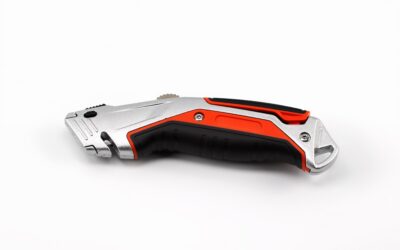
Most drywall gets cut without a saw at all — score the face paper with a utility knife, snap the sheet, slice the back. But the moment you need a hole in the middle of a panel for an outlet box, a recessed light, or a plumbing stub, the knife is useless and the drywall saw takes over. There are four distinct tools that wear that name, and picking the right one for the cut determines whether you get a crisp opening or a blown-out mess that needs patching before you have even hung the sheet.
Part of our Paint & Walls guide — explore the full guide →
- Jab Saw: The One Everyone Should Own
- Rasp-Style and Utility Saws for Straight Cuts
- Oscillating Multi-Tool: Cleanest Cuts in Finished Walls
- RotoZip and Cut-Out Tools: The Production Method
- Hole Saws and Circle Cutters for Round Openings
- Which Saw for Which Cut
- Before Any Saw Touches a Finished Wall: Know What's Behind It
- Keeping Blades Working
- Cutting Without Blowouts
Jab Saw: The One Everyone Should Own
The jab saw (also called a keyhole saw or drywall utility saw) is a 6-inch pointed blade with coarse teeth on a fixed handle, costing $8 to $18. The sharpened tip punches straight through 1/2-inch board with a firm palm strike — no pilot hole needed — and the aggressive 7 to 8 TPI teeth cut on both push and pull strokes on better models.
Good picks: the Klein 725 (about $15) with its hardened tip, the DeWalt DWHT20123 (about $12) with a folding blade that makes it pouch-safe, and the Stanley FatMax (about $13). Look for an induction-hardened blade; soft-tooth bargain saws dull inside one house’s worth of cuts.
Technique matters more than brand. Stab through just inside your cut line, saw with long strokes at a low angle, and steer the point where you want the cut to go. For outlet boxes, angle the blade slightly inward toward the box interior — an opening a hair small can be shaved; one cut 1/4 inch oversize means the cover plate will not hide it and you are floating setting compound around a box.
Rasp-Style and Utility Saws for Straight Cuts
Short straight cuts that a snap cannot handle — notching around a door header, trimming an inch off a hung sheet’s edge — call for a coarse handsaw. A dedicated drywall handsaw looks like a stubby wood saw with widely set teeth that clear gypsum dust instead of clogging. Many hangers skip it and use the jab saw for notches, then clean the ragged edge with a drywall rasp ($8 to $12), a cheese-grater tool that shaves a cut edge smooth and square in a few strokes. The rasp is the unsung hero of tight-fitting board: cut every opening slightly small, rasp to a perfect fit.
Oscillating Multi-Tool: Cleanest Cuts in Finished Walls
For cutting into walls that are already finished — adding an outlet, opening a wall for a plumbing repair — an oscillating multi-tool with a half-moon or plunge blade beats every hand saw. It cuts a thin, straight kerf with almost no dust thrown and, critically, shallow blade exposure means you are far less likely to nick the romex or PEX hiding behind the board. Set the blade to plunge just past the 1/2-inch board thickness and trace your layout lines. Corded models like the Dremel Multi-Max start around $70; a cordless Milwaukee or DeWalt runs $99 to $179 bare. If the patch is part of a bigger fix, our drywall repair guide picks up where the cutting leaves off.
RotoZip and Cut-Out Tools: The Production Method
Spiral-cutting tools — the RotoZip RZ1 (about $80) and cordless cut-out tools from DeWalt and Makita ($99 to $150 bare) — spin a 1/8-inch guide-point bit at 30,000 RPM and cut drywall like a router. Pros hang the sheet right over the outlet boxes, plunge the bit inside the box area, ride the bit’s smooth pilot tip around the outside of the box, and the opening drops out in fifteen seconds, perfectly matched to the box. No measuring, no layout transfer, no misplaced holes.
Two cautions. First, push the wires deep into the box before hanging, because the bit will find and strip anything in its path. Second, cut counterclockwise around the outside of the box so bit rotation holds the guide tip against the box instead of wandering away. Dust is the trade-off — a spiral saw turns gypsum into airborne flour, so wear a real respirator, not a nuisance mask.
Hole Saws and Circle Cutters for Round Openings
Recessed lights and round vents want a round cutter. A carbide-grit or bi-metal hole saw in the exact can diameter (4, 5, or 6 inches typically, $15 to $30) chucks into any drill and makes a factory-clean circle. An adjustable circle cutter ($20) scores any diameter up to about 16 inches — score the face deeply, then tap the plug out from behind. Freehanding circles with a jab saw is possible but never pretty; for a hole a trim ring will not cover, use the right cutter.
Which Saw for Which Cut
- Full-sheet rips and crosscuts: Utility knife score-and-snap — never a saw. Our how to cut drywall guide covers the full method.
- Outlet and switch boxes, new hanging: Jab saw for a handful of rooms; RotoZip-style tool for a whole house.
- Openings in finished/painted walls: Oscillating multi-tool.
- Notches and short straight cuts: Jab saw plus rasp cleanup.
- Round holes for cans and vents: Hole saw or adjustable circle cutter.
Before Any Saw Touches a Finished Wall: Know What’s Behind It
Cutting into new board on open framing is consequence-free. Cutting into a finished wall is not — romex, PEX, gas flex line, and HVAC ducting all live in stud bays, and a jab saw punched blindly through paint finds them the expensive way. Three habits keep you safe. First, check the geography: wires run vertically up from outlets and horizontally about 8 to 12 inches above outlet height between them, and plumbing stacks sit near fixtures on both floors. Second, scan with a stud finder that has AC detection ($25 to $50), marking studs and hot zones. Third — the habit pros actually rely on — cut the opening shallow. Score deeply with a utility knife, then saw with only 5/8 inch of blade committed, or better, use the oscillating tool with the blade set just past board thickness. Once you have a hand-sized opening, look and feel inside with a flashlight before extending any cut. Two minutes of caution against a $400 electrician visit or a punctured supply line is the easiest math in remodeling.
Keeping Blades Working
Gypsum is soft but abrasive — it dulls steel faster than pine does. A jab saw is done when starting a punch-through takes real effort; at $12 to $15, replace rather than sharpen. Oscillating blades wear at the tooth tips and are also consumables: buy the 10-packs of bi-metal blades ($20 to $30) instead of singles, and save carbide blades for when you might graze a screw. Spiral-saw bits snap when flexed sideways, so steer with the tool body, not wrist pressure, and keep two or three spare bits ($4 each) in the case. Wipe dust off all cutting tools at day’s end; gypsum absorbs humidity overnight and rusts blades in their pouch.
Cutting Without Blowouts
Blowout — the back paper tearing away in chunks — happens when teeth exit the far side unsupported. Three habits prevent it. Saw with moderate pressure and let the teeth work; forcing the blade rips paper instead of cutting it. When precision matters, score your layout line with a utility knife first so surface paper is severed before the saw arrives. And on visible edges, cut from the face side, since tear-out lands on the back where nobody sees it. A ragged opening in the middle of a field is a taping problem you created for yourself; thirty extra seconds of clean sawing costs less than ten minutes of setting-compound repair.
For a typical remodel, a $15 jab saw, a $10 rasp, and the utility knife already in your pouch handle 95 percent of cuts. Add powered cutters when the box count climbs into the dozens — that is the point where the production tools stop being toys and start paying rent.