Most “disinfectant” floor cleaners on grocery store shelves don’t actually disinfect; they sanitize, which is a meaningfully lower standard. The EPA defines disinfection as killing 99.999% of bacteria within a specified contact time, and only products registered with an EPA number on the label legally qualify. Picking the best disinfectant floor cleaner means matching an EPA-registered formula to your specific flooring without stripping the finish or leaving residue that traps dirt faster. The wrong product on hardwood voids warranties; the wrong dilution on tile leaves a hazy film that takes three plain-water mops to remove.
- Top Picks on Amazon
- What "Disinfectant" Actually Means on a Label
- Top Pick for Most Floors: Lysol Multi-Surface Cleaner
- Best for Tile: Pine-Sol Original
- Best Eco-Friendly Option: Method Squirt + Mop
- For Hardwood: Bona Hardwood Floor Cleaner
- Commercial-Grade Pick: Clorox Healthcare Bleach Germicidal
- What to Avoid
- Application Tips That Actually Matter
- Picking the Right Product for Your Home
- Frequently Asked Questions
Top Picks on Amazon
What “Disinfectant” Actually Means on a Label
The hierarchy runs from cleaner (removes dirt) to sanitizer (kills 99.9% of bacteria) to disinfectant (kills 99.999%) to sterilizer (kills all microorganisms). Only the last two require EPA registration. Look for the eight-digit EPA registration number on the back label and the specific dwell time required for disinfection, typically 5-10 minutes of wet contact.
Wipe a floor and walk away, and most “disinfectants” haven’t actually disinfected. They’ve sanitized. That’s enough for most homes but worth understanding before you assume germ-free.
Top Pick for Most Floors: Lysol Multi-Surface Cleaner
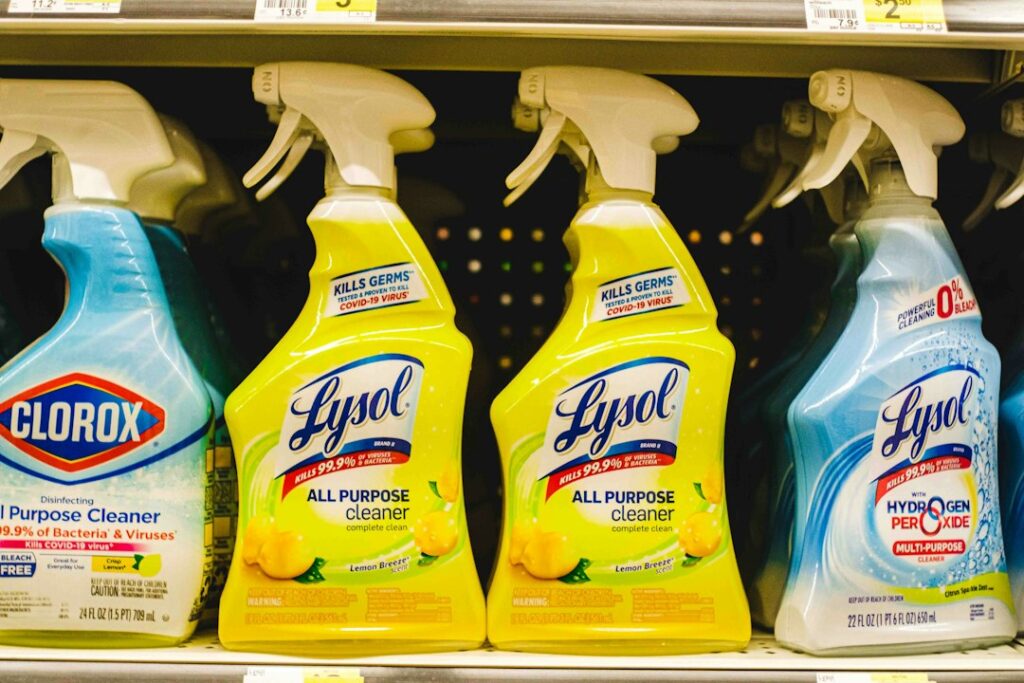
Lysol Multi-Surface Cleaner (EPA Reg. No. 777-89) is the all-around safest choice for sealed hardwood, vinyl, tile, and laminate. The benzalkonium chloride formula kills Staph, E. coli, and Salmonella in 10 minutes at the recommended dilution of 1/4 cup per gallon. It is sold at any grocery store. The lemon scent isn’t aggressive, and it doesn’t leave a sticky residue when used at the proper ratio.
Don’t use it full strength on hardwood. Even dilute, mop with damp not soaking-wet pads to prevent moisture penetration through seams.
Best for Tile: Pine-Sol Original
Pine-Sol Original (EPA Reg. No. 5813-22) qualifies as a disinfectant only at the 1:8 dilution ratio specified on the back of the bottle; most people dilute too weakly to actually disinfect. The pine oil cuts grease and grime effectively on ceramic and porcelain tile, and the 10-minute contact time kills the major bathroom and kitchen pathogens.
Mixed properly, one bottle makes a lot of working solution. Excellent value for high-traffic kitchen tile and bathroom floors.
Best Eco-Friendly Option: Method Squirt + Mop
Method’s hard-floor formula isn’t an EPA-registered disinfectant but cleans effectively with plant-based surfactants and leaves no streak. For households that need cleaning without aggressive chemistry (small children crawling, sensitive pets, asthma concerns), this is the practical compromise. It comes ready to use directly on the floor.
If you genuinely need disinfection (post-illness, after raw chicken on the floor), supplement with a single dilute-Lysol pass and follow with plain water rinse.
For Hardwood: Bona Hardwood Floor Cleaner
Bona is not a disinfectant. It’s a pH-neutral cleaner formulated specifically to preserve polyurethane and oil-finished hardwood. Use it for daily cleaning, then for periodic disinfection, run a diluted Microban 24 Hour solution (EPA Reg. No. 777-138) which is hardwood-safe according to the manufacturer.
A 32-ounce ready-to-use spray lasts 4-6 months of regular use in a typical home.
Commercial-Grade Pick: Clorox Healthcare Bleach Germicidal
For daycares, in-home medical care, or after illness, Clorox Healthcare Bleach Germicidal Cleaner (EPA Reg. No. 67619-12) kills 51 pathogens in 1 minute and tuberculosis in 3 minutes. The hospital-grade formula is harsher than household products, so wear gloves, ventilate, and rinse with plain water after disinfection.
- Pros: kills norovirus, C. diff spores, MRSA
- Cons: will discolor grout, harsh on vinyl, leaves residue
- Use case: serious contamination events, not daily cleaning
What to Avoid
Skip “natural” vinegar-based DIY mixes for actual disinfection. White vinegar at 5% acetic acid sanitizes (kills around 99% of bacteria) but doesn’t reach disinfectant levels and won’t kill norovirus, the leading cause of household stomach illness. Vinegar also etches stone and natural marble irreversibly.
Avoid any product labeled “antibacterial” that lacks an EPA registration number. That’s marketing language without regulatory backing.
Application Tips That Actually Matter
Disinfection requires wet contact time. Wiping a floor “dry” in 30 seconds means nothing got disinfected. Use a flat microfiber mop, work in 4×4 foot sections, and let the cleaner sit visibly wet for the full label dwell time, usually 10 minutes for residential products. For high-traffic areas you can rinse with plain water afterward to remove residue.
Change mop water between rooms. Mopping a kitchen with the same bucket of dirty solution you just used in the bathroom moves bacteria around rather than killing it.
Picking the Right Product for Your Home
For most homes with mixed flooring and ordinary cleaning needs, Lysol Multi-Surface diluted properly is the best disinfectant floor cleaner overall: affordable, EPA-registered, and tolerable to most finishes. Households with babies or chemical sensitivities should default to Method or Bona for daily work and reserve Lysol for targeted disinfection. Pet households and post-illness situations benefit from rotating in Pine-Sol or Clorox Healthcare. Match the chemistry to the floor, follow dilution and dwell time, and you’ll get genuine disinfection without trading away finish life.
Frequently Asked Questions
Can you use bleach to disinfect hardwood floors?
No. Bleach can lighten and blotch wood, break down the finish, and raise the grain, especially if it seeps into seams. For sealed hardwood, use an EPA-registered disinfectant that the maker states is safe for wood, diluted as directed, applied with a damp rather than wet microfiber mop. Never mix bleach with ammonia or any other cleaner, since the combination releases toxic gas.
What is the best way to disinfect laminate and vinyl floors?
Use an EPA-registered disinfectant diluted exactly as the label directs, applied with a well-wrung microfiber mop so the floor stays visibly wet for the dwell time without puddles. Laminate swells if water sits in its seams, so keep it damp rather than wet. Rinse with plain water afterward to remove residue that dulls the surface and attracts dirt.
Do steam mops disinfect floors?
Steam mops can sanitize sealed tile and some vinyl, but most are not EPA-registered disinfecting devices, and the steam rarely stays on one spot long enough to reach a disinfection standard. Heat and moisture can also damage hardwood, laminate, and some vinyl, voiding warranties. For true disinfection, an EPA-registered liquid with the full wet contact time remains the reliable method.
Are disinfectant floor cleaners safe for pets and kids?
They are safe when used as directed, but keep children and pets off the floor until it is completely dry. For crawling babies and pets that lick floors, follow the disinfection step with a plain water rinse to remove residue, and store concentrates out of reach. Check the label for any specific warnings, and ask a veterinarian about products with strong essential oils or pine oil around cats.
Prefer to explore on your own?
See how new flooring looks in your actual room in seconds — free, no signup.
Try the free Floor Studio →