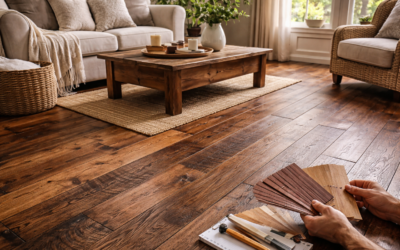
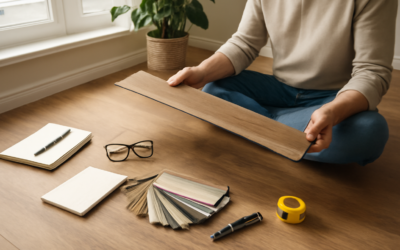
Installing your own floor used to mean nail guns, table saws, and a weekend of skinned knuckles. Today, the most popular flooring categories ship engineered specifically for homeowner installs with hand tools and basic patience. Choosing the best diy flooring for your skill level and your room is less about being brave and more about matching the product to the conditions and accepting the trade-offs honestly. The picks below have produced acceptable-to-excellent results for first-time installers in real homes, and the ones to avoid are flagged with the same honesty.
- Why DIY-Friendly Flooring Looks Different Now
- Top Pick: Rigid-Core SPC LVP
- Runner-Up: Laminate with Pre-Attached Pad
- Third Pick: Floating Engineered Hardwood
- Honorable Mention: Peel-and-Stick LVT
- Skip These as DIY Projects
- Tools Worth Buying
- Subfloor Prep — Where Most DIY Jobs Go Wrong
- Estimated Time and Cost for a 200 Square Foot Room
- The Confident Recommendation
Why DIY-Friendly Flooring Looks Different Now
Click-lock joint systems changed the math entirely. Valinge’s 5G locking technology, Unilin’s Uniclic system, and the various Drop-Lock and Angle-Tap mechanisms used across modern LVP and laminate eliminated the glue, nails, and stretchers that made installation a contractor’s job. Modern click systems engage with hand pressure, lock mechanically without adhesive, and disassemble cleanly if a plank needs replacement years later. Combined with floating-floor underlayments and prefinished aluminum oxide top coats, the install learning curve dropped from weeks to hours.
Top Pick: Rigid-Core SPC LVP
For most DIY installers, rigid-core SPC luxury vinyl plank is the right answer. The cores are dimensionally stable enough to forgive minor subfloor imperfections, the click joints engage reliably even when struck slightly off-axis, and the planks cut cleanly with a utility knife scored against a straightedge — no power tools required for most cuts. Wear layers of 20 to 22 mil deliver real durability, and waterproof cores let you install in kitchens, bathrooms, basements, and laundry rooms without worry.
- COREtec Pro Plus Enhanced — proven click system, attached underlayment, $3.80 to $4.80 per square foot material
- Shaw Floorte Pro Plus — wide plank visuals, 20 mil wear layer, $3.50 to $4.50 per square foot
- Mohawk SolidTech Plus — excellent click engagement, broad style range, $3.20 to $4.20 per square foot
- LifeProof (Home Depot exclusive) — value pricing with attached pad, $2.80 to $3.80 per square foot
Plan on 8 to 12 hours of work for a typical 200 square foot room including prep, undercutting door jambs, and trimming around obstacles.
Runner-Up: Laminate with Pre-Attached Pad
Modern laminate with an attached underlayment, AC4 or AC5 wear rating, and the same click-lock joint technology installs nearly identically to SPC LVP at roughly the same price point. The difference comes down to water tolerance — most laminate is water-resistant but not waterproof, which makes it best suited for living rooms, bedrooms, hallways, and dining rooms rather than kitchens or bathrooms. Pergo Outlast Plus, Mohawk RevWood Plus, and Mannington Restoration deliver attractive wood visuals at $2.50 to $4.00 per square foot.
Third Pick: Floating Engineered Hardwood
Engineered hardwood with click-lock joints (avoiding traditional nail-down installation) is achievable for a confident DIY installer. The cuts are similar to LVP work, but the material costs more and the margin for error is tighter — visible splinters at trim cuts are less forgiving than on a synthetic plank. Mannington Restoration, Bruce Hydropel, and Anderson Tuftex Coastal Plain all offer floating-floor engineered hardwood with respectable visuals at $5 to $9 per square foot.
Honorable Mention: Peel-and-Stick LVT
For laundry rooms, mudrooms, and small basement bathrooms, peel-and-stick LVT tiles can deliver a serviceable floor for under $2 per square foot in a couple of hours. Quality has improved dramatically in the past decade, with products from Lucida, Achim, and Floorpops carrying genuine wear layers and decent design ranges. The trade-off is shorter expected life (5 to 10 years versus 20+ for click-lock LVP) and intolerance for any standing water that reaches the adhesive.
Skip These as DIY Projects
- Glue-down LVT — the adhesive open time and trowel discipline punish first-timers severely
- Nail-down solid hardwood — requires a pneumatic cleat nailer, precise acclimation, and substantial subfloor prep
- Sheet vinyl — the material is unforgiving in tight cuts and heat-welded seams require pro tools
- Tile installs of any kind — backer board, thinset mortar, and grout work require both skill and dedicated tools
- Carpet — power stretchers, seam tape, and tackless strip work are genuinely contractor-level tasks
Tools Worth Buying
The tool list for a successful click-lock install is shorter than most people expect:
- Tapping block and pull bar designed for LVP (Roberts and QEP both sell good ones for $25 to $40)
- Quality utility knife with extra blades (Olfa or Stanley) for scoring planks
- Carpenter’s square or speed square for accurate cross cuts
- Tape measure, chalk line, and pencil for layout
- Rubber mallet for tapping plank joints fully home
- Multi-tool oscillating saw for undercutting door jambs ($60 to $120)
- Knee pads — non-negotiable for any flooring work
Subfloor Prep — Where Most DIY Jobs Go Wrong
The most common cause of DIY install failure is inadequate subfloor preparation. Click-lock LVP requires subfloor flatness within 3/16 inch over 10 feet. Run a long straightedge across the floor and mark every high spot and dip. Sand high spots, fill low spots with leveling compound, and vacuum the entire subfloor before underlayment goes down. Skipping this step produces visible hollow spots, plank flex, and joint separations within months.
Estimated Time and Cost for a 200 Square Foot Room
- SPC LVP at $4 per square foot material: $800 for flooring, $50 for transitions and quarter-round, $40 for underlayment if not attached — total ~$890
- Equivalent contractor install: $750 to $1,200 labor on top of materials
- DIY time investment: 8 to 14 hours including prep and trim work
- Effective hourly rate for DIY: $50 to $90 saved per hour after subtracting tool costs
The Confident Recommendation
For a first-time DIY flooring project, choose a rigid-core SPC LVP from a known brand, in a single rectangular room without complicated transitions, and over a subfloor you can verify is flat. Allocate a full weekend, watch two manufacturer install videos before starting, and accept that the first 30 square feet will go slowly. The result will be indistinguishable from contractor work and the savings will fund the next project.
Prefer to explore on your own?
See how new flooring looks in your actual room in seconds — free, no signup.
Try the free Floor Studio →