Most people shopping for the best hot water extraction carpet cleaner assume the priciest model wins. It rarely works that way. The machine that actually deep-cleans your carpet is the one whose heat, suction, and tank capacity match how you live, not the one with the longest spec sheet. Hot water extraction, sometimes loosely called steam cleaning, sprays a heated detergent solution into the carpet pile, then immediately vacuums it back out along with loosened dirt. Get the specs right and your carpet dries in hours and stays cleaner longer.
- Top Picks on Amazon
- How Hot Water Extraction Actually Works
- Suction Power: The Spec That Matters Most
- Heat: Onboard Heaters vs. Hot Tap Water
- Tank Capacity and CFM Considerations
- Brush Design and Attachments
- Portable vs. Upright Machines
- Maintenance, Solution, and Smart Use
- Matching the Machine to Your Home
Top Picks on Amazon
How Hot Water Extraction Actually Works
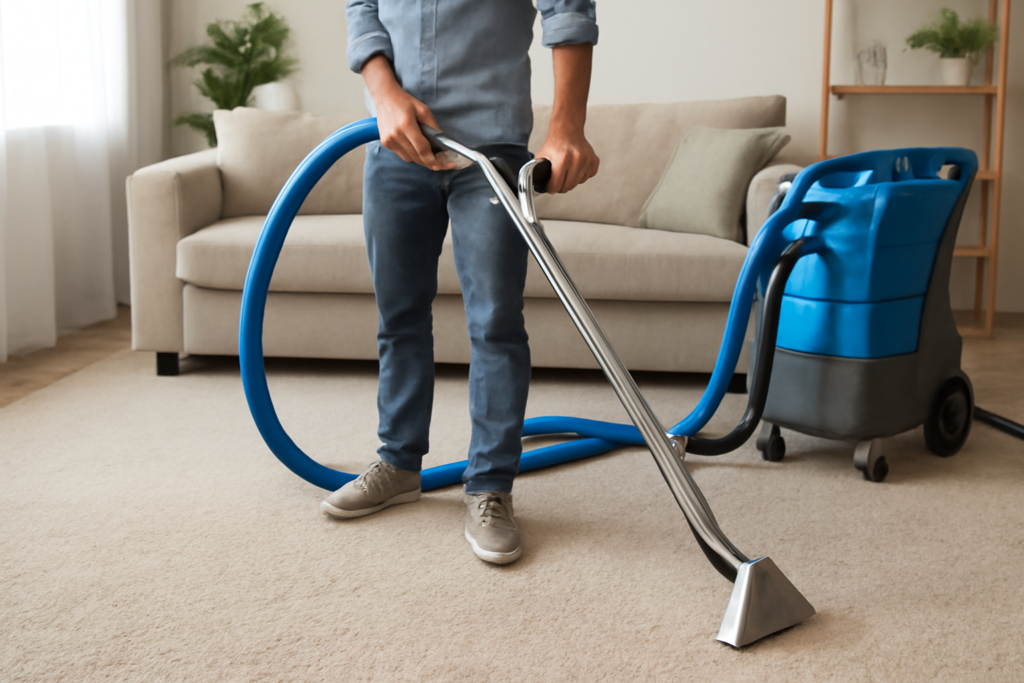
The process is simpler than the marketing suggests. A pump pushes a mix of hot water and cleaning solution through jets onto the carpet. Rotating or stationary brushes agitate the fibers to break dirt loose. Then a powerful vacuum motor pulls the dirty water back into a separate recovery tank. Because the soiled water leaves the carpet almost immediately, you avoid the soggy, slow-drying mess that comes from old-fashioned shampooing.
True hot water extraction does not rely on steam vapor the way the nickname implies. It uses hot liquid water, usually heated to between 120°F and 150°F in consumer machines. The heat helps dissolve grease and lift stains, but the suction is what removes the grime. A machine with weak recovery suction will leave your carpet wetter and dirtier no matter how hot it runs.
Suction Power: The Spec That Matters Most
Recovery suction determines how much dirty water comes back out. On consumer machines this is hard to compare directly because brands report it inconsistently. Some list air watts, some list water lift in inches, and some list nothing at all. As a rule, look for machines that mention strong “water lift” or a dedicated vacuum motor separate from the pump.
Stronger suction means shorter drying times, which translates to less risk of mildew and mold in the padding underneath. If a carpet stays damp for more than 24 hours, you invite musty odors. When two machines are otherwise similar, choose the one users consistently report drying faster.
Heat: Onboard Heaters vs. Hot Tap Water
Heat ranks just behind suction in importance. There are three approaches you’ll see:
- Onboard heaters: These warm the water as it passes through, maintaining a steady temperature throughout the job. They cost more but keep performance consistent.
- Heat-retention systems: These insulate the tank to slow heat loss but do not actively add heat. They rely on you filling with hot tap water.
- No heat feature: The cheapest machines depend entirely on how hot your tap runs, which cools quickly during a long session.
If your water heater is set to 120°F, that is plenty hot for most cleaning. An onboard heater is a convenience that keeps the water from cooling as you cross a large room, not a magic upgrade. For a single bedroom, hot tap water in an insulated tank works fine.
Tank Capacity and CFM Considerations
Two-tank machines keep clean solution and recovered dirty water separate, which is exactly what you want. Tank size dictates how often you stop to refill and empty. A clean-water tank of roughly 1 gallon handles a single room. For whole-house cleaning, look for 1.5 gallons or more so you are not constantly running to the sink.
Airflow, measured in CFM (cubic feet per minute), describes how fast the vacuum moves air, which affects both extraction and drying. Higher CFM with strong water lift is the ideal combination. Be cautious of machines that boast high CFM but weak lift, since they may sound powerful without pulling moisture out effectively.
Brush Design and Attachments
The brush bar does the agitation that loosens embedded soil. Motorized rotating brushes work harder than stationary or passive brushes and matter most for high-traffic areas and pet households. Some machines run dual brush rows or counter-rotating designs for deeper cleaning.
Attachments expand what the machine can do. A handheld upholstery tool lets you clean stairs, car interiors, and sofas. A dedicated stain or crevice tool helps with spot treatment. If you have stairs or furniture you want to refresh, prioritize a model that includes these tools rather than buying them separately later.
Portable vs. Upright Machines
Upright extractors look like vacuum cleaners and are built for cleaning large open carpet areas efficiently. They cover ground fast and store easily. Portable canister or spot machines are smaller, more maneuverable, and excel at stairs, upholstery, area rugs, and quick spot treatment.
For a typical home with wall-to-wall carpet, an upright is the workhorse. If you mainly battle pet accidents and the occasional spill, a compact portable spot cleaner may be all you need and costs far less. Many homeowners eventually own both.
Maintenance, Solution, and Smart Use
Whatever machine you buy, a few habits protect both your carpet and the equipment. Always empty and rinse the recovery tank after each use to prevent odor buildup. Use only the manufacturer-approved cleaning solution, since household detergents foam excessively and can damage the pump. Vacuum thoroughly with a regular vacuum before extracting, because removing loose dry dirt first lets the extractor focus on deep grime.
Do a final pass with the spray turned off to pull up as much remaining moisture as possible. Open windows or run a fan to speed drying. Stay off the carpet until it is dry to the touch.
Matching the Machine to Your Home
Choosing the best hot water extraction carpet cleaner comes down to honest assessment of your space and habits. Large carpeted home with kids and pets? Prioritize strong suction, an onboard heater, a two-tank design of 1.5 gallons or more, and motorized brushes. Apartment with one or two rooms? A simpler insulated-tank upright will serve you well at a lower price. Mostly hard floors with rugs and stairs? A portable spot machine is the smart, affordable pick.
Read independent owner reviews for real-world feedback on drying time and suction durability rather than trusting headline specs alone. The right machine pays for itself by extending your carpet’s life and saving you from repeated professional cleanings.