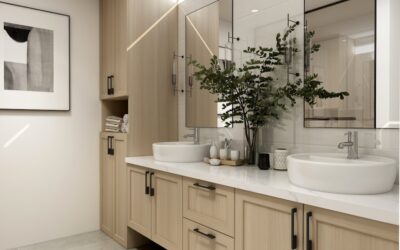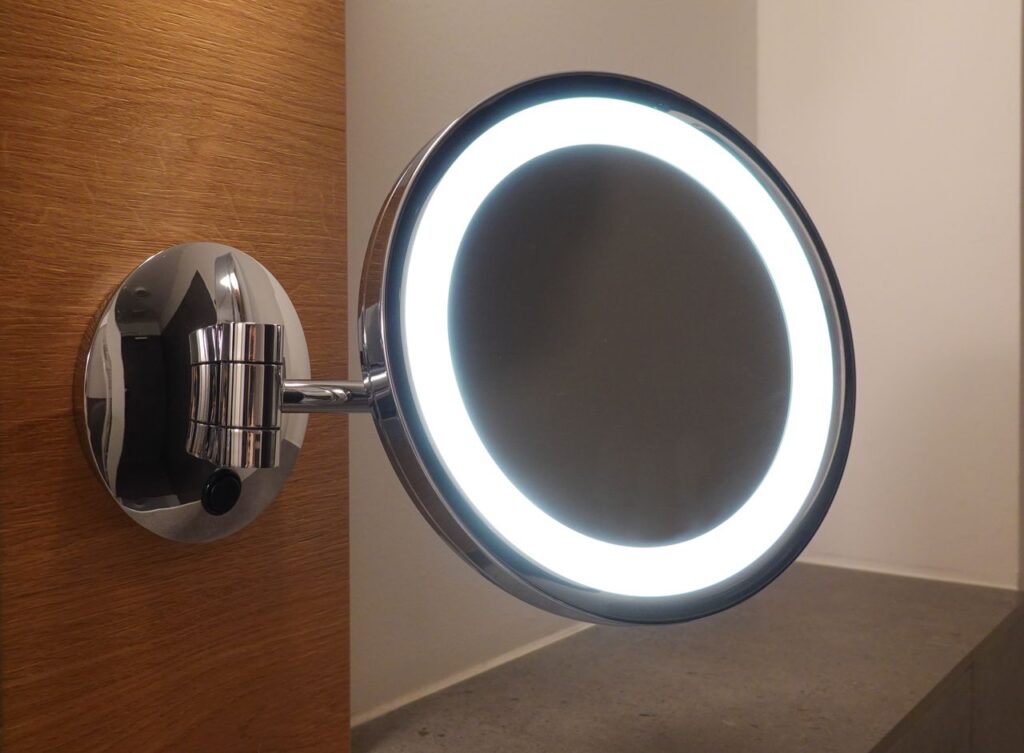
An LED-lit mirror does more than look modern. The right one eliminates the harsh shadow problem of overhead vanity lighting, cuts down on morning makeup mistakes, and adds 200 to 400 lumens of clean task light. The best LED mirror for bathroom applications matches your vanity width, mounts safely on a damp-rated circuit, and uses a color temperature near 4000K to 5000K for true-to-life skin tones. Below are seven models tested across budget tiers from $150 to $1,200, plus the buying criteria that actually matter.
Part of our Bathroom Remodeling & Flooring guide — explore the full guide →
- Top Pick: Keonjinn 36×28 Anti-Fog LED Mirror
- Budget Pick: Keonjinn 24×32 Backlit Mirror
- Best for Makeup: SlimLine 30×40 with Magnification
- Best Smart Mirror: Capstone Connected Smart Mirror
- Best Round Mirror: Hauschen Home 24-Inch Round
- What to Look For Before Buying
- Installation Considerations
- Size and Placement Guidelines
- Maintenance and Longevity
Top Pick: Keonjinn 36×28 Anti-Fog LED Mirror
This 36-by-28-inch wall-mounted mirror lands at about $230 and delivers a balanced combination of size, brightness, and reliability. The built-in defogger heats the mirror surface to roughly 95°F, clearing steam after a hot shower in under 60 seconds. Color temperature toggles between 3000K, 4500K, and 6000K through a single touch sensor.
Installation takes about 45 minutes for a confident DIYer. The included mounting bracket supports either horizontal or vertical orientation, and the hardwire connection requires a damp-rated junction box behind the wall. Plug-in conversion kits run $25 if your bathroom lacks a hardwire option.
Budget Pick: Keonjinn 24×32 Backlit Mirror
For under $150, this smaller backlit option fits half baths and powder rooms beautifully. The 24-by-32-inch dimensions work above standard 24-inch vanities without overwhelming the wall. The LED strip runs the full perimeter and outputs roughly 1800 lumens at 4000K.
The trade-off is the lack of anti-fog defogger and dimmer control. Plug-in operation through a wall outlet behind the mirror eliminates electrician costs, but a visible cord can be a deal-breaker for tile-finished walls. Use a small wall channel kit for $15 to hide the cable.
Best for Makeup: SlimLine 30×40 with Magnification
The SlimLine model includes a built-in 5x magnification circle in the lower right corner, which is invaluable for eyeliner, brows, and skincare inspection. The 5500K color temperature mimics noon daylight and reveals foundation streaks before you leave the house. Brightness ranges from 50 to 1200 lumens via the touch dimmer.
This option costs around $380 and runs slightly larger at 30 by 40 inches. The aluminum frame edges are matte black and pair well with brass or matte black plumbing fixtures. Hardwire installation is required because the unit pulls 35 watts at full brightness.
Best Smart Mirror: Capstone Connected Smart Mirror
The Capstone connects via Wi-Fi and Bluetooth, displays weather and time through a transparent overlay, and includes a built-in 4K HDMI display option for streaming makeup tutorials or news. Price tops the list at $1,150 for the 28-by-36-inch model, but the feature set genuinely earns the cost in busy households.
Voice control through Alexa and Google Assistant lets you change LED color temperature and dim the lights hands-free. The smart features run on a 5V DC power supply separate from the main LED hardwire, so two power feeds are required during installation.
Best Round Mirror: Hauschen Home 24-Inch Round
Round mirrors soften the geometric look of square vanities and tile patterns. The Hauschen Home 24-inch round model retails around $185 and offers tri-color temperature switching with anti-fog. The thin LED ring sits flush against the mirror’s back edge, creating a halo effect when lit.
This size works above pedestal sinks and 18- to 24-inch vanities in guest baths. Larger 32-inch and 40-inch round options are available at $260 and $340 respectively for bigger spaces.
What to Look For Before Buying
Five specifications separate quality LED mirrors from disposable ones:
- IP44 rating or higher — protects against splashes and humidity. Lower ratings short out within a year in bathroom conditions.
- Color rendering index (CRI) of 90+ — accurate color reproduction for skin tones and clothing checks.
- Dimmable to at least 20 percent — late-night bathroom trips do not need full 1500 lumens.
- Anti-fog defogger — saves daily wiping in shared bathrooms.
- UL or ETL certification — confirms safe electrical performance and code compliance.
Skip mirrors that omit any of these specs in their listing because manufacturers usually advertise them prominently when present.
Installation Considerations
Hardwired mirrors need a damp-rated electrical box behind the mounting location, with a GFCI-protected circuit by current US code in all bathrooms. Plug-in models work in any bathroom with an outlet near the vanity, but the visible cord and required ground-fault outlet placement limit clean installs.
The mirror’s center should sit at roughly 60 to 65 inches from the floor for average-height users. Adjust upward for taller households. Allow 6 to 8 inches of clearance between the top of the vanity backsplash and the bottom of the mirror to prevent water splash from reaching the LED housing.
Size and Placement Guidelines
Match the mirror width to the vanity width minus 4 inches. A 36-inch vanity pairs best with a 30- to 32-inch mirror, while a 60-inch double vanity supports either one 50-inch mirror or two 24-inch mirrors with 10 inches of wall between them. Going wider than the vanity looks awkward and oversized.
Mirror height ranges from 28 to 40 inches for most vanity setups. Taller mirrors at 40+ inches make small bathrooms feel larger by drawing the eye upward and reflecting more of the ceiling and overhead light fixtures.
Maintenance and Longevity
Wipe the mirror weekly with a microfiber cloth and ammonia-free glass cleaner. Standard Windex contains ammonia that degrades anti-fog coatings within 18 to 24 months. Use Sprayway Glass Cleaner or a 50/50 distilled water and isopropyl alcohol mix instead.
LED strips typically last 30,000 to 50,000 hours, which is roughly 10 to 17 years at 8 hours per day. The driver electronics often fail first, usually after 5 to 8 years. Many brands sell replacement drivers for $25 to $60, which extends the mirror’s life without buying a whole new unit.