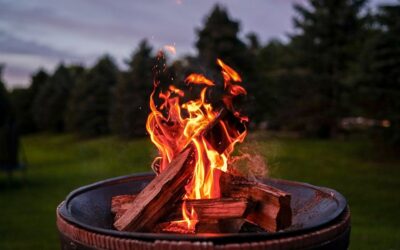
A natural gas fire pit changes how you use your backyard. Flip a switch, and the patio becomes the gathering spot from April through November in most climates. After installing and testing dozens of units for clients and friends, I have a clear sense of which models actually hold up to weather, deliver the heat output they advertise, and look good five years later. The best outdoor natural gas fire pits share a few characteristics: real stainless or aluminum construction, properly sized burner pans with quality media, and an ignition system that does not die after one winter.
Part of our Windows & Doors guide — explore the full guide →
Here are the top picks across price tiers, plus the buying criteria you should be using before pulling the trigger.
- Why Natural Gas Beats Propane for Permanent Installations
- Top Pick: Outland Living Series 401
- Premium Pick: Bromic Tungsten Smart-Heat
- Best Coffee Table Style: Heatmaster Stone Stahl 42
- Best Linear Fire Pit: HPC Evolution 360 Series
- Budget Pick: Endless Summer GAD15279ES
- Key Specs to Compare
- Installation Requirements
- Media Selection: Lava Rock vs Fire Glass
- Maintenance for Longevity
Why Natural Gas Beats Propane for Permanent Installations
Propane has its place — portable units, vacation cabins, properties without gas service. For a permanent backyard installation, natural gas wins on three fronts. No tank to refill. Lower operating cost (roughly 30 to 50 percent cheaper per BTU). Unlimited burn time. The trade-off is a one-time installation cost of $400 to $1,200 for a licensed plumber to run a gas line from your meter to the pit location, with a shutoff valve at the pit.
BTU output matters more than people realize. A 50,000 BTU fire pit warms a 6 to 8-foot radius noticeably. An 85,000 to 100,000 BTU unit pushes useful heat to 12 feet. For a typical patio with 4 to 6 seats, 60,000 to 80,000 BTUs is the right range.
Top Pick: Outland Living Series 401
The Outland Living Series 401 is my consistent recommendation for homeowners wanting plug-and-play quality without spending five figures. The 30-inch round model produces 58,000 BTUs from a stainless burner pan, comes with lava rock or fire glass, and a CSA-certified electronic ignition. Around $529 to $649 depending on retailer.
The aluminum body is powder coated and has held up to 5 years of New England winters in one of my installations without rusting or warping. The included weather cover is functional. Plan on $75 in fire glass upgrades if you want a contemporary look — the stock lava rock is fine but unimpressive.
Premium Pick: Bromic Tungsten Smart-Heat
For homeowners who want a true outdoor living centerpiece and have $4,000 to $7,000 to spend, the Bromic Tungsten Smart-Heat is built like commercial restaurant equipment. 60,000 BTUs from a 316-grade stainless burner. Wireless remote ignition with safety lockout. CSA and UL certified. Five-year warranty on the burner and three on the body.
The design is squared off and contemporary — better suited to modern architecture than craftsman or farmhouse styling. Heat output is rock solid, ignition has never failed in three winters at one of my client properties in Minneapolis.
Best Coffee Table Style: Heatmaster Stone Stahl 42
If you want a fire feature that doubles as a coffee table when not lit, the Heatmaster Stone Stahl 42 is a strong choice. The 42-inch square unit produces 65,000 BTUs and ships with a smoke gray fire glass and a steel mesh cover that lets you set drinks and snacks around the burner.
The cast concrete body is heavy (around 220 pounds) which makes installation a two-person job but keeps the unit stable in wind. Around $1,800 to $2,400 depending on color options.
Best Linear Fire Pit: HPC Evolution 360 Series
Linear or trough-style fire pits work brilliantly along seat walls, retaining walls, or as a centerpiece against a fence. The HPC Evolution 360 series comes in 24, 36, 48, 60, and 72-inch lengths with BTU outputs from 65,000 to 200,000 BTUs.
The 304 stainless burner is one of the best in the industry. Match-lit and electronic ignition versions available. Pricing runs $750 to $2,200 for the burner pan alone — you build or buy the enclosure separately, which gives you total design flexibility.
Budget Pick: Endless Summer GAD15279ES
For homeowners on a tight budget, the Endless Summer GAD15279ES delivers 30,000 BTUs in a steel bowl with hammered bronze finish for around $250 to $349. Smaller than the premium picks and lower BTU output, but reasonable build quality for the price.
Expect a 3 to 5 year lifespan if you cover it when not in use. The igniter is the first thing to fail — keep the replacement piezoelectric module handy ($25) and you can extend the useful life considerably.
Key Specs to Compare
When evaluating any natural gas fire pit, focus on these specs over the marketing language:
- BTU output: Match to patio size. 50,000-60,000 for small patios, 65,000-85,000 for medium, 90,000+ for large entertaining spaces
- Burner pan material: 304 or 316 stainless steel is essential. Avoid powder-coated steel burners — they corrode within 2 years
- Ignition type: Electronic with battery backup is most reliable. Avoid match-lit only for everyday use
- CSA or ANSI certification: Required by code in most jurisdictions for permanent gas installations
- Warranty: Three years minimum on the burner, one year on the body
Installation Requirements
A natural gas fire pit installation requires a permitted gas line in most jurisdictions. The line typically uses 3/4-inch black iron pipe or yellow CSST (corrugated stainless steel tubing) from your gas meter to the pit location, with a quarter-turn shutoff valve within 6 feet of the pit. Expect $400 to $1,200 for the gas line work and $150 to $300 for the inspection and pressure test.
Clearance from combustibles matters too. Most manufacturers require 36 inches of clearance from siding, deck railings, or other combustible structures. Verify with your specific unit and local code.
Media Selection: Lava Rock vs Fire Glass
Lava rock is cheaper ($25 to $60 for a 10-pound bag) and gives a traditional fire look. Fire glass costs more ($90 to $200 for the same coverage) but produces a cleaner, more modern flame. Both work fine — the burner pan does the work. Match the media to your design aesthetic.
Use only tempered fire glass rated for outdoor gas applications. Regular landscaping glass or recycled bottle glass will explode under heat.
Maintenance for Longevity
Cover the fire pit when not in use. Inspect the burner pan annually for corrosion and clean orifices with compressed air. Replace ignition batteries each spring. Drain water from the pan before winter — trapped water freezes and warps the burner. Following these four habits gets you 10+ years out of any of the best outdoor natural gas fire pits on this list.