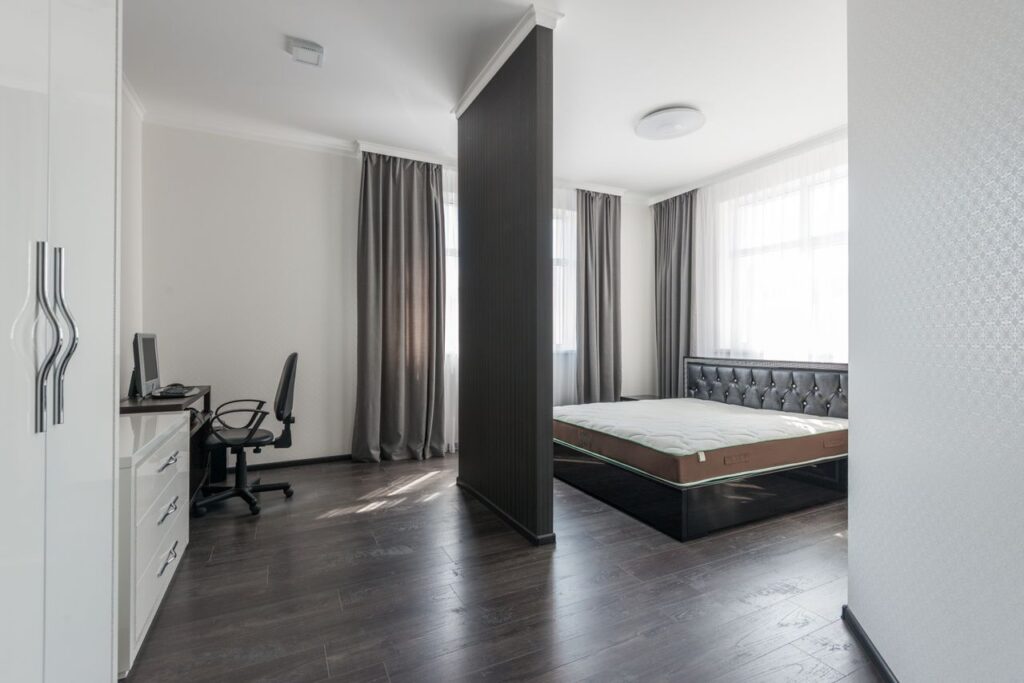
The best portable AC for bedroom use is not the most powerful one on the shelf. It is the one quiet enough to sleep beside, sized to your room so it does not short-cycle, and set up on a proper wall outlet with a tight window seal. A unit that roars at 56 decibels will cool the room fine and still ruin your night.
For most bedrooms between 150 and 350 square feet, a quiet portable air conditioner with an inverter compressor, a dedicated sleep mode and a sound level in the low to mid 40s decibel range on its lowest setting is the target. Dual-hose models cool more efficiently than single-hose units, and a properly sized unit will run longer, quieter cycles instead of blasting on and off.
- What Makes the Best Portable AC for Bedroom Use
- Sizing: BTU for Small Rooms
- Single-Hose vs Dual-Hose
- Portable AC vs Coolers and Other Small Units
- Safe Placement and Power
- Reducing Noise Further
- Troubleshooting Common Bedroom AC Problems
- A Quick Buying Checklist
- Typical Cost Ranges
- Frequently Asked Questions
What follows covers the features that actually matter at night, how to size one without overbuying, and how to place and power it safely.
What Makes the Best Portable AC for Bedroom Use
Bedroom duty is different from cooling a garage or a living room. Noise, gentle airflow and steady temperature matter more than raw capacity. Look for these features first:
- Low decibel rating: conventional portable units often run around 50 to 56 dB. Quieter inverter models can drop into the low 40s on low fan. Every 10 dB is perceived as roughly twice as loud, so the difference is dramatic.
- Inverter compressor: a portable aircon inverter model ramps the compressor up and down instead of slamming on and off. That eliminates the loud clunk at each startup and holds temperature more evenly.
- Sleep mode: gradually raises the set point a degree or two overnight and drops the fan to its lowest speed. Many also dim the display.
- Display off option: bright LEDs are a real sleep problem. Check that the display can be turned off fully.
- Timer and remote: set it to shut off after you fall asleep or start before bedtime.
- Self-evaporating condensate: reduces or eliminates the need to empty a water tank in humid weather, and prevents the unit shutting off at 3 a.m. with a full tank.
Sizing: BTU for Small Rooms
Portable air conditioners carry two capacity numbers. The older figure, often labeled ASHRAE, is higher. The newer seasonally adjusted cooling capacity (SACC) reflects real-world heat gain from the exhaust hose and is noticeably lower. Size by the SACC number when you can.
| Bedroom size | Approximate SACC BTU |
|---|---|
| Up to 150 sq ft | About 5,000 to 6,000 |
| 150 to 300 sq ft | About 6,000 to 8,000 |
| 300 to 450 sq ft | About 8,000 to 10,000 |
Add capacity for a sunny west-facing room, a top-floor bedroom under a hot attic, or a room with high ceilings. Subtract a little for a shaded, well-insulated room. Anyone searching for a portable AC 1 ton unit is looking at roughly 12,000 BTU on the older rating, which is usually more than a typical bedroom needs. Oversizing causes short cycles, poor dehumidification and more startup noise.
If you only need a small aircon unit for bedroom use in a compact room, a lower-capacity model or a window unit may be quieter and more efficient than a large portable.
Single-Hose vs Dual-Hose
A single-hose unit pulls room air across the condenser and blows it outside. That creates slight negative pressure, drawing warm air in through door gaps and outlets. A dual-hose unit uses a second hose to pull outdoor air for the condenser, so it does not depressurize the room. In most bedrooms, dual-hose models cool faster and use less energy for the same result, though they take up a bit more window space.
Either way, keep the exhaust hose as short and straight as possible. Every extra foot and bend adds heat back into the room. Insulated hose sleeves help noticeably.
Portable AC vs Coolers and Other Small Units
Search results mix true air conditioners with a lot of other products, so check what you are buying.
- Portable room cooler or small room cooler: often an evaporative cooler that blows air across wet pads. It adds humidity and only works well in dry climates. It is not a refrigerant air conditioner.
- AC cooler for room listings: read the specs. If there is no exhaust hose and no BTU rating, it is not an air conditioner.
- Window units: usually quieter and more efficient than portables of the same capacity because the compressor sits outside the room. If your window and lease allow one, it is worth considering.
- Ductless mini-split: the best indoor AC option for long-term quiet cooling, but it requires a licensed HVAC installer and usually a new circuit.
A small HVAC unit such as a single-zone mini-split costs far more up front but can run nearly silently inside the room. For a rental or a short-term fix, a quality portable remains the practical choice.
Safe Placement and Power
Portable air conditioners draw serious current, especially at startup. Treat them like any other large appliance.
- Plug directly into a wall outlet. Never use an extension cord or power strip. Both can overheat under the continuous load.
- Use a circuit with spare capacity. Ideally the unit shares its circuit with little else. If breakers trip when the AC and a hair dryer or space heater run together, move one of them to a different circuit.
- Check the plug. Many units have a safety plug with a test and reset button. Do not bypass it.
- Keep clearance. Leave about 12 to 20 inches around the unit for airflow, away from curtains and bedding.
- Seal the window kit. Foam gaps around the slider panel so hot air and insects stay out.
- Keep the cord clear. Route it where no one will trip over it or pinch it under furniture.
If you need a new outlet near the window, or a dedicated circuit to avoid tripping breakers, have a licensed electrician add it. Do not try to modify the plug or wiring yourself. If an outlet feels warm, looks scorched or the plug fits loosely, stop using it and have it inspected.
Reducing Noise Further
Even the quietest units make some sound. A few tricks help:
- Place the unit on a dense rug or anti-vibration pad to cut hum transmitted through the floor.
- Position it across the room from the bed, as far as the hose allows.
- Pre-cool the room an hour before bed on high, then switch to sleep mode.
- Clean the filter every two weeks. A clogged filter makes the fan work harder and louder.
- Check that the hose is not rattling against the window frame.
Troubleshooting Common Bedroom AC Problems
- Room never gets cool: the unit is undersized, the hose is too long, or warm air leaks around the window kit.
- Unit shuts off overnight: the water tank is full. Drain it or run a continuous drain hose to a bucket.
- Musty smell: drain the tank fully, dry the unit on fan-only mode for an hour, and clean the filter.
- Breaker trips: too much load on the circuit. Unplug other devices or have an electrician evaluate adding a circuit.
A Quick Buying Checklist
Before you buy, run through this short list with the spec sheet open:
- SACC capacity matched to your room size, not just the larger older rating
- Published noise rating on low fan, ideally in the low to mid 40s dB
- Inverter or variable-speed compressor for quieter, steadier cooling
- Dual-hose design if your window kit can fit it
- Sleep mode, full display shut-off and a timer
- Self-evaporating or continuous drain option for humid climates
- A window kit that fits your window type, including sliders and casements
- A power cord long enough to reach a wall outlet without an extension cord
Also think about where the unit will sit. Portables are heavy, often 50 to 80 pounds, and most roll on casters. Make sure the path from the outlet to the window works in your furniture layout before you buy.
Typical Cost Ranges
Basic single-hose portable units commonly run a few hundred dollars. Quieter dual-hose and inverter models usually cost more, often in the mid hundreds up to roughly $700 or beyond. Operating cost depends on your electricity rate and hours of use. A single-zone mini-split professionally installed typically starts in the low thousands.
Frequently Asked Questions
How quiet should a bedroom portable AC be?
Aim for a unit rated in the low to mid 40s decibel range on its lowest fan setting. Many standard portables run 50 dB or louder, which light sleepers usually notice.
What BTU do I need for a 12 by 12 bedroom?
A 144 square foot room typically needs around 5,000 to 6,000 BTU on the SACC rating. Add more for sun exposure or a hot attic above.
Can I plug a portable AC into an extension cord?
No. Plug it directly into a wall outlet. Extension cords and power strips can overheat under the sustained load.
Is an inverter portable AC worth the extra cost?
For bedrooms, usually yes. Inverter compressors run quieter, avoid loud startup cycles, hold temperature more evenly and use less electricity.
Is a portable cooler the same as a portable air conditioner?
No. Many portable coolers are evaporative units that add moisture and only work well in dry climates. A true air conditioner has a refrigerant compressor and an exhaust hose.