Choosing the best saw blade for laminate flooring is the single biggest factor in whether your finished floor looks factory-perfect or chewed-up along every cut edge. Laminate is deceptively hard on cutting tools. That thin wear layer sitting on top of a high-density fiberboard core is loaded with aluminum oxide, one of the most abrasive materials used in flooring, and it will dull a wood blade in a single room if you pick wrong.
After running through dozens of these floors on the job, I can tell you the difference between a $12 framing blade and a proper high-tooth-count laminate blade is night and day. The right blade gives you clean, chip-free edges that tuck perfectly under baseboard and trim, while the wrong one leaves you sanding, filling, or worse, buying replacement planks.
Why Laminate Needs a Special Blade
Laminate flooring is not solid wood, and treating it like wood is the most common mistake I see DIYers make. The decorative photographic layer and the melamine wear surface are extremely brittle. When a coarse blade with big, aggressive teeth tears through, it chips and splinters the top layer, leaving a ragged white edge that shows even after installation.
The aluminum oxide coating that makes laminate so scratch-resistant on the floor is exactly what destroys standard blades. A general-purpose carpentry blade with 24 to 40 teeth cuts fast but leaves a rough finish, and the abrasive surface wears down cheap carbide teeth in a hurry. To get glass-smooth cuts, you want more teeth, a specific grind, and often a carbide formulation rated for abrasive and laminated materials.
Tooth Count: The Most Important Spec
Tooth count is where most of the decision lives. For a standard 10-inch miter saw or table saw, here is how the ranges break down for laminate:
- 40 teeth: The bare minimum. Cuts faster but you’ll get some chipping, especially on melamine surfaces. Fine for cuts hidden under baseboard.
- 60 teeth: The sweet spot for most laminate work. Clean edges on both faces with reasonable cutting speed.
- 80 teeth: The gold standard for visible cuts, transitions, and stair nosing. Slower feed rate but virtually chip-free.
For a 7-1/4 inch circular saw, look for a 40-tooth fine-finish blade, since blade diameter limits how many teeth manufacturers can fit. More teeth means more cutting points contacting the surface at once, which shears the brittle laminate cleanly instead of ripping it. My rule: if the cut will be visible, go 60 tooth or higher.
Blade Type and Tooth Grind
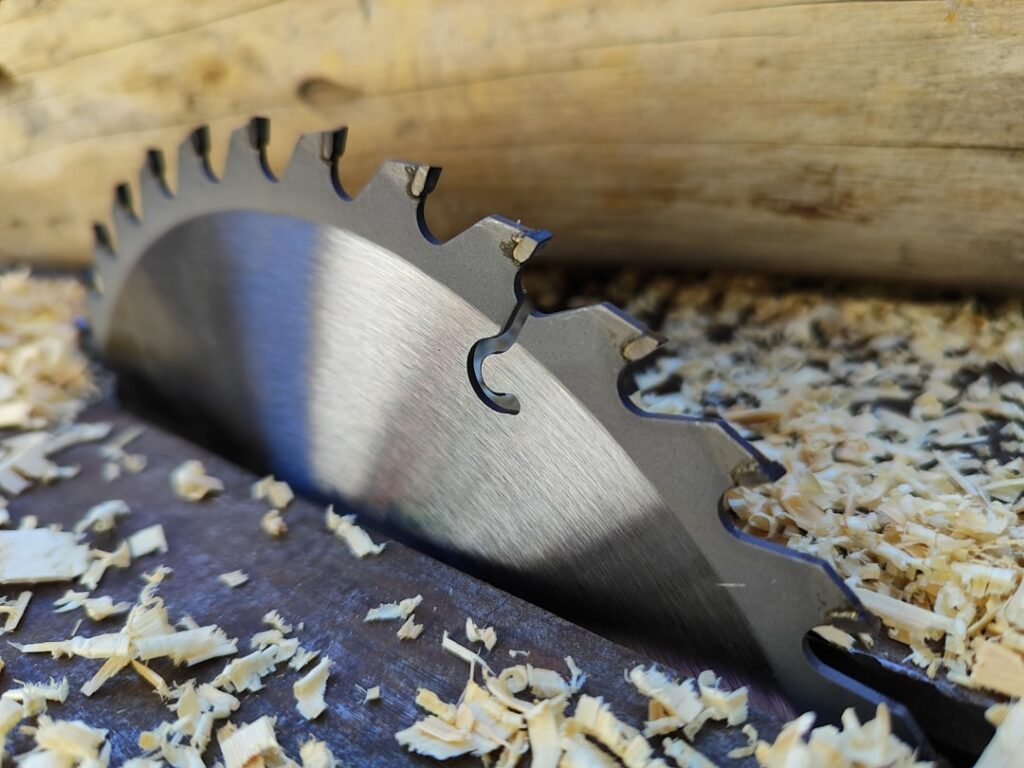
Beyond count, the tooth geometry matters. You want a triple-chip grind (TCG) or a high alternate top bevel (Hi-ATB) for laminate. TCG blades alternate a flat-topped tooth with a beveled tooth, which is ideal for abrasive, hard materials like laminate and melamine because it handles the aluminum oxide without dulling fast. Hi-ATB blades use a steeper bevel angle, around 25 to 40 degrees, and slice the top surface fibers for an ultra-clean finish.
Standard ATB blades, common on general woodworking blades, work acceptably but dull faster on the abrasive coating. Avoid flat-top-grind (FTG) rip blades entirely; they’re built for cutting with the grain of solid lumber and will shred a laminate surface.
Look for a Negative Hook Angle
On miter saws and sliding compound saws, a blade with a negative or low hook angle (0 to negative 5 degrees) pulls less aggressively into the material. That gives you more control and dramatically reduces chip-out on the top surface, which is exactly what you want when the decorative face is up.
Top Blade Picks for Laminate Flooring
These are blades I’ve either run personally or recommend without hesitation. Prices are approximate 2024 retail in USD.
- Freud LU79R010 (Diablo) 80-Tooth Laminate/Melamine Blade — around $55: Purpose-built with Hi-ATB grind and a red anti-friction coating. Leaves an almost polished edge. My first choice for a table or miter saw.
- Diablo D1080N 80-Tooth Laminate Blade — around $40: Negative hook angle designed specifically for laminate on a miter saw. Excellent value for the finish quality.
- DeWalt DW3218PT 80-Tooth Precision Trim — around $45: Tungsten carbide teeth, very smooth, holds up well against the abrasive surface.
- Freud D1084L 84-Tooth — around $50: One of the highest tooth counts in a 10-inch, near-zero chip-out on visible cuts.
- Diablo D0740A 40-Tooth 7-1/4″ Circular Saw Blade — around $18: Best budget pick for corded or cordless circular saws when a table saw isn’t available.
If you own a jigsaw for notching around pipes and door jambs, pair it with a fine down-cutting blade like the Bosch T101BR reverse-tooth blade. Standard jigsaw blades cut on the upstroke and chip the top surface; a reverse-tooth blade cuts on the downstroke and keeps the decorative face clean.
Matching the Blade to Your Saw
The saw you use dictates blade choice as much as the material does. A sliding compound miter saw with an 80-tooth laminate blade is the fastest, cleanest setup for cross-cuts and angle cuts on planks. A table saw handles rip cuts down the length of a plank, though for laminate a straightedge and circular saw often work just as well and generate far less abrasive dust in the shop.
Whatever saw you run, cut with the decorative face oriented so the teeth exit through the back. On a miter or table saw, that means good side up; on a handheld circular saw, which cuts on the upstroke, keep the good side down. This simple orientation trick eliminates half the chip-out problems people blame on the blade.
Tips for Chip-Free Cuts Every Time
Even the best saw blade for laminate flooring performs better with good technique. A few habits that make a real difference:
- Apply painter’s tape over the cut line. The adhesive supports the brittle top layer and prevents micro-chipping. Peel it off after cutting.
- Slow your feed rate. Pushing an 80-tooth blade too fast overwhelms the teeth. Let the blade do the work, especially on the last inch of the cut where blow-out happens.
- Support the offcut. Unsupported material tears as the blade exits. A second sawhorse or a helper prevents that.
- Keep the blade clean. Laminate resin builds up on teeth and increases friction and burning. A quick soak in blade cleaner restores performance.
- Replace when dull. The abrasive coating wears carbide over time. A dull blade burns edges and chips no matter the tooth count.
How Long Will a Laminate Blade Last?
A quality 80-tooth carbide blade will comfortably handle three to five average rooms of laminate before you notice a drop in cut quality, sometimes far more if you’re only doing cross-cuts. The aluminum oxide is what limits life, so a blade you use exclusively for laminate wears differently than one you swap between plywood and flooring. I keep a dedicated laminate blade in the shop and never use it on anything else, which stretches its life considerably.
When you start seeing scorch marks, hearing the motor labor, or noticing chips reappear on cuts that used to be clean, it’s time to either have the blade professionally sharpened or replace it. Sharpening a carbide laminate blade runs $15 to $25 and restores most of the original performance.
Final Recommendation
For most homeowners installing a floor, the best saw blade for laminate flooring is a dedicated 80-tooth Hi-ATB or TCG carbide blade with a low or negative hook angle, run on a compound miter saw. The Diablo and Freud laminate-specific blades in the $40 to $55 range deliver professional, chip-free results that justify every dollar over a generic blade.
Spend the extra money here. A floor is a long-term investment, and the small premium for the right blade pays you back in clean edges, faster installation, and planks you don’t have to scrap. Pair the right blade with painter’s tape and a patient feed rate, and your cuts will disappear under the trim exactly the way they should.
Prefer to explore on your own?
See how new flooring looks in your actual room in seconds — free, no signup.
Try the free Floor Studio →