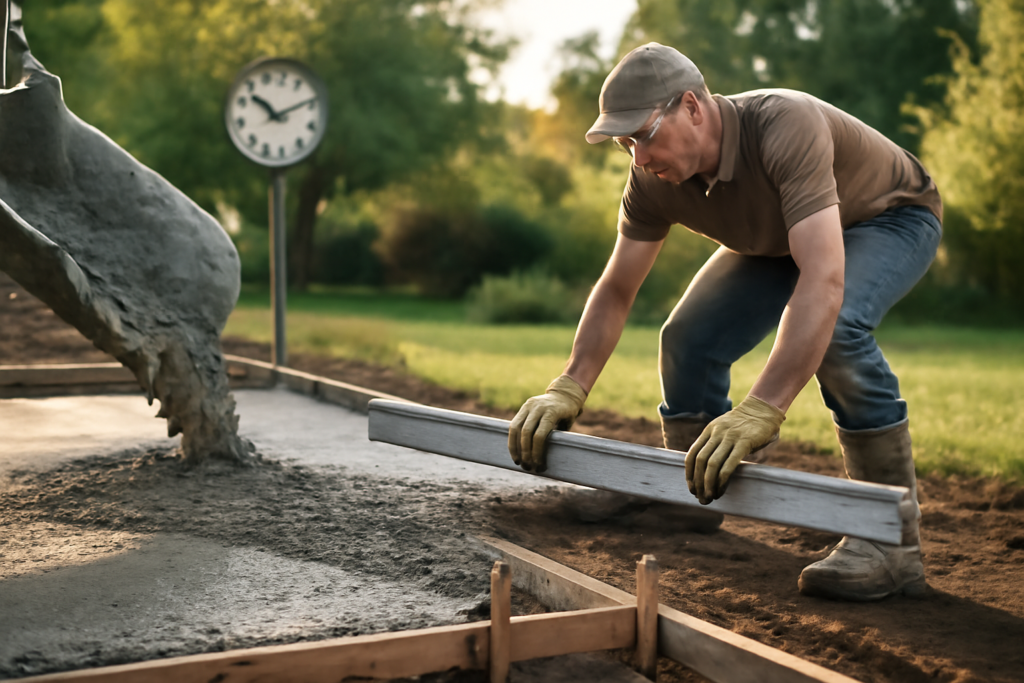
Pour concrete on the wrong day and you can end up with cracks, a weak surface, or a slab that never reaches full strength no matter how good the mix was. The best time to pour concrete comes down to temperature and weather far more than the calendar, and understanding why helps you plan a job that cures properly. Concrete does not simply dry; it cures through a chemical reaction called hydration that needs the right conditions to build strength. Hit the timing right and you get a hard, durable slab. Miss it and you fight problems for the life of the project.
- The Ideal Temperature Range
- Why Cold Weather Is a Problem
- Why Extreme Heat Is Also Bad
- The Best Seasons
- Pick a Mild, Dry Day
- Time of Day Matters Too
- Plan for the Full Curing Window
- Quick Timing Checklist
- How Curing Actually Works
- Pouring in Hot Weather: Extra Steps
- Pouring in Cold Weather: Extra Steps
- Reading the Forecast Like a Pro
- Final Word
The Ideal Temperature Range
Concrete cures best in mild, moderate temperatures. The sweet spot for the surrounding air is generally around 50 to 60 degrees Fahrenheit, with conditions staying above freezing for several days afterward. In this range the hydration reaction proceeds at a steady, predictable pace, giving you time to place and finish the concrete before it sets while still allowing it to gain strength reliably.
Temperatures that are too low slow or stop hydration, while temperatures that are too high speed it up dangerously fast. Both extremes weaken the finished product, which is why the moderate middle is what professionals aim for.
Why Cold Weather Is a Problem
Cold is the bigger enemy because of one specific risk: freezing. If fresh concrete freezes before it has gained enough strength, the water inside expands and ruptures the internal structure, permanently compromising the slab.
- Avoid pouring when temperatures will drop below freezing within the critical early curing window.
- Watch the overnight low, not just the daytime high, since nights are when freezing strikes.
- If you must pour in cool conditions, use insulating blankets to protect the curing concrete.
- Cold also slows the set, meaning you wait much longer before you can finish or use the surface.
For most homeowners, the simplest rule is to wait until the freezing risk has clearly passed.
Why Extreme Heat Is Also Bad
Hot weather creates the opposite problem. High temperatures, strong sun, and wind cause the surface to dry too quickly, a condition that leads to flash setting and surface cracking. When the top cures faster than the body of the slab, you get shrinkage cracks and a weaker bond.
If you pour in heat, work early in the morning when it is cooler, keep the concrete shaded if possible, and mist or cover the surface to slow evaporation. Curing compounds and wet burlap help retain moisture so the slab does not dry out prematurely.
The Best Seasons
Spring and fall are usually the prime seasons for pouring concrete in most US climates. They tend to deliver the moderate temperatures and lower extremes that concrete loves. Mornings are cool, afternoons are mild, and the risk of both hard freezes and blistering heat is reduced.
Summer pours are doable but require heat precautions, and winter pours demand active freeze protection. Whenever possible, schedule major slabs, driveways, and footings for these shoulder seasons.
Pick a Mild, Dry Day
Beyond the season, the individual day matters. Aim for a dry day with no rain in the forecast for the hours around the pour and the early curing period. Rain falling on fresh concrete can wash out the surface, dilute the mix, and leave a pitted, weak finish.
That said, concrete needs moisture to cure, just not falling directly onto an unset surface. The goal is a dry placement followed by controlled moisture during curing through misting or curing compounds.
Time of Day Matters Too
Morning is often the best time to start. Pouring in the morning gives the concrete a full day of moderate temperatures to set up before the cooler night arrives, and in hot weather it avoids the worst of the afternoon sun. Starting early also gives you daylight to finish the surface properly without rushing.
Plan for the Full Curing Window
Pouring is just the start. Concrete continues gaining strength for weeks, reaching much of its strength in the first 28 days. The early days are the most critical, so check the forecast for the entire window, not just the pour day. A perfect pour day followed by a hard freeze two nights later can still ruin the slab.
Quick Timing Checklist
- Air temperature around 50 to 60 degrees Fahrenheit, staying above freezing for several days.
- No rain forecast around the pour and early curing.
- Spring or fall when possible.
- Start in the morning for a full day of mild curing.
- Plan protection if heat or cold is unavoidable.
How Curing Actually Works
It helps to understand why timing matters so much. Concrete does not harden by drying out; it hardens through hydration, a chemical reaction between water and cement that continues as long as moisture and a reasonable temperature are present. If the concrete dries too fast, the reaction stops prematurely and the slab never reaches its potential strength. If it freezes early, the reaction halts and the expanding ice damages the structure.
This is why curing is about maintaining the right conditions, not just waiting. Keeping fresh concrete moist and within a moderate temperature range for the first several days lets hydration do its work and produces a far stronger result than concrete left to dry or freeze on its own.
Pouring in Hot Weather: Extra Steps
If summer is your only option, you can still pour successfully with the right precautions. The enemy is rapid moisture loss, so everything you do should slow evaporation and keep the mix workable.
- Schedule the pour for early morning to beat the heat.
- Dampen the subgrade and forms before placing concrete so they do not pull water from the mix.
- Have enough hands ready to place and finish quickly before it sets.
- Apply a curing compound or keep the surface moist with misting or wet coverings.
- Provide shade or windbreaks if possible to reduce drying.
Pouring in Cold Weather: Extra Steps
Cold-weather pours demand active protection against freezing. If you cannot wait for warmer days, plan to keep the concrete warm through the critical early curing period. Insulating blankets trap the heat the curing concrete generates, and heated enclosures can keep the area above freezing. Avoid pouring on frozen ground, which can settle and crack the slab as it thaws. The extra effort and cost of freeze protection is why most homeowners simply wait for a milder window.
Reading the Forecast Like a Pro
A good pour starts with a careful look at the weather, and not just the temperature for the pour day. Check the overnight lows for the next several nights, watch for any rain in the window around placement, and note the wind and humidity, since dry, windy conditions accelerate evaporation even at moderate temperatures. A mild, calm, dry stretch of several days is the ideal you are looking for, not just one good afternoon.
Final Word
The best time to pour concrete is a mild, dry day in the moderate season, ideally with temperatures in the 50s, no freezing on the horizon, and no rain in the forecast. Respect the curing window, protect against extremes, and your slab will reach full strength and last for decades. When the weather cooperates, the work is straightforward; when it does not, patience and protection are what separate a lasting pour from a cracked disappointment.