A great towel is one of those small luxuries you feel every single day, and once you have used a good one, the thin, scratchy kind never feels acceptable again. The best Turkish cotton bath towels combine plush softness with fast absorbency and the kind of durability that lets them survive hundreds of wash cycles without going flat or stiff. That combination is exactly why hotels and spas reach for Turkish cotton, and why it is worth understanding before you buy.
Turkish cotton comes from the Aegean region and is prized for its extra-long staple fibers. Longer fibers spin into stronger, smoother yarn with fewer loose ends, which means a towel that feels silkier, pills less, and holds up longer than one woven from short, common cotton. Below is what actually matters when you shop, followed by specific recommendations for different needs and budgets.
What Makes Turkish Cotton Special
The magic is in the staple length. Turkish cotton fibers typically measure well over an inch, and that extra length lets mills spin fine, continuous yarn with very few weak spots. Egyptian cotton shares this long-staple advantage, but the two behave a little differently in the bathroom. Turkish cotton starts out slightly less plush than Egyptian and grows softer and more absorbent with every wash, which is why a Turkish towel you buy today often feels better a year from now.
Absorbency is the other headline feature. A well-made Turkish towel wicks water off your skin quickly yet still dries faster on the rack than a dense, heavy alternative. That balance matters in a humid bathroom where a slow-drying towel can turn musty. If you have ever pulled a damp, sour-smelling towel off the bar, the quick-drying nature of a quality Turkish weave is a real everyday benefit, not just marketing.
Because the fibers are so smooth, Turkish cotton also resists the pilling and shedding that plague cheaper towels. You will not spend the first month picking lint off your skin. Over years of use, the good ones stay lofty instead of matting down into thin, board-like rectangles.
It helps to know how Turkish cotton stacks up against the other options on the shelf. Standard upland cotton, the kind in most bargain multipacks, uses short fibers that produce a fuzzier, weaker yarn prone to pilling and thinning. Combed cotton is a step up because the manufacturing removes short fibers and impurities, but it still cannot match the staple length of Turkish or Egyptian cotton. When a label just says one hundred percent cotton with no origin or staple claim, assume it is the short-staple kind, which is why the Turkish designation on a towel actually means something for the feel and lifespan you get.
Understanding GSM Before You Buy
GSM stands for grams per square meter, and it is the single most useful number on a towel label. It measures density, which translates roughly to how thick, plush, and absorbent a towel feels. Towels generally run from about 300 GSM at the thin, quick-drying end up to 900 GSM at the ultra-plush, spa-blanket end.
For an everyday bath towel, aim for something in the 500 to 700 GSM range. That band hits the sweet spot: substantial and absorbent enough to feel luxurious, yet not so heavy that it takes forever to dry or overwhelms your washer. Below roughly 400 GSM you get lightweight towels that dry fast and pack small, which makes them excellent for the gym, travel, or a beach bag, but they feel thin as your main bathroom towel.
At the top end, towels above 700 GSM feel gloriously thick and hotel-like, but there is a tradeoff. Heavier towels hold more water, so they take longer to dry between uses and add real bulk to a laundry load. If your bathroom has poor ventilation or you do laundry infrequently, a mid-weight towel is often the smarter pick than the plushest one on the shelf.
Weave, Construction, and Durability
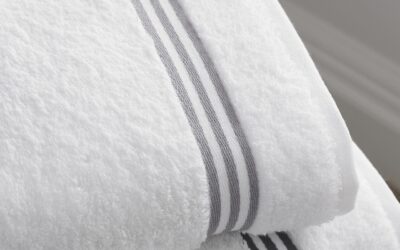
Look past the fiber and check how the towel is built. Double-stitched, reinforced hems are a quiet indicator of quality because the hem is where towels fail first, unraveling after repeated washing. A dobby border or neatly finished edge suggests the maker paid attention to construction, not just the fluffy loops in the middle.
Loop density and length affect how the towel performs. Longer loops create more surface area and feel plusher, but very long uncut loops can snag on jewelry and rough skin. A well-balanced Turkish towel uses loops that are generous enough to feel soft yet tight enough to resist pulling. Give a towel a gentle tug at the corner in the store; a quality one feels firm and cohesive rather than loose and floppy.
Certifications add peace of mind. An OEKO-TEX Standard 100 label means the textile was tested for harmful substances, which matters for something that touches your skin and your children’s skin daily. Many reputable Turkish towel brands, including names like Delara, Hammam Linens, and various premium hotel-collection lines, carry this certification and back their towels with multi-year guarantees.
Watch the marketing language carefully, because the word Turkish gets stretched. Some towels are labeled Turkish cotton when only a percentage of the blend is genuine long-staple fiber, or when the cotton is grown elsewhere and merely woven in Turkey. Neither is fraud exactly, but neither delivers the full benefit. Look for a clear statement of one hundred percent Turkish cotton, and be a little skeptical of a plush-looking towel priced far below the rest of the market, since real long-staple fiber costs more to source and a suspiciously cheap price usually means a blend or short-staple substitute.
Top Picks for Different Needs
For the best all-around choice, a 600 GSM Turkish cotton bath towel set is hard to beat. Brands such as Chakir Turkish Linens and Utopia Towels sell six-piece sets in this weight for roughly $30 to $50, and they deliver genuine long-staple softness at a price that does not sting when you eventually replace them. These towels suit most households because they balance feel, absorbency, and drying time without demanding a premium.
If you want a true spa experience and have the ventilation and laundry habits to support it, step up to an 800 GSM towel from a premium line. Expect to pay $25 to $40 per single towel, but you get a thick, enveloping feel that rivals a high-end hotel. Delara and similar upscale brands produce this tier, and the extra plushness genuinely reads as a luxury upgrade in a guest bathroom.
Travelers and gym-goers should look at lightweight Turkish peshtemal or flat-woven towels in the 300 to 400 GSM range. These pack down small, dry in a fraction of the time, and often double as a beach wrap or picnic blanket. Hammam Linens and comparable makers sell them for $15 to $25, and their quick-drying nature makes them the practical opposite of a heavy plush towel.
Do not overlook hand towels and washcloths when you build out a set. A common mistake is buying beautiful bath sheets and then pairing them with thin, mismatched hand towels that wear out and cheapen the whole bathroom. Buying a coordinated set in the same weight and color keeps the look consistent and means everything ages at roughly the same rate. For a guest bathroom, two bath towels, two hand towels, and two washcloths in a mid-weight Turkish cotton is a sensible starting bundle that usually lands between $40 and $70.
Caring for Your Towels So They Last
Even the best Turkish cotton bath towels can be ruined by bad laundry habits, and a few simple rules keep them plush for years. Wash new towels once before first use to remove manufacturing residue and help set the fibers. Use about half the detergent you think you need, because excess soap builds up in the loops and makes towels stiff and less absorbent over time.
Skip the fabric softener entirely. It coats the cotton fibers with a waxy film that feels soft for a wash or two but steadily kills absorbency, which defeats the whole point of a quality towel. If your towels ever feel stiff or smell musty, run them through a hot wash with a cup of white vinegar and no detergent to strip the buildup, then a second rinse with a half cup of baking soda to refresh them.
Dry towels on medium heat rather than high, and pull them out while they still have a hint of give rather than baking them bone-dry, which weakens the fibers over time. Fluff and shake each towel before folding to lift the loops back up. Treat them this way and a good set of Turkish towels will stay soft and absorbent for five to ten years, making them one of the better value-per-use purchases in your whole home.