Bifold doors were everywhere in 1980s tract housing for good reason — they’re cheap, they don’t swing into the room, and they cover a wide opening. But anyone who has lived with them knows the downsides: warping, jumping off the track, pinched fingers, and that flimsy hollow-core look that screams builder-grade. Plenty of bifold door alternatives exist today, and most are no more expensive than replacing the original bifolds with the same flimsy product.
Part of our Windows & Doors guide — explore the full guide →
This guide walks through seven solid replacements, with realistic costs, where each works best, and what you’ll actually need to install them.
- Why Replace Bifold Doors
- Option 1: Sliding Barn Doors
- Option 2: Pocket Doors
- Option 3: French Doors (Mini)
- Option 4: Curtains
- Option 5: Pivot Doors
- Option 6: Accordion Doors (The Modern Kind)
- Option 7: Open Shelving (No Door at All)
- Quick Comparison
- What to Consider Before Choosing
- Installation Tips
- Frequently Asked Questions
Why Replace Bifold Doors
The most common complaints homeowners cite:
- Doors come off the track when bumped
- Hinges loosen and panels sag within a few years
- Hollow cores look cheap and dent easily
- Limited access — you can only see half the closet at a time
- Hard to keep aligned, especially on closets wider than 5 feet
Any of the alternatives below solves at least three of those problems.
Option 1: Sliding Barn Doors
A barn door rolls on an exposed steel track mounted above the opening. It’s the dominant Pinterest favorite from 2018 onward, and good hardware kits are now under $100. The door itself can be DIY shiplap, a salvaged solid-core door, or a prebuilt unit from Home Depot.
Cost: $200–$600 installed, depending on door choice. Single track hardware kits from Smartstandard or Artisan run $60–$130 for 6-foot spans.
Best for: Wide closets (5 feet or more), pantries, laundry alcoves. Avoid in spaces where you need to push furniture against the adjacent wall — the door needs that wall to slide onto.
Option 2: Pocket Doors
Pocket doors slide into a pocket built into the adjacent wall. They disappear completely when open, giving you full closet access and zero swing clearance issues. The catch: installation requires opening up the wall, which means a half-day of drywall work and at least one new framed pocket.
Cost: $400–$900 installed for retrofit. Johnson Hardware 1500 series pocket frames cost about $130, the door $100–$300.
Best for: New construction or renovations where walls are already open. In existing walls, check for plumbing and electrical before committing.
Option 3: French Doors (Mini)
Two narrow swinging doors hinged on each side of the opening. They look more upscale than bifolds, open fully, and work well with painted finishes that match trim.
Cost: $200–$500 for a pair of solid-core slab doors plus hinges and casing.
Best for: Smaller closets (under 4 feet wide). Wider openings require oversized doors that swing too far into the room.
Option 4: Curtains
A simple curtain rod with floor-to-ceiling drapes is the cheapest swap on this list. It softens a bedroom, reduces noise inside the closet, and takes 20 minutes to install. The trade-off is the open look — closet contents are partially visible behind sheer fabric, fully hidden behind blackout panels.
Cost: $50–$200. A Kwik-Hang curtain rod ($25), a Levolor track ($40), or a tension rod ($15) plus 96-inch curtains ($30–$80 a pair) does the job.
Best for: Rentals, bedrooms, design-driven spaces, kids’ rooms where doors get slammed off the track regularly.
Option 5: Pivot Doors
A single tall door hinged at the top and bottom, often offset from the wall edge. Pivot doors swing on a 360-degree axis with no traditional hinges, giving a clean modern look. Common in mid-century and contemporary remodels.
Cost: $400–$1,200 for the hardware plus a solid-core door. Krownlab pivot hinges run about $400 per pair for residential weight ranges.
Best for: Statement closets, primary bedroom suites, design-forward homes. Skip if the closet sees heavy daily use — pivot hinges are precision pieces and require occasional adjustment.
Option 6: Accordion Doors (The Modern Kind)
Not the flimsy plastic accordion of the 1970s. Modern accordion or folding doors use solid wood or composite panels on a top-hung track that folds flat to one side. The Marwin and Woodfold residential lines look like real cabinetry.
Cost: $300–$1,500 depending on width and material.
Best for: Very wide openings (8 feet or more), laundry alcoves, and home offices that double as walk-in closets. Wider spans than barn doors can comfortably handle.
Option 7: Open Shelving (No Door at All)
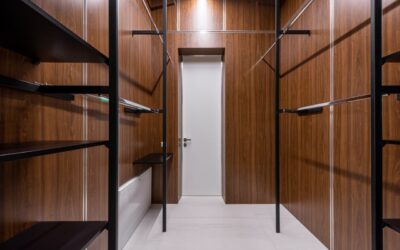
Removing the door entirely turns a closet into a built-in feature. With custom shelving, baskets, and good lighting, an open closet looks intentional rather than incomplete. This works especially well for small bedroom closets where the door swing eats valuable floor space.
Cost: $100–$1,000 depending on shelving system. The Container Store Elfa Custom ($200–$800) and IKEA Pax frames ($150–$600 per unit) both look polished.
Best for: Small bedrooms, mudroom alcoves, kids’ rooms where containers double as decor.
Quick Comparison
- Cheapest: Curtains ($50)
- Most popular DIY: Barn doors ($200–$600)
- Best space-saver: Pocket doors
- Most premium look: Pivot doors
- Best for wide openings: Sliding barn or accordion
- Best for narrow openings: French doors
What to Consider Before Choosing
- Opening width — bifolds cover 3 to 8 feet, but each alternative has different sweet spots
- Header height — barn doors need 6 inches above the opening for the track
- Adjacent wall space — sliding doors need a flat wall the same width as the door
- Floor surface — pivot doors and curtain pooling work better on hard flooring than carpet
- Frequency of use — a daily closet needs hardware rated for heavy cycling
Installation Tips
Most of these bifold door alternatives are DIY-friendly with basic tools — drill, level, stud finder, miter saw. Pocket doors are the exception and usually need a contractor unless you’ve framed walls before. Always hit at least one stud when mounting a barn door track. The hardware itself isn’t heavy, but a closing door creates lateral force that pulls drywall anchors loose within months.
Whichever route you choose, removing builder-grade bifolds and replacing them with something built for the next 20 years is one of the highest-impact, lowest-budget upgrades any homeowner can make to a closet or pantry.
Frequently Asked Questions
What is the best alternative to bifold doors for a laundry closet?
Sliding barn doors, bypass sliders, and louvered doors are the most practical choices, since none of them swing into the walkway in front of the machines. If the closet holds a dryer, check the dryer manual for closet ventilation requirements; many require louvered doors or vent openings for airflow. Curtains also work well when budget and quick access matter more than looks.
Are sliding bypass doors a good replacement for bifold doors?
Yes, for wide reach-in closets. Bypass doors use two or more panels that slide past each other on parallel tracks inside the existing opening, so they need no wall space beside the opening and no swing clearance. The drawback is access: only part of the closet is open at any one time. Solid-core or mirrored panels on quality rollers feel far sturdier than hollow bifolds.
Can you replace a bifold door with a regular hinged door?
Yes. Openings up to about 36 inches usually take a single prehung door, and wider openings suit a pair of hinged doors. Bifold openings often have no proper door jamb, so expect to add a jamb or install a prehung unit, and possibly adjust the framing to fit a standard door size. Leave enough floor space for the door to swing open fully.
Do barn doors give enough privacy for a closet or bathroom?
They are fine for closets but weak for bathrooms. A barn door hangs in front of the opening rather than inside it, so it leaves gaps along the sides and bottom that let sound, light, and odor through, and it rarely locks securely. Choosing a door a few inches wider than the opening and adding a floor guide or edge stops reduces the gaps.