The single most important part of a sliding barn door is not the door itself but the barn door track that carries it, because a cheap or undersized track is what turns a beautiful door into a rattling, sticking headache. Choosing the right barn door track means matching the track length to your opening, the weight rating to your door, and the mounting method to your wall structure. This guide walks through sizing, track styles, hardware quality, and installation so your door glides smooth and quiet for years.
Part of our Windows & Doors guide — explore the full guide →
- How Barn Door Tracks Work
- Sizing the Track Correctly
- Track Styles and Finishes
- Weight Ratings Matter
- Mounting to the Wall
- Installing the Track
- Getting Quiet, Smooth Operation
- Single, Bypass, and Bi-Parting Configurations
- Track Materials and Quality Differences
- Troubleshooting a Noisy or Sticking Door
How Barn Door Tracks Work
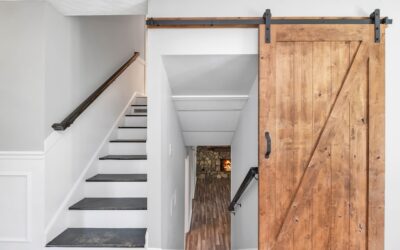
A barn door hangs from two roller hangers that ride along a horizontal steel track mounted above the opening. The door slides sideways to open, tucking against the wall rather than swinging into the room, which is why barn doors are so popular in tight spaces like bathrooms, pantries, and closets.
The track bolts to the wall, ideally into studs or a mounted backer board, and end stops keep the rollers from sliding off. A floor guide at the bottom keeps the door from swinging away from the wall. The whole system is simple, but each component’s quality and sizing determines how well it performs.
Sizing the Track Correctly
The cardinal rule of barn door tracks is that the track must be twice the width of the door opening. That length lets the door fully clear the opening when slid to one side, so you get the whole doorway. A 36-inch-wide door needs a 72-inch track minimum.
The door itself should be two to three inches wider than the opening on each side, so a 32-inch opening wants a roughly 36- to 38-inch-wide door for proper coverage and privacy. Check that the wall beside the opening is wide enough to accept the door in the open position, since obstructions like light switches or adjacent doors can block the slide.
- Door width: opening width plus 2 to 3 inches per side
- Track length: at least double the door width
- Wall clearance: confirm the door has a clear landing spot beside the opening
Track Styles and Finishes
Tracks come in a few profiles. The classic flat strap style shows a straight steel bar with visible roller wheels, the look most people picture. The top-mount or box-rail style hides more of the hardware for a cleaner, modern appearance. Bypass tracks let two doors slide past each other on parallel rails for wide openings.
Finishes range from matte black, by far the most popular, to brushed nickel, oil-rubbed bronze, and raw steel. Match the finish to your other hardware. Quality kits from brands like SmartStandard, National Hardware, and Rustica use powder-coated steel that resists chipping, while cheap tracks show rust and finish wear within a year.
Weight Ratings Matter
Every track and roller set carries a weight rating, and undersizing it is the top cause of sagging and premature roller failure. A solid-wood door is far heavier than a hollow-core one, so weigh or estimate your door before buying hardware.
- Hollow-core or lightweight doors: 100 to 150 pound rated kits suffice
- Solid-core or solid-wood doors: choose 200 pound or higher ratings
- Oversized or double doors: heavy-duty commercial-grade track
Buying a rating well above your door’s weight costs little more and gives smoother, quieter operation with less strain on the wheels.
Mounting to the Wall
The track’s fasteners must hit solid structure, because the door’s full weight hangs from those bolts. The best practice is to mount a backer board, a finished 1×6 or wider board anchored across the studs above the opening, then attach the track to the board. The backer board spreads the load and gives you continuous solid material to bolt into anywhere along the track.
If you skip the backer board, you must locate each stud and land a lag bolt in it, which limits your bolt spacing. Never rely on drywall anchors alone for a barn door; the weight will pull them out. A backer board painted to match the wall or stained to match the door looks intentional and solves the anchoring problem entirely.
Installing the Track
With the backer board or studs identified, installation is a careful but manageable job for two people.
- Mark the track height so the bottom of the door will clear the floor by about half an inch.
- Hold the track level, mark your bolt holes, and drill pilot holes into the backer board or studs.
- Bolt the track up with the provided lag bolts and spacers, checking level as you go.
- Attach the roller hangers to the top of the door and lift the door onto the track.
- Install the end stops, then add the floor guide at the bottom to keep the door tracking straight.
The spacers behind the track hold it off the wall so the door clears the baseboard and trim as it slides.
Getting Quiet, Smooth Operation
A well-installed track glides nearly silently. If yours is noisy, check that the track is dead level, since a slight tilt makes the door roll to one end on its own. Anti-jump discs and soft-close dampers, available on better kits, stop the door from bouncing off the rollers and cushion the ends of the slide.
Invest in the track and rollers rather than skimping, because the hardware is what you interact with every day. Size the track to double the door width, match the weight rating to a solid door, mount to a proper backer board, and level it precisely, and your barn door will slide smooth and quiet for the life of the room.
Single, Bypass, and Bi-Parting Configurations
Barn door tracks come in several configurations to suit different openings, and choosing the right one up front prevents ordering the wrong hardware. A single-door setup is the most common, with one door sliding to one side on a single track. It works for standard doorways up to about four feet wide where there is clear wall space on one side.
For wider openings, you have two options. A bypass track uses two parallel rails set at slightly different depths so two doors can slide past each other, ideal for closets and openings six to twelve feet wide where you have no adjacent wall space on either side. A bi-parting setup uses a single long track with two doors that meet in the middle and slide apart, opening the center of a very wide opening like a great room divider. Bi-parting needs wall space on both sides for the doors to land. Measure your opening and your available wall space carefully, then pick the configuration that matches, because each uses different track hardware.
Track Materials and Quality Differences
Not all tracks are built alike, and the quality difference shows in daily use. Budget tracks use thinner-gauge steel that can flex under a heavy door, allowing the door to sag or the rollers to bind over time. Better tracks, from brands like SmartStandard, National Hardware, and Rustica, use thicker cold-rolled steel with a durable powder-coat finish that resists chipping and rust.
The rollers matter as much as the rail. Cheap kits use nylon or thin-walled wheels that wear and grow noisy, while quality kits use sealed precision bearings that glide silently for years. Look for nylon-lined or ball-bearing wheels rated well above your door’s weight. The mounting hardware tells a story too: quality kits include proper lag bolts, spacers, and anti-jump discs, while bargain kits often skimp on fasteners, leaving you to source your own. Spending an extra $40 to $80 on a reputable kit is worthwhile because the track and rollers are what you touch and hear every single time you use the door.
Troubleshooting a Noisy or Sticking Door
Even a good track can develop issues, and most are easy to diagnose. If the door rolls to one end on its own, the track is not level, and re-shimming or remounting it dead level solves the drift. A door that scrapes the floor usually means the track was mounted too low or the rollers need adjusting, and many hangers offer height adjustment to raise the door slightly.
Noise and sticking usually trace to a few causes. Debris in the track catches the wheels, so wiping the rail clean often restores smooth travel. Dry or worn bearings can be quieted with a light silicone lubricant, though badly worn rollers should be replaced. If the door bounces or feels like it might jump off, add anti-jump discs to keep the rollers captured on the rail. A door that no longer latches or aligns with the opening may have a loose track that has shifted under the weight, so re-checking and tightening the mounting bolts periodically keeps everything running as smoothly as the day you installed it.