White caulk against a black sink is a pinstripe of failure you will stare at every day. As matte black fixtures, dark grout, and charcoal countertops moved into mainstream kitchens and baths, black caulk went from a specialty order to a hardware-store staple — and it has practical advantages beyond matching: black hides the mildew shadows, dust, and slight yellowing that make aging white caulk look grubby years before it fails. The catch is that chemistry still rules. A black sealant that thrives around a shower will peel off a driveway joint, so this guide pairs the right black product with each job and covers the application quirks dark caulk adds.
Part of our Paint & Walls guide — explore the full guide →
Where Black Caulk Is the Right Call
Reach for black anywhere the joint touches dark materials or should visually disappear:
- Dark grout lines: caulking the tub-to-tile or counter-to-backsplash change of plane to match charcoal or black grout — the single most common use
- Black and composite granite sinks: the rim bead on black undermounts and drop-ins
- Matte black fixtures and glass: shower door channels, faucet deck gaps, black-framed shower enclosures
- Countertops: seams and wall joints on soapstone, black quartz, and dark granite
- Expansion joints: asphalt driveways, dark-stained concrete, and pavers where gray or white would stripe
- Exterior details: black window frames, dark siding trim, metal roofing penetrations and gutter seams
- Appliances and thresholds: gaps at black appliance trim kits and dark floor transitions
One aesthetic warning from experience: against nearly-black surfaces, “black” caulks vary — some cure to a soft charcoal, others to jet black with a gloss. On a visible seam, test a bead on cardboard first, because a half-shade mismatch on a black counter is more visible than white would have been.
Pick the Chemistry First, the Color Second
Silicone — wet areas and non-porous surfaces
For showers, tubs, sinks, and anything glass or metal, 100 percent silicone is the standard: permanently flexible, waterproof, and mold-resistant. GE Advanced Silicone 2 Kitchen & Bath in black (about $8-$10 a cartridge) is the ubiquitous pick, rated for 10-year mold-free protection and 30-minute water-ready exposure. DAP’s Silicone Max and Gorilla’s black silicone are comparable. Remember silicone’s two rules: nothing sticks to it (including paint and future silicone), and surfaces must be bone dry at application.
Polyurethane and hybrids — joints that move and take abuse
Outdoors and underfoot, polyurethane and silyl-modified hybrids win on toughness and adhesion. Sikaflex 1a in black and Loctite PL S30 roof and flashing sealant handle expansion joints, metal roofing, and gutters; both stay flexible through freeze-thaw and are paintable once cured. For driveway and slab joints specifically, self-leveling black polyurethane (Sikaflex Self-Leveling, about $10-$14) flows flat into horizontal cracks without tooling. Cure times run longer — up to a week for full cure on deep joints — so plan around rain.
Siliconized acrylic latex — trim and easy touch-ups
Where the joint is dry and cosmetic — dark baseboards, black window casings inside, filling nail-hole shadows on ebony trim — a black siliconized latex like DAP Dynaflex 230 in black ($6-$8) tools with a wet finger, cleans up with water, and takes paint. It is the forgiving choice for anyone nervous about smearing silicone across a wall.
Specialty blacks
Two niches worth knowing: color-matched caulks from grout manufacturers (Mapei, Custom Building Products, TEC) come in the exact sanded and unsanded shades of their grout lines, so a “black” that is really Charcoal #60 can match perfectly; and butyl or asphaltic blacks serve roofing and foundation work where tar-compatible sealant is required.
Application: What Changes When the Caulk Is Black
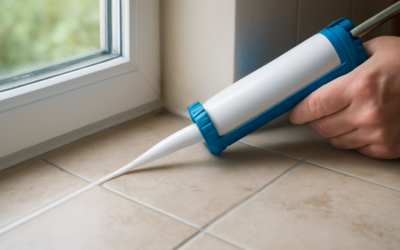
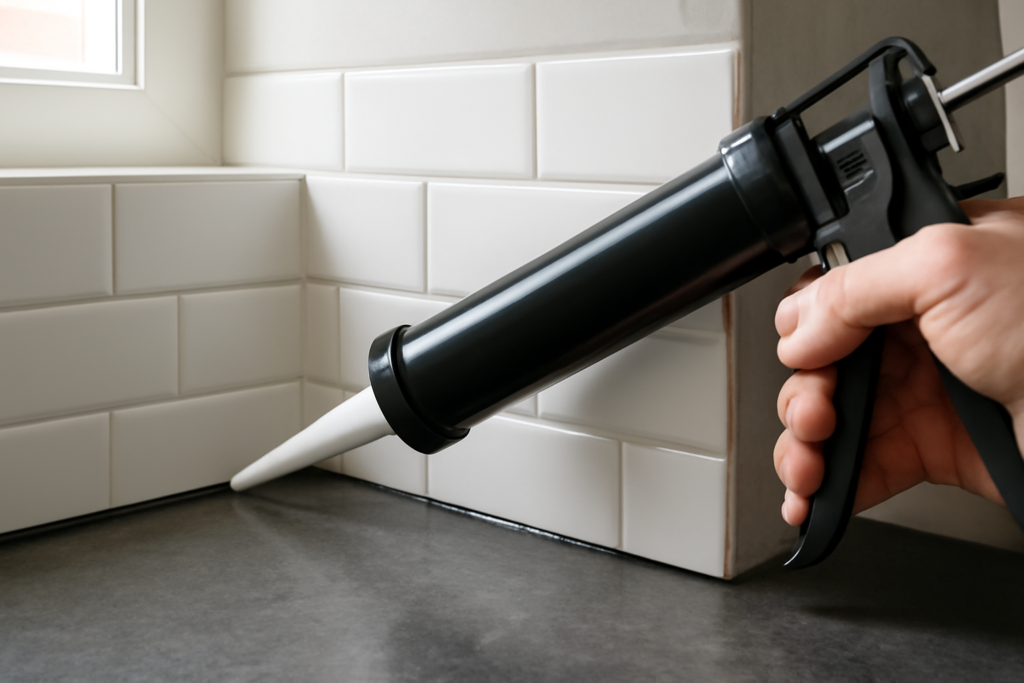
Technique is standard caulking — clean, dry, cut the nozzle small at 45 degrees, push a steady bead, tool once — but black raises the stakes on neatness, because every smear and fingerprint shows on adjacent light surfaces like ink. Tape both sides of the joint with painter’s tape, pull the tape immediately after tooling while the caulk is wet, and keep mineral spirits (silicone) or a damp rag (latex) at hand for strays. Tool with a plastic caulk tool or a nitrile-gloved finger dipped in soapy water; bare fingers turn black quickly and transfer it everywhere. On deep joints over 1/4 inch, stuff backer rod first — it halves material use and produces the hourglass profile that survives movement.
Old caulk must come out completely before the new bead goes in; black over failing white telegraphs every ridge. Slice both edges, peel the bulk, then use caulk remover gel and a plastic razor. Full removal, surface prep, and joint sizing are covered in our comprehensive caulk guide, and everything there applies double when the color will highlight sloppy prep.
Mildew and Maintenance in Dark Beads
Black caulk hides mildew — which is a feature and a bug. The shower bead will look clean years longer than white, but the colony can be established before you see it, so put dark wet-area caulk on a schedule instead of waiting for visual cues: squeegee or towel the joint area after showers, hit it monthly with a bathroom cleaner, and plan replacement at roughly 5 years in a daily-use shower regardless of appearance. Any bead that lifts at the edge or stays slimy after cleaning is done, whatever its color.
Color-Matching Tricks the Pros Use
When true black is not quite right, three workarounds close the gap. Grout-caulk color programs are the first stop for tile work: if your grout is Mapei Black 10 or Custom’s Raven, buy the caulk made to that exact chip number, sanded texture and all, so the flexible joint disappears into the grid — a generic black beside a soft-black grout is a visible stripe. Second, for one-of-a-kind surfaces like honed soapstone, paintable black latex caulk can be topcoated with a matched paint or stone enhancer once cured, something silicone will never allow. Third, on gloss-versus-matte mismatches, a cured silicone bead can be knocked down from gloss to satin by a light pass with 0000 steel wool — test on a hidden inch first. Photograph the surface in daylight next to the caulk shade card at the store; kitchen lighting flattens dark tones and fools the eye toward buying too glossy.
Buying Notes
Expect $6-$14 per 10-ounce cartridge depending on chemistry, with squeeze tubes around $6 for small jobs. Black stocks thinner than white and clear in stores — big-box locations often carry only one black silicone — so order specialty products (self-leveling, grout-matched shades, hybrids) online ahead of the weekend. Check the cure-color note on the label: “matte black” and “gloss black” both exist, and on a long visible seam the sheen difference matters as much as the shade.
How Much You Need and How Long It Lasts
Coverage math prevents mid-bead store runs: a 10-ounce cartridge lays roughly 25 linear feet of 1/4-inch bead or 50-plus feet of a fine 1/8-inch line, so a tub surround takes one tube with margin and a driveway’s joints may take four to six of the self-leveling type. Shelf life is the quiet spoiler — silicone hardens in the tube within about a year of manufacture, opened or not, and a partially used cartridge sealed with a screw in the nozzle is only good for a few weeks. Buy fresh for the job, check the date stamp on the cartridge base, and expect service life of 5-10 years in wet interior joints, 10-20 for polyurethane outdoors, with black’s UV resistance actually outperforming white in direct sun since the pigment shields the polymer.
The Bottom Line
Black caulk is the finishing detail that makes dark design elements look built-in rather than caulked-around. Match the chemistry to the job — GE silicone in the wet zones, Sikaflex outside, Dynaflex on trim — tape your lines, and test the cured shade before committing to a showcase seam. Done right, the bead disappears, which is exactly what good caulk is supposed to do.