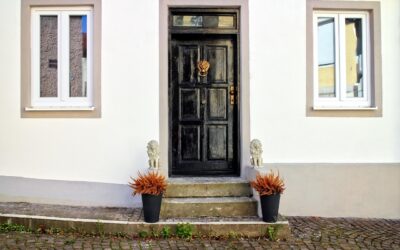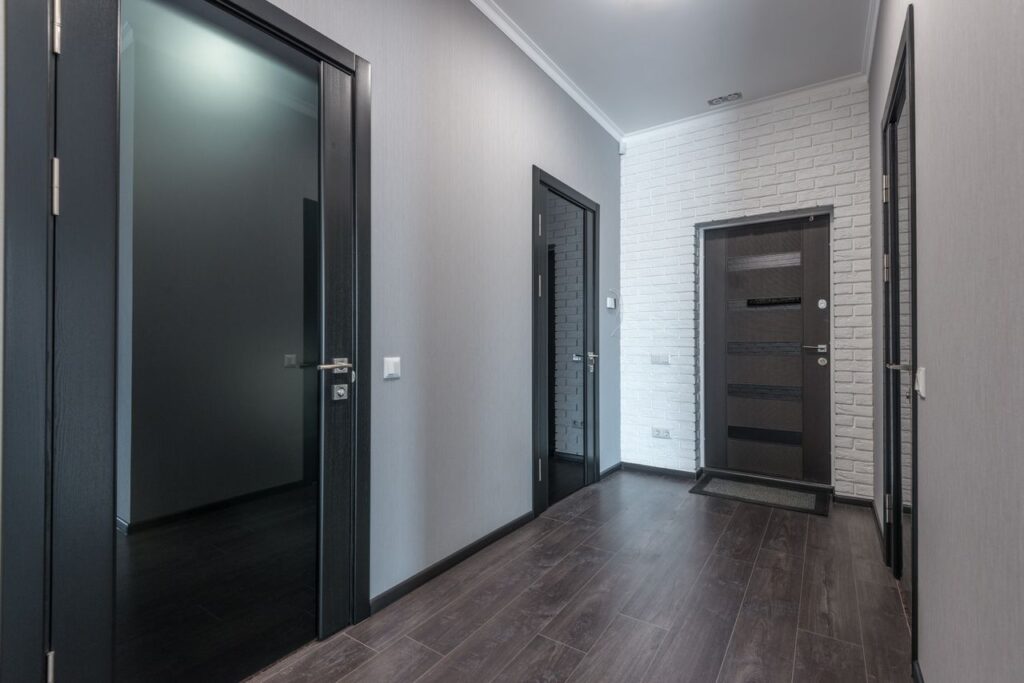
Black interior doors look stunning in design magazines and miserable in poorly lit hallways, which is why so many homeowners regret the choice within a year of installing them. The most successful black internal doors ideas account for the entire context — natural light levels, ceiling height, hardware finish, trim color, and adjoining wall colors — rather than treating the doors as a single accent decision. Get those variables right and black doors transform a builder-grade space into something that feels intentional. Get them wrong and the house looks like a funeral parlor.
Part of our Windows & Doors guide — explore the full guide →
- The Right Black Paint Makes or Breaks the Look
- Five-Panel Shaker Doors Are the Default Pick
- Pair Black Doors With Specific Trim Colors
- Hardware Finish Should Be Decisive
- Matching Black to Wall and Floor Colors
- Where Black Doors Work Best
- Lighting Considerations You Cannot Ignore
- The Painting Process for a Pro Result
The Right Black Paint Makes or Breaks the Look
Skip pure black. The deepest, richest interior door blacks have undertones that soften the harshness. Benjamin Moore Black Beauty 2128-10 has a slight blue undertone that reads sophisticated against warm wood floors. Sherwin-Williams Tricorn Black SW 6258 is closer to true black with subtle warmth. Farrow and Ball Pitch Black is a designer favorite with a muted matte finish.
Use a satin or eggshell sheen, never high gloss unless the room has dramatic light and you want a lacquered look. Flat black absorbs every fingerprint and shows handprints around the knob within weeks.
Five-Panel Shaker Doors Are the Default Pick
The simplest black door style is a five-panel or two-panel shaker slab. The clean lines work in modern, transitional, farmhouse, and craftsman homes. Solid-core MDF interior doors are the workhorse choice — primed white from the factory, then painted black after install. Expect $90 to $180 per door slab.
For a higher-end look, choose a six-panel or three-panel door with crisp routed details. Deeper shadow lines on traditional panel doors give black paint more dimension and visual interest than completely flat slabs.
Pair Black Doors With Specific Trim Colors
The trim color around a black door changes everything. Matching black trim creates a bold framed-out look that works in tall spaces with at least 9 foot ceilings. Crisp white trim against black doors is the safest combination — Benjamin Moore Simply White or Decorator White hold up well next to deep blacks.
Avoid antique white or cream trim with black doors. The yellow undertones clash with black and make the trim look dingy. If your existing trim is cream and you do not want to repaint, pick a black with warm undertones like Pitch Black or Iron Mountain rather than a cool blue-black.
Hardware Finish Should Be Decisive
Three hardware finishes shine on black doors. Aged brass and unlacquered brass develop a warm patina that pops against black paint — Rejuvenation, Schoolhouse, and Emtek all carry quality brass options. Matte black hardware reads minimalist and modern but blends into the door so much that the knob nearly disappears at certain angles.
Polished nickel and chrome are the third good choice and lean transitional. Skip oil-rubbed bronze on black doors — the finishes are too close in tone and end up looking muddy. Plan on $40 to $200 per door for hardware depending on quality.
Matching Black to Wall and Floor Colors
Black doors look best with mid-tone wall colors. Warm grays like Benjamin Moore Revere Pewter HC-172 and Edgecomb Gray HC-173 are classic pairings. White walls work in airy modern homes with abundant natural light. Deep colors like navy, hunter green, and burgundy can work in libraries and powder rooms but require careful execution.
Floor color is just as critical. Medium-tone hardwoods in oak, walnut, and hickory provide grounding warmth. Light white-oak and pale floors emphasize the contrast and lean Scandinavian. Dark espresso floors with black doors feel heavy and require lighter walls to balance.
Where Black Doors Work Best
Not every door should be painted black. The highest-impact installations are at front entryways from a foyer, at primary bedroom and bathroom doors visible from main living spaces, and at large openings to home offices and libraries. Closet doors and laundry doors hidden in hallways do not need the upgrade.
Powder room doors at the end of a hallway look striking in black with brass hardware. Pantry doors with glass panels painted black create a distinct visual moment in open kitchens.
Lighting Considerations You Cannot Ignore
Black absorbs light, so any room or hallway with black doors needs more lighting than you would otherwise plan. Add an extra recessed can or a wall sconce in narrow hallways with black doors on both sides. Hallways below 6 feet wide tend to feel cramped with black doors unless the ceiling is bright white and the floor is light.
South-facing rooms with strong natural light can carry black doors easily. North-facing rooms with cool gray light should use a black with warm undertones to avoid feeling cold and depressing.
The Painting Process for a Pro Result
Painting interior doors black takes more prep than painting them any other color because every imperfection shows. Sand the existing primer or finish with 220 grit, fill any nail holes or dings with wood filler, sand smooth, then prime with a stain-blocking primer like Zinsser BIN. Apply two coats of your black paint with a 4-inch foam roller for the panels and a 2-inch synthetic brush for the corners and edges.
Plan on 6 to 8 hours of total work per door spread across two days for proper cure between coats. Quality black paint runs $50 to $80 per gallon and covers about 6 doors. Done correctly, black internal doors ideas should hold their finish for 8 to 10 years before needing a refresh. If you are doing more than three doors at once, remove them from their hinges and paint horizontally on sawhorses for a flawless finish — gravity helps the paint level smoothly without runs or sags around panels.