There is something undeniably bold about black kitchen countertops. They anchor a kitchen design with sophistication, hide everyday messes better than light surfaces, and pair beautifully with virtually any cabinet color. At DnG Flooring, we have helped hundreds of homeowners select and install black countertops over our 30-plus years in business, and we can tell you this: black never goes out of style.
Part of our Countertops guide — explore the full guide →
Whether you prefer the depth of natural soapstone, the sparkle of black granite, or the consistency of engineered quartz, there is a black countertop material for every taste and budget. This guide walks you through every major option, compares finishes and durability, and provides practical pairing and maintenance advice.
Best Materials for Black Kitchen Countertops
Not all black countertop materials are created equal. Here are the top choices, each with distinct characteristics that affect appearance, performance, and price.
Black Granite
Black granite remains the classic choice for black kitchen countertops. Popular varieties include Absolute Black (a solid, deep black), Black Pearl (with silver and gray flecks), and Black Galaxy (featuring gold or copper sparkles). Granite is naturally hard, heat-resistant, and available at a wide range of price points from $50 to $150 per square foot installed.
Black Quartz
Engineered quartz delivers the most consistent black color without the natural variation of stone. Brands like Caesarstone, Silestone, and Cambria offer jet-black options in polished, matte, and textured finishes. Quartz is non-porous, never needs sealing, and costs $70 to $140 per square foot installed.
Soapstone
Soapstone starts as a dark gray and deepens to near-black with regular mineral oil applications. It offers a warm, matte finish with subtle veining that feels distinctly different from granite or quartz. Soapstone is non-porous and heat-resistant. Installed costs run $110 to $180 per square foot.
Black Marble
Varieties like Nero Marquina feature a rich black base with striking white veining. Black marble is dramatic but demands more maintenance than other options due to its porosity and susceptibility to etching. Expect to pay $100 to $200 per square foot installed.
Black Concrete
Concrete countertops can be pigmented to a deep charcoal or true black. The surface has an organic, matte look with subtle textural variations. Concrete requires sealing and costs $100 to $180 per square foot installed.
Black Laminate
For budget-friendly black kitchen countertops, modern laminate has come a long way. High-pressure laminates from Formica and Wilsonart offer convincing matte black and stone-look patterns at $20 to $50 per square foot installed. They cannot match the durability or feel of natural stone, but they deliver the look at a fraction of the price.
Matte vs Glossy Black Countertops
The finish you choose has an enormous impact on both the look and practicality of black kitchen countertops.
Glossy (Polished) Black
A polished black countertop creates a mirror-like surface that reflects light and makes the kitchen feel more dramatic and formal. The high-gloss finish highlights the depth of the stone’s color and any natural patterns.
The downside is visibility. Every fingerprint, water spot, crumb, and dust particle shows up prominently on a polished black surface. If you are someone who keeps a spotless kitchen at all times, this is not a problem. If you have kids, pets, or a busy household, be prepared to wipe the counters frequently.
Matte (Honed or Leathered) Black
A honed or leathered black countertop has a soft, non-reflective surface that hides fingerprints, water spots, and minor scratches far better than a polished finish. The trade-off is that the color appears slightly less deep and can show lighter patches where oils from hands contact the surface.
Leathered finishes add a subtle texture to the stone that further disguises wear and gives the countertop a more tactile, organic quality. This finish has become increasingly popular for black kitchen countertops because it combines the drama of black with the practicality of a low-maintenance surface.
Our recommendation: For most households, a honed or leathered finish is the smarter choice. It delivers the black look without the constant cleaning that polished surfaces demand.
Cabinet Pairing Ideas
Black kitchen countertops are remarkably versatile when it comes to cabinet pairings. Here are the combinations that work best:
- White cabinets + black countertops: The classic high-contrast pairing. Crisp white shaker or flat-panel cabinets with black countertops create a timeless, clean aesthetic that works in traditional and modern kitchens alike.
- Natural wood cabinets + black countertops: Light oak, maple, or walnut cabinets paired with black countertops bring warmth and organic balance. This combination is particularly popular in Scandinavian and mid-century modern designs.
- Gray cabinets + black countertops: A sophisticated, tonal combination that feels contemporary without being stark. Medium gray works best to maintain enough contrast.
- Black cabinets + black countertops: A bold, monochromatic choice that creates a moody, luxurious atmosphere. This works best in larger kitchens with plenty of natural light to prevent the space from feeling too dark. Vary the finish (matte cabinets with polished counters, or vice versa) to add depth.
- Navy or dark green cabinets + black countertops: A striking combination that adds color without sacrificing the grounding effect of the dark countertop. Gold or brass hardware ties the look together beautifully.
Durability by Material
When choosing black kitchen countertops, durability varies significantly depending on the material:
- Black granite: Rates 6 to 7 on the Mohs hardness scale. Highly scratch-resistant, heat-resistant up to moderate temperatures, and stain-resistant when properly sealed. Expected lifespan exceeds 50 years.
- Black quartz: Rates about 7 on the Mohs scale. Extremely scratch- and stain-resistant. Not as heat-resistant as natural stone and can discolor or crack from hot pans placed directly on the surface. Lifespan of 25 to 50 years.
- Soapstone: Rates 3 to 4 on the Mohs scale. Softer and more scratch-prone than granite or quartz, but scratches are easily repaired. Completely heat- and stain-proof. Lifespan exceeds 100 years.
- Black marble: Rates 3 to 5 on the Mohs scale. Susceptible to scratching, etching from acids, and staining without regular sealing. Beautiful but high-maintenance. Lifespan of 50-plus years with proper care.
- Concrete: Moderately durable but can crack, chip, and stain if not properly sealed. Heat can cause discoloration. Lifespan of 20 to 50 years depending on maintenance.
- Laminate: Resistant to stains but can scratch, burn, and chip at edges. Not repairable. Lifespan of 10 to 20 years.
Cleaning and Maintenance
Keeping black kitchen countertops looking their best requires the right cleaning approach for each material.
Daily cleaning for all materials: Use a soft microfiber cloth with warm water and a small amount of mild dish soap. Wipe dry immediately to prevent water spots, which are more visible on black surfaces than lighter ones.
Granite and marble: Avoid acidic cleaners (vinegar, lemon juice, citrus-based sprays). Use a pH-neutral stone cleaner for regular maintenance. Reseal granite every 1 to 2 years and marble every 6 to 12 months.
Quartz: Clean with any non-abrasive household cleaner. Avoid bleach and highly acidic products. No sealing required.
Soapstone: Clean with soap and water. Apply food-grade mineral oil periodically to maintain the darkened appearance and disguise light scratches.
Concrete: Use a pH-neutral cleaner and reseal every 1 to 3 years. Blot spills immediately to prevent staining.
For polished black surfaces, keep a dedicated microfiber cloth handy for quick wipe-downs throughout the day. A spray bottle with a 50/50 mix of water and isopropyl alcohol works well for streak-free cleaning on quartz and granite.
Cost Comparison
Here is a side-by-side cost comparison for black kitchen countertops (installed price per square foot):
- Laminate: $20 to $50
- Granite: $50 to $150
- Quartz: $70 to $140
- Concrete: $100 to $180
- Soapstone: $110 to $180
- Marble: $100 to $200
For a typical 30-square-foot kitchen countertop, total costs range from $600 for budget laminate to $6,000 for premium marble. The sweet spot for most homeowners is black granite or quartz in the $2,100 to $4,200 range, which delivers excellent appearance and durability without breaking the budget.
Design Inspiration and Trends
Black kitchen countertops are showing up in several exciting design directions for 2026:
- Black countertops with open shelving: Replacing upper cabinets with open wood shelves above a black countertop creates an airy, modern look that showcases both the stone and your favorite kitchenware.
- Waterfall black islands: A black countertop with a waterfall edge down one or both sides of a kitchen island creates a sculptural centerpiece.
- Mixed material kitchens: Black countertops on the island with butcher block or white countertops on the perimeter add variety and visual interest.
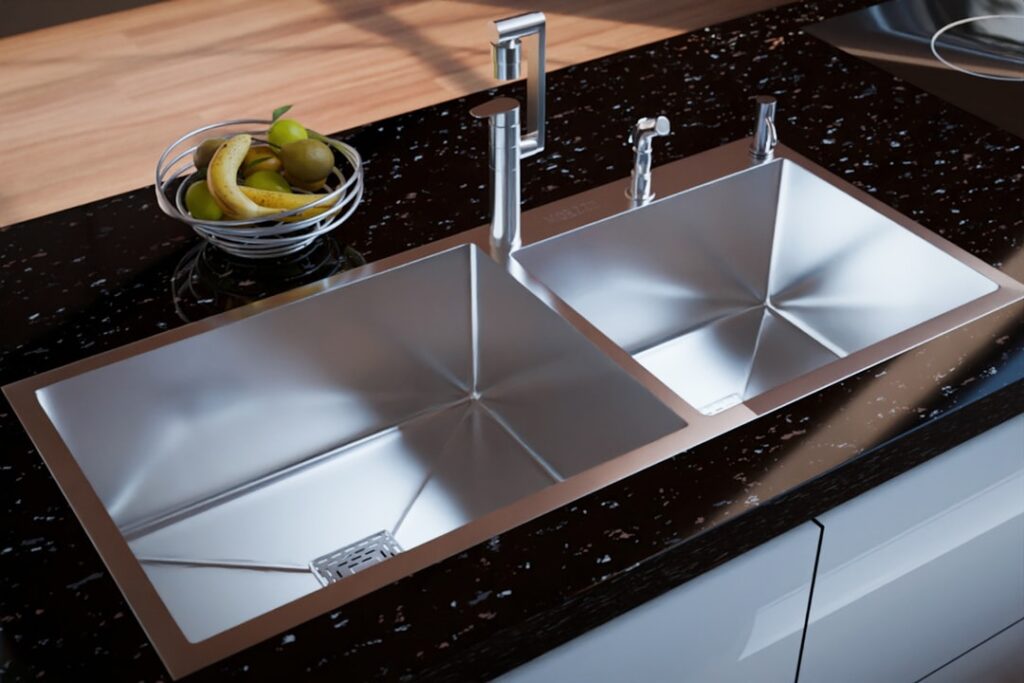
- Integrated black sinks: A black composite or granite sink set into black countertops creates a seamless, monolithic look that is both practical and visually striking.
- Textured black surfaces: Leathered and brushed finishes are replacing polished black as the preferred finish for a more relaxed, tactile experience.
Common Concerns About Black Countertops
Homeowners often hesitate before committing to black kitchen countertops. Here are the most common concerns and our honest perspective:
“Black countertops show everything.” This is partially true, especially with polished finishes. However, choosing a honed, leathered, or subtly patterned surface (like Black Pearl granite) significantly reduces visible fingerprints and dust. With regular wiping, keeping a black countertop clean is no harder than maintaining a white one that shows stains and discoloration.
“A black kitchen will feel too dark.” Black countertops paired with light cabinets, adequate lighting, and reflective backsplash materials actually create a balanced, grounded space. The key is ensuring you have sufficient ambient and task lighting, especially under-cabinet LED strips.
“Black countertops will go out of style.” Black is a neutral. It has been used in kitchen design for decades and shows no signs of fading. If anything, the variety of available finishes and materials has only expanded the ways homeowners can use black surfaces.
Frequently Asked Questions
What is the most durable black kitchen countertop material?
Black granite, specifically Absolute Black or Black Galaxy, is the most durable option. It resists scratches, heat, and stains better than most other materials. Black quartz is a close second, offering superior stain resistance but slightly less heat tolerance.
Do black countertops make a kitchen look smaller?
Not when paired thoughtfully with lighter elements. Black countertops with white or light-colored cabinets, a bright backsplash, and good lighting can actually make a kitchen feel more defined and intentional. In very small, dark kitchens without much natural light, lighter countertops may be a safer choice.
Are black quartz countertops hard to keep clean?
Polished black quartz does show fingerprints, water marks, and dust more than lighter colors. A honed or matte finish dramatically reduces this issue. Regardless of finish, quartz is one of the easiest countertop materials to clean since it is non-porous and never needs sealing.
Can you pair black countertops with a black backsplash?
Yes, but vary the materials and finishes to create depth. For example, matte black countertops with glossy black subway tile or textured black mosaic prevents the combination from looking flat. Adding metallic grout or accent tiles also helps break up the monochromatic palette.
What is the cheapest way to get black countertops?
High-pressure laminate is the most affordable option at $20 to $50 per square foot installed. For a step up in quality, look for budget-friendly black granite varieties like Absolute Black in a 2-centimeter thickness, which can be found starting around $50 per square foot installed.