Black cabinetry jumped from niche contemporary trend to mainstream showstopper after Houzz’s 2023 survey showed 12 percent of kitchen remodels included some dark cabinet color, up from 3 percent in 2018. A well-designed kitchen with black cabinets can look expensive, timeless, and warm when the rest of the room supports it, or it can look like a dim dungeon if the lighting, countertops, and hardware are wrong. This guide covers shade selection, finish choices, the countertop and backsplash pairings that photograph best, and the small mistakes that ruin otherwise great designs.
Pick the Right Black
Not all blacks are created equal. True jet black reads modern and stark, while softer almost-blacks with brown, blue, or green undertones feel warmer and more livable. Popular paint choices for a reason:
- Benjamin Moore Onyx (2133-10): Near-true black with very slight blue undertone
- Sherwin-Williams Tricorn Black (SW 6258): Deep neutral black, no strong undertone
- Benjamin Moore Black Beauty (2128-10): Subtle green undertone, great with natural wood
- Farrow and Ball Railings (No. 31): Blue-black that reads almost navy in daylight
- Benjamin Moore Soot (2129-20): Charcoal-black softer than true black
Test any color with a large sample (2 by 2 feet minimum) on actual cabinet doors in the kitchen. Lighting, wall color, and flooring all shift how a black reads.
Matte vs. Satin vs. High-Gloss
Finish sheen changes the entire mood. Matte (about 5 to 10 percent gloss) looks architectural and hides fingerprints well, but it shows wear and cleaning streaks over time. Satin (25 to 35 percent) is the workhorse for busy kitchens, wiping clean with a damp cloth and handling splashes without marring.
High-gloss black cabinets look striking and reflect light, but every fingerprint and dust speck shows. Reserve high-gloss for accent cabinets or low-traffic zones. For most homes, a satin enamel in black offers the best durability-to-looks ratio.
Countertop Pairings That Work
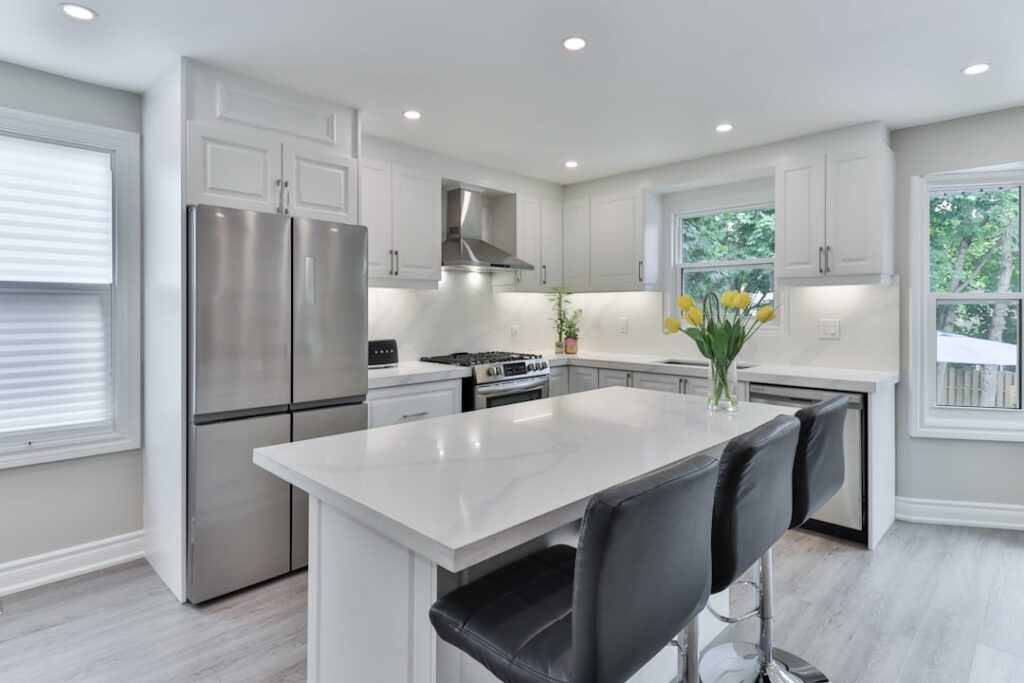
Black cabinets need a lighter countertop to avoid the cave effect. White quartz is the safest bet; Caesarstone Pure White, Silestone Blanco Zeus, and Cambria Whitney all stay crisp against deep cabinets. For more visual interest, consider marble-veined quartz like Cambria Brittanicca or Calacatta Laza.
Natural stone works too. Carrara marble adds movement. Taj Mahal quartzite reads warmer than marble with better durability. Avoid black or dark gray counters unless you have excellent lighting; they pull the whole room into shadow.
Backsplash Options
Simple subway tile in white or soft cream keeps the kitchen bright and costs under $4 per square foot installed. For more drama, try a handmade zellige tile in warm white, which adds texture that catches light and breaks up the black.
Slab backsplashes continuing the countertop material upward give a seamless, upscale look. Budget $30 to $80 per square foot for quartz or marble slab, and confirm your installer can handle outlet cutouts in stone.
Hardware Choices That Elevate
Hardware is where black cabinets get interesting. Brushed brass and unlacquered brass read warm and sophisticated; they are the most popular pairing in high-end design right now. Polished nickel and chrome lean more contemporary and reflect light effectively.
Skip oil-rubbed bronze on true black; it disappears into the cabinets. If you want dark hardware, use matte black pulls that are a slightly different texture from the cabinet finish so they read as intentional.
Lighting Is Non-Negotiable
Black absorbs 90 percent more light than white cabinetry, so a black kitchen with poor lighting feels oppressive. Plan for three light layers:
- Ambient: Recessed cans or flush mounts, at least 20 lumens per square foot
- Task: Under-cabinet LED strips rated 2700K to 3000K, 400 lumens per linear foot
- Accent: Pendant lights over islands, sconces near open shelving, or toe-kick lighting
Warm white bulbs at 2700K make black cabinets feel cozier. Cool white above 4000K makes them feel harsh and industrial.
Wall Color and Flooring
Walls should lean light and warm to balance the cabinets. Off-whites like Benjamin Moore Simply White, Swiss Coffee, or Sherwin-Williams Alabaster all work. Avoid cool grays; they make the kitchen feel sterile.
Light hardwood flooring in white oak or European oak is the gold standard. Medium-tone wood, warm-toned tile, or pale natural stone also work. Dark floors under black cabinets create a tunnel effect; reserve that combo for rooms with abundant natural light.
Island and Upper Cabinet Strategy
Full black on uppers and lowers is bold and works in larger kitchens with great lighting. For smaller spaces, try black on just the lowers with white, cream, or wood uppers to lift the room visually. A two-tone kitchen with a black island and lighter perimeter is the most popular compromise and photographs beautifully.
Open shelving in walnut or oak breaks up expanses of black and adds warmth. Glass-front upper cabinets with interior lighting create display moments that show off dishware.
Maintenance Realities
Black shows dust, water spots, and fingerprints more than any other color. Wipe doors and drawer fronts every 2 to 3 days with a microfiber cloth and diluted dish soap. Skip ammonia-based cleaners; they dull painted finishes over time.
Touch-up paint is your friend. Ask the cabinetmaker for a small jar of the exact finish for scratch repairs. Black scratches show as light lines and are easy to spot, but touching them up with a fine artist brush takes under a minute.
Resale Considerations
Zillow’s 2022 analysis found homes with black kitchens sold for an average of $1,500 more than comparable white kitchens, reversing the trend from five years prior. The effect is strongest in urban and contemporary markets. In traditional suburbs, a classic white or soft green kitchen still outperforms. Matching the finish to neighborhood expectations matters more than any trend.